Even now, 10 years later, his name is out there.
Go ahead, type it in the search bar on a phone or laptop and see what happens. Right away, up come the photos, the memes, the social media rants. And not just from a decade ago. From today.

People won’t let him go. They write songs and plays about him. They paste his image next to presidents and pop stars. They argue about what he meant, what he means now, and why he ever mattered to anyone.
After all these years, he’s everywhere, immediately recognizable. Just say his name, and people know.
Harambe.
He is, almost certainly, the most famous silverback western lowland gorilla in the world, an achievement born of tragedy, modern technology and humanity’s limitless capacity to use its most powerful tools for ridiculous purposes.
Harambe died 10 years ago, on May 28, 2016, when an emergency response team at the Cincinnati Zoo & Botanical Garden shot him in the head to protect a 3-year-old boy who had fallen into the gorilla enclosure while visiting the zoo with his family.
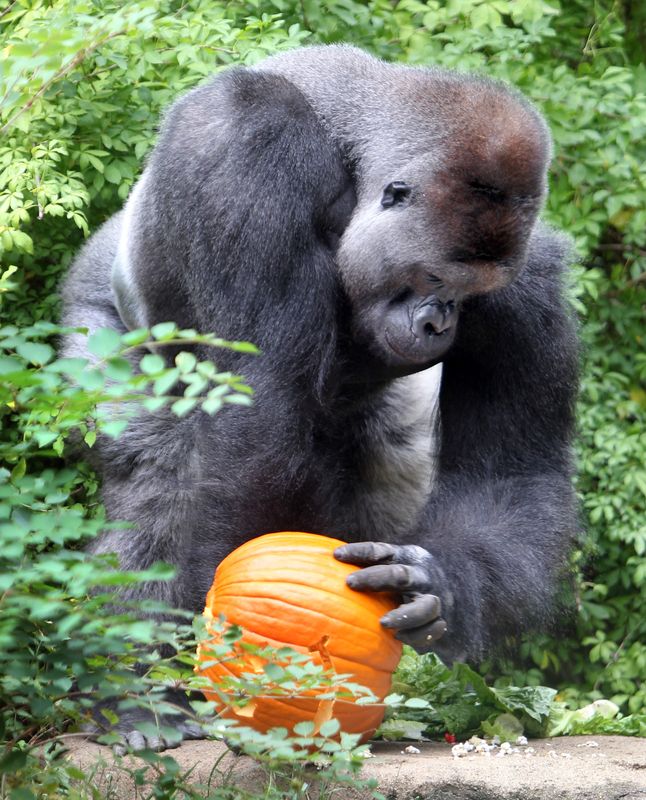
Before that moment, Harambe had lived the kind of public yet anonymous life most zoo animals do. Hundreds of people paused every day to look at him, all 450 pounds of him, as he paced and climbed in his habitat or sat idly staring back at them, arm resting on his leg, chewing foliage.
He cut an impressive, even majestic, figure. But few visitors would have remembered his name from those encounters.
After his death, and because of the bizarre circumstances, few could forget it. His name and face became a proxy for anything and everything. Protesting injustice? Mourning a loss? Making light of something serious? Harambe was there for it. A Swiss Army knife of online expression.
He had staying power, too. Instead of a viral moment, Harambe’s death experienced viral days, then weeks and months, until finally becoming what it is today: an enduring piece of internet folklore.
“It transformed into a cultural event,” said Krysten Stein, a communications professor at the University of Cincinnati Blue Ash College. “It is a cultural moment that’s ingrained in the internet.”
Why that happened, she said, may say more about human nature than it does about Harambe.
First came anger and sadness, then the jokes
Within days of his tragic end, millions of people who had just learned Harambe’s name turned him into an internet star.
The commentary and memes about him on social media soon morphed from grief and outrage into something else entirely. He appeared in yellow parachute pants, dancing to MC Hammer’s “U Can’t Touch This.” He sat among the clouds, hanging out with David Bowie and Prince in heaven. He appeared next to Thomas Jefferson on Mount Rushmore.
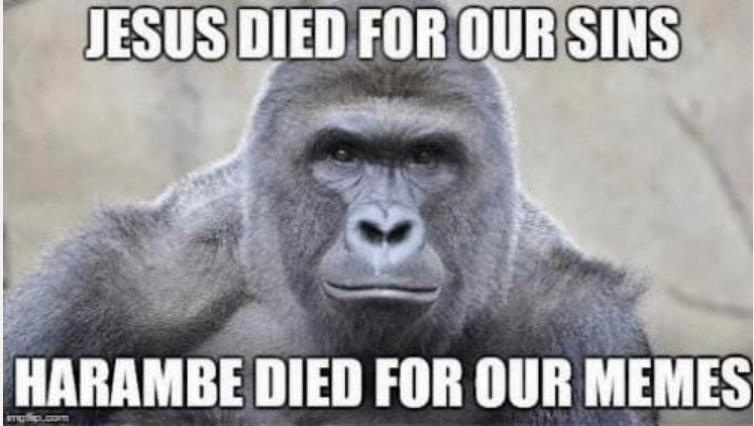
“JESUS DIED FOR OUR SINS,” someone posted online at the time. “HARAMBE DIED FOR OUR MEMES.”
A decade earlier, all this would have been baffling. Before the internet, it would have been impossible. But in 2016, as social media completed its conquest of the world’s collective attention span, Harambe’s ascension to cult hero status made perfect sense.
“Harambe really combined this emotion, this shock, this absurdity,” Stein said. “All of these things travel very quickly online. It allows people to participate in it.”
Anyone with a smart phone and an opinion joined this de facto worldwide town hall, where strangers mourned Harambe’s death, passed judgment on a mother who momentarily lost track of her toddler, and debated the appropriate amount of time to risk leaving someone else’s child alone with a gorilla before shooting the gorilla.
“The first wave was sort of sincere. There were petitions. There was outrage,” said Alex Turvy, a Cincinnati-based sociologist and the author of “Memes in the Machine,” a book on internet culture that comes out next year.
Then came the jokes, some inspired by the weirdness of the tragedy, and some by the weirdness of the internet. Turvy compared it to a bunch of middle school kids cracking up during class. The more they’re told not to laugh, the more they do.
“The memes sort of started as a parody and then ate it up entirely,” he said of the jokesters who took over the Harambe conversation. “Things got very twisted and crazy from there.”
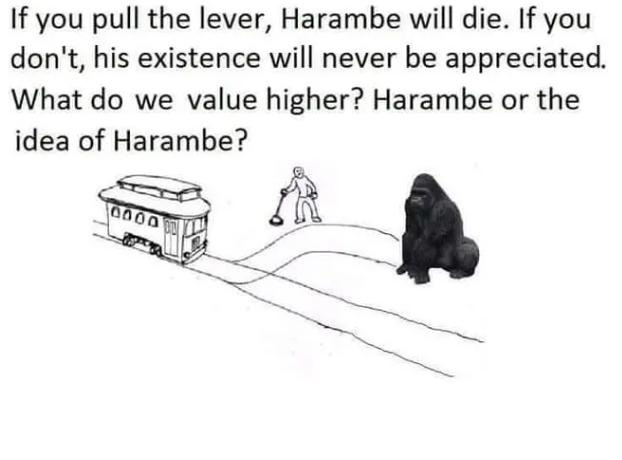
On one end of the spectrum, a Reddit post leaned into philosophy by questioning whether Harambe meant more to the world dead than alive. “What do we value higher?” it asked. “Harambe or the idea of Harambe?”
On the other, a young stand-up comedian popularized the phrase “D—s out for Harambe,” which can’t be spelled out here but became one of the most popular and nonsensical memes of 2016.
“The joke was never really about the gorilla,” Turvy said. “It was just sort of like a way for people online to signal they were in on the joke.”
Harambe helped people with ‘feelings they couldn’t place’
Zoo officials, who declined an interview request, were most definitely not in on the joke. After facing unrelenting criticism, including a hack of his Twitter account, then-zoo director Thane Maynard issued a statement in August 2016 pleading for a respite.
“We are not amused by the memes, petitions and signs about Harambe,” Maynard wrote. “Our zoo family is still healing, and the constant mention of Harambe makes moving forward more difficult.”
The internet shrugged. Instead of fading away, as most online sensations do, the memes and conversations Harambe inspired stuck around. According to Google Trends, searches related to Harambe peaked in July 2016, months after his death, and settled into a lower but steady thrum of interest that continues today.
Turvy said the architecture of the internet has something to do with that. Today, he said, the web is a more fractured and fast-moving place, where users can isolate themselves politically and culturally on different platforms.
Back in 2016, that wasn’t the case. A phenomenon like Harambe broke through on Reddit and 4chan as easily as it did on Twitter and Facebook. Harambe was everywhere, all at once. A shared experience.
“It feels like a callback to an internet that doesn’t quite exist anymore,” Turvy said. “It was one of the last, in my mind, great, long-running, cross-platform memes.
“That doesn’t really happen anymore.”
But the structure of the online world only partly explains Harambe’s endurance. Harambe has a lot to do with it, too.
For those moved by Harambe’s death, especially the tech-savvy teens and 20-somethings who encountered him just as memes took over the internet, he became a generational touchstone. The gorilla of their memes.
Jamie Cohen, a digital culture expert at Queens College in New York, said conversations with his students at the time revealed that Harambe mattered because he came to symbolize loss, grieving and helplessness.
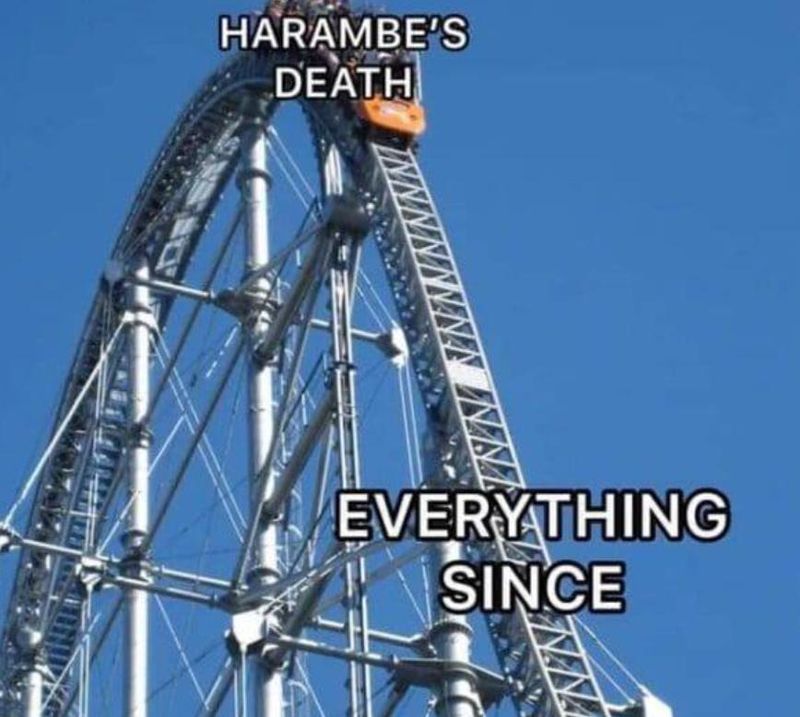
The world was changing fast – politically, socially and technologically – and many felt there was nothing they could do about it. A recurring theme in those early memes was that everything got worse after Harambe died.
“Harambe played this important role for people dealing with feelings that they couldn’t place,” Cohen said. “Harambe acted like a pivot point. An absurd death at a zoo ended up becoming, like, this could be the moment where the world took a turn.”
How Harambe predicted the internet of today
Justin Loudermilk, a Cincinnati native who was 14 at the time, shared a meme of Harambe with angel wings on a staircase to heaven after the gorilla died.
He’s not sure, a decade later, why Harambe’s death resonated with him and his friends, but it still comes up from time to time in conversations today. It still matters.
“It definitely has a weird meaning,” he said, “beyond the incident itself.”
Four years ago, Loudermilk, who now lives in Louisville, drew a likeness of Harambe on a whiteboard at work, alongside the words “RIP Harambe.” The drawing remained there until someone erased it a few weeks ago.
“It was like I lost him for a second time,” Loudermilk said.
Cohen said he’s not surprised by that kind of response. The emotional connection to a whiteboard drawing shared with coworkers and visitors is essentially the same connection young people have with the Harambe memes they created and shared a decade ago.
“Young men, young women use memes because it’s a visual representation of a feeling,” Cohen said. “That’s why I love memes. Memes prove you’re not alone.”
Will young people still be talking about Harambe in another 10 years? Will anyone?
It’s impossible to say whether the internet alone will keep him relevant, given how much it’s changed and how much change is coming. But if a recent, AI-generated TikTok clip called “Harambe: The Musical” is any indication, Harambe isn’t going anywhere. As of this week, the video has 2 million views.
Cohen, who considers Harambe a “cultural artifact” that will never disappear, said it’s impossible to know what the gorilla might mean to future generations. Once memes are released into the wild, anything can happen. Some Harambe images and memes already have been co-opted by activists, artists and even by white supremacists.
In this way, Harambe foretold the contradictions that dominate today’s internet. Beautiful and maddening. Tragic and comic. Filled with meaning and devoid of reason.
The online world has remade and repurposed Harambe’s story many times in the past decade, for better and for worse, and likely will again. Go ahead, type his name in the search bar. See what comes up.
He’s still out there, still familiar, yet changing every day.
This article originally appeared on Cincinnati Enquirer: Why Harambe is still the gorilla of our memes 10 years after his death
Reporting by Dan Horn, Cincinnati Enquirer / Cincinnati Enquirer
USA TODAY Network via Reuters Connect