Ohio has just one immigration court, located in Cleveland. But in late June, more than a dozen of some 420 people being held at the Butler County jail on behalf of Immigration and Customs Enforcement appeared virtually before a judge.
A Cincinnati Enquirer reporter observed three hours of online proceedings before Judge Jennifer Riedthaler-Williams on June 24.

Here’s what we learned about the process.
Cleveland court is one of 71 across the country
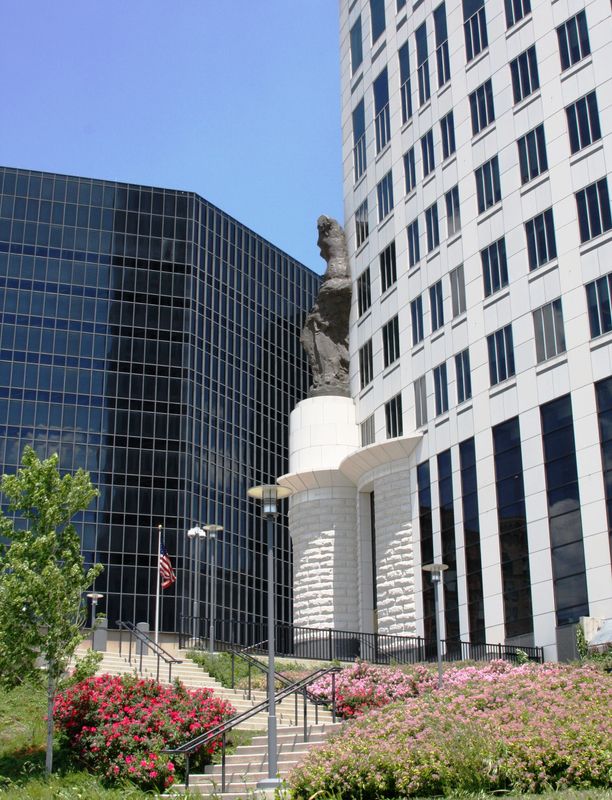
Riedthaler-Williams sits in a courtroom in the Carl B. Stokes U.S. Courthouse building in downtown Cleveland. She is one of 10 judges for the Cleveland Immigration Court, who each were paid $156,000 to $195,000 in 2023, according to the court’s most recent pay roster.
The Cleveland court is part of the Executive Office for Immigration Review of the U.S. Department of Justice. Established in 2006, it hears all of Ohio’s immigration cases.
Across the country, the Justice Department operates 71 courts with 700 judges in 29 states, plus the U.S. territories of Puerto Rico and the Northern Mariana Islands. Texas has the most, with 13, followed by California with 11.
Riedthaler-Williams, a 2001 graduate of Cleveland’s Case Western Reserve University law school, was appointed to the San Francisco Immigration Court in May 2019 and moved to the Cleveland court that August.
Between 2019 and 2024, she ruled on 259 requests for asylum for ICE detainees who argued they were persecuted in their home countries, according to an analysis from Syracuse University. She granted 43 of them, university data showed.
Judge encouraged people to visit immigration court
Unlike most U.S. courts, immigration courts only grant access to case files to detainees (known as respondents), their attorneys and select others. Anyone else who wants to see their “record of proceedings” can request them under the Freedom of Information Act.
But hearings, with limited exceptions, are public – although collecting sound, video or photos is prohibited.
Whether that includes virtual hearings is fuzzy.
“Observers should plan to observe immigration hearings in person at the courtroom in which a hearing is scheduled and tried,” Press Secretary Kathryn Mattingly said via email.
But her email also noted that links on the immigration court’s website “are posted for parties appearing remotely.”
Riedthaler-Williams encouraged visitors in a 2019 Case Western newsletter. “If you have a chance, come in and observe hearings,” she said then.
Cleveland immigration court ‘packed full with hearings’
On June 24, Riedthaler-Williams began admitting parties to her WebEx site shortly after 8 a.m.
With the growing number of immigration cases across Ohio and the country – the backlog is now a record 3.6 million – Riedthaler-Williams moved quickly through her morning docket.
Over three hours, she toggled between detainees, lawyers, jail officials and language interpreters online, and a lone government attorney and court staffer on site.
Sitting behind two computer screens in her courtroom, Riedthaler-Williams’ face could not be seen on WebEx. Asked for a photo, the court press secretary said the court does not provide photos of immigration judges.
Immigration hearings followed similar script
Once on screen, attorneys’ names were provided in captions, with detainees identified only by the letter of their jail pod. As the judge opened each new hearing, she referred to detainees by what is called their “alien number,” then asked them to state their name for the record.
Jose Gonzalez-Rodriguez, 28, was up first. Like other detainees, he resembled his mug shot, appearing in a striped yellow-and-white jail uniform with just his head and shoulders visible.
Gonzalez-Rodriguez posted bond a day earlier, his attorney told the judge. In response, she scheduled his next hearing. Speaking through a Spanish interpreter, she told him that if he doesn’t attend the hearing another judge could seek to remove him from the country.
“Do you understand?” she asked. “Sí,” he responded.
Riedthaler-Williams repeated the script over the next few hours, as detainees asked for bond, asylum, voluntary departures and lawyers. “Do you understand? Do you have any questions for me?” she asked each.
She advised 23-year-old detainees from Brazil — a man and woman arrested at the same time and the same address — to get help to complete their asylum applications. She urged a Punjabi-speaking man who said he needed heart surgery to find an attorney for his bond and asylum matters. When a detainee speaking Arabic said he’d paid his bond a week earlier, she said she would follow up; the next day, he was no longer on the jail roster.
This story was updated to add a video.
This article originally appeared on Cincinnati Enquirer: Where do Ohio’s ICE detainees see a judge? A virtual trip to Cleveland’s immigration court
Reporting by Patricia Gallagher Newberry, Cincinnati Enquirer / Cincinnati Enquirer
USA TODAY Network via Reuters Connect