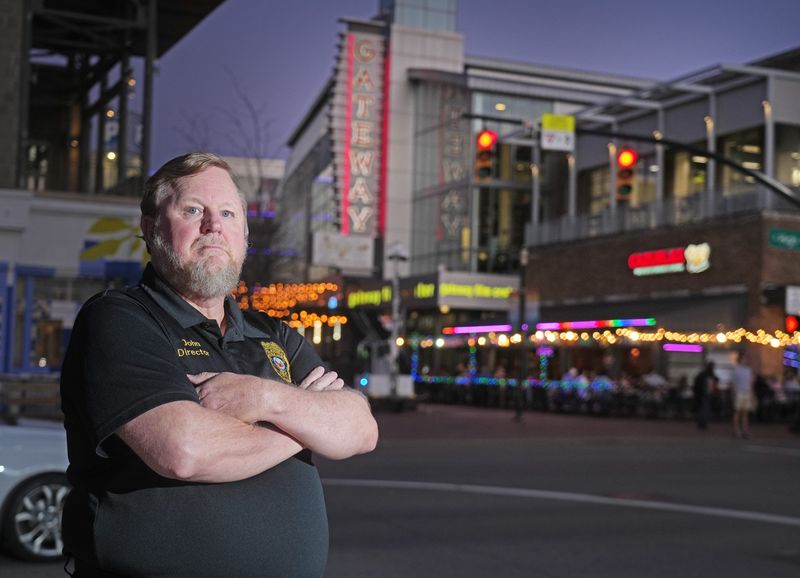
When John Hurst Jr. stepped through the Gateway parking garage exit, he was pulled back in time.
As the sun set, Hurst strolled below dim string lights and toward the glowing red Gateway sign in early March just like he’d done countless times before. He began to feel the memories rushing back to him.

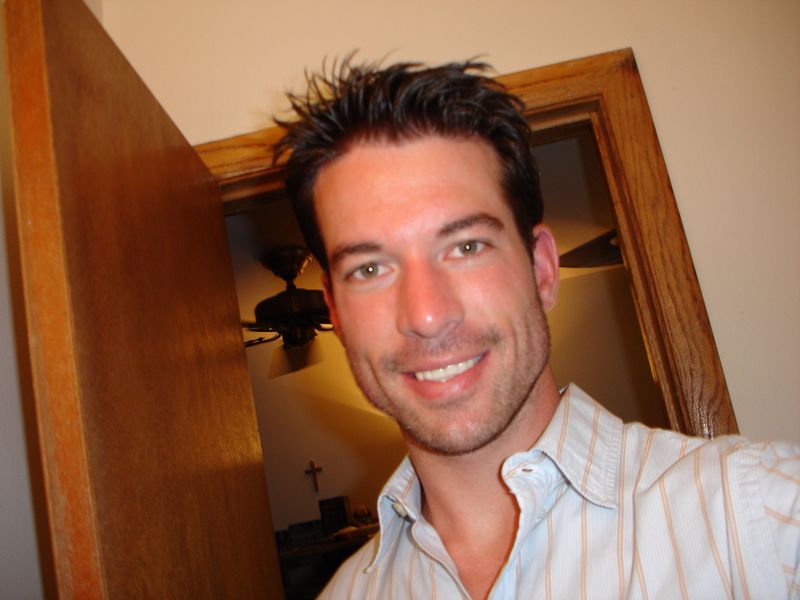
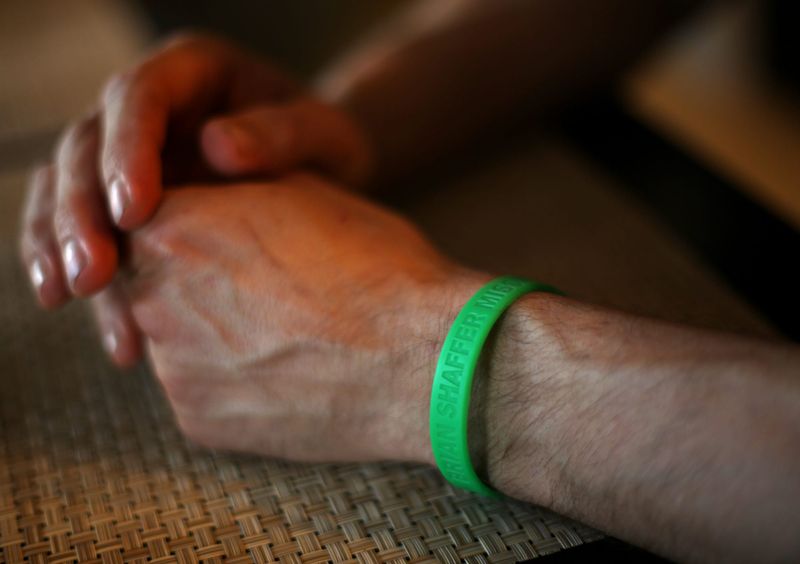
Much has changed at the complex on the edge of the University District in the last 20 years. But one thing has not − it remains the last place anyone saw the handsome, 27-year-old Ohio State medical student Brian Shaffer.
Hurst, a retired Columbus police sergeant, was the lead investigator on Brian’s case after he vanished in the early morning hours of April 1, 2006. Grainy security camera footage showed Brian walking into the former home of the Ugly Tuna Saloona on the second floor of the Gateway but never caught him walking out.
While Hurst retired in 2019, the camera’s images of Brian atop the building’s escalators remain as clear in his mind in 2026 as they were two decades ago.
“Every law enforcement officer has that one case,” Hurst said. “Even now, I’m thinking what can I do? Is there somebody I can reach out to? All of that stuff still goes through your mind. It never went away.”
The biggest case of Hurst’s career has long captivated Ohio and the nation. But two decades on, Brian’s case appears no closer to being solved than it was when Hurst first began investigating it.
After meeting his father for dinner at a steakhouse March 31, 2006, Brian met up with his friend Clint Florence for drinks and the two bounced around the University District taking shots before heading to the Ugly Tuna Saloona.
Brian, his friend and female acquaintances were seen on camera entering the bar. At around 1:50 a.m. April 1, 2006, the camera caught Brian talking to two women near the escalators before walking back inside. It was likely the last time anyone saw him.
When Brian’s girlfriend couldn’t get ahold of him after that night, she waited in his apartment for two days, hoping he would show back up.
Brian was supposed to board a plane with her on April 3 for a spring break trip to Miami. But he never showed, leaving his girlfriend and so many others in his life to wonder what happened to him.
Theories of Brian’s disappearance have overrun online message boards and swirled on social media pages for years.
Some have wondered if Brian simply walked away from his life and the girlfriend he was set to join on a spring break trip a few days later. Others have speculated whether he might have taken his own life as he grieved his mother’s death from weeks earlier. And there’s of course the possibility that Brian became the victim of foul play or a deadly accident.
Regardless, his brother Derek Shaffer continues to hold out hope that Brian will someday be found.
“Every day we think about Brian and can’t believe it’s been 20 years,” Derek Shafer said in a prepared statement. “We still continue to hope and pray to have answers some day and wish that anyone who knows anything would come forward.”
Columbus police declined to make an officer available for an interview on Brian’s disappearance. In a prepared statement, police told The Dispatch that the case remains open, that the division is still receiving tips, pursuing all leads and interviewing people.
When Brian vanished in 2006, he became one of an estimated 600,000 people nationwide who are reported missing each year, according to the U.S. Department of Justice. On any given day, roughly 1,000 Ohioans are missing, data from the Ohio Attorney General’s Office shows.
Columbus police alone receive thousands of reports of missing persons per year, a 2024 Dispatch investigation found. At the time, just eight detectives and one sergeant were tasked with investigating reports, which climbed as high as 6,934 between 2013 and 2024, according to the division.
While Hurst knows police are overwhelmed by the amount of missing persons reports they face, he’s still hopeful someone will one day crack the case.
Although security cameras somehow missed Shaffer, someone had to see something, Hurst said. Whoever that person is, Hurst said, he or she likely holds the key to the case and may not even know it.
“We’re just missing that one piece of the puzzle,” Hurst said. “As soon as we get that piece, everything’s going to fall together.”
Did Columbus police botch the Brian Shaffer case?
In the days following Brian’s disappearance, police checked multiple nearby security cameras. Each one led to another dead end, Hurst said.
It’s the lack of evidence in Brian’s case, Hurst said, that’s made it so difficult to solve from the start. But others who came to know the Shaffer family and looked into the case themselves aren’t so sure.
Don Corbett, a board-certified investigator and retired Austintown police detective, befriended Brian’s dad Randy Shaffer after his son’s disappearance. The two grew so close that Corbett said Randy Shaffer would sometimes call him in the middle of the night, seeking reassurance about his long lost son.
Corbett has pushed police to give him access to files for years and said he’s even offered to sign a nondisclosure agreement since the investigation is ongoing. But police, he said, have repeatedly rebuffed his offers to help and that’s made Corbett wonder whether they bungled the case and don’t want anyone seeing the files.
“There’s that detective mystique: ‘what the cops say must be right,'” Corbett said. “When you mischaracterize a case from the start that it’s a missing person or its nothing, that’s how you investigate it. I believe that’s what they did.”
Columbus police have touted a recovery rate for disappearances that often hovers between 96% and 99% per year, a spokesperson previously told The Dispatch
But not every case counted in that measure of success results in a happy ending, The Dispatch’s 2024 VANISHED investigation found. Missing persons who are found dead, for example, are counted in the Columbus police recovery rate, a spokeswoman said.
Columbus police declined to say how many cases go unsolved a year “due to the fluid nature” of investigations, the police spokesperson said. With thousands of missing persons reports filed annually in Columbus though, it’s possible anywhere from dozens to hundreds of cases remain unsolved each year.
When asked about Corbett’s accusations, a Columbus police spokesman said via email that the division stands by its work on the case.
Hurst told The Dispatch there will “always be naysayers who think we probably screwed things up.” But when it come’s to Brian’s disappearance, Hurst said detectives followed every lead that came in and every law enforcement officer who looked at the case agreed police did everything they could.
Corbett isn’t the only person who thinks law enforcement might have fumbled the case though.
Lori Davis, a Muskingum County woman turned missing persons advocate has her doubts about how well the case was handled. Shortly after Brian vanished, Davis became an unofficial spokesperson for the family and helped run their website dedicated to the disappearance.
Four or five years after Brian disappeared, Davis remembered talking to law enforcement and discovered that they never collected any DNA of Brian or that of his relatives to enter in databases such as the National Missing and Unidentified Persons System.
NamUs, as it’s usually called, has helped to solve more than 46,000 missing persons cases since it was created in 2007. Without his DNA in that clearinghouse though, it’s possible a body could be discovered and never matched to Brian’s, Davis said.
Mistakes like the DNA one have made Davis wonder what else was mishandled in the early days of Brian’s disappearance.
The Dispatch’s 2024 VANISHED investigation found that police often fail to use every tool at their disposal to bring missing Ohioans home.
At least 50% of the 689 Ohioans missing for a year or more as of Oct. 31, 2024 were absent from NamUs, a Dispatch analysis found. A bill introduced at the statehouse in response to The Dispatch’s investigation would force Ohio to follow the lead of 16 other states that require law enforcement reporting to NamUs.
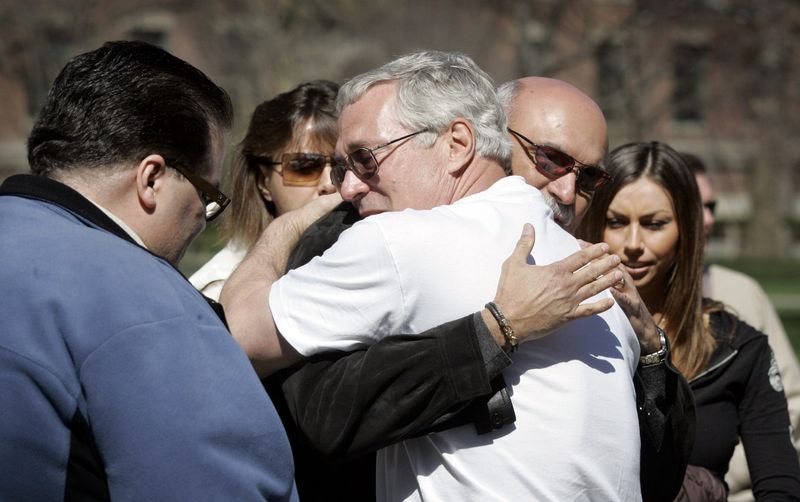
Roughly two years after Brian went missing, Randy Shaffer died when a tree branch fell on him after a storm in 2008. He left the world, Davis said, without any answers about what happened to his son.
But Davis made a promise to Brian’s father, Randy, that she would never stop looking or advocating for his missing son.
“There are so many things I wish were handled differently,” she said. “I am absolutely sickened that we are still basically at the same point we were 20 years ago.”
How Brian Shaffer’s disappearance gained a true crime following
In the decades since Brian went missing, his disappearance has taken on a life of its own in pop culture.
Countless podcasts have been recorded. Episodes of TV documentary series have been filmed. And Hurst is even writing a book about the case.
Brian’s case has almost taken on an urban legend status in true crime circles, said Michelle Jeanis, an associate professor of criminal justice at the University of Louisiana at Lafayette.
Jeanis compared the case to the infamous 2013 disappearance of Elisa Lam from the Cecil Hotel in downtown Los Angeles. Lam had been seen acting strangely on security camera footage at the hotel days before she went missing and was reportedly later found in a water tank on the top of the building.
Many wondered if Brian might still be somewhere in the Ugly Tuna Saloona since cameras never caught him leaving. But Hurst said maintenance staff searched crawl spaces and walls and found no trace of the medical student.
“People watch and say: ‘How could he have escaped all of the cameras? That’s impossible,'” Jeanis said. “Video evidence is incredibly news worthy…People can go back to this case and see the CCTV footage and feel like they’re part of it.”
When a case like Brian’s generates a ton of public interest and develops its own mythology, Jeanis said facts often get blurred with falsehoods about what happened.
Everyone has their own theory of the case, but many, including Jeanis, Corbett, Davis and Hurst all think that after 20 years, Brian is likely already dead.
Florence, Brian’s friend who was out with him the night he vanished, was scrutinized early on by police and the public. Florence initially cooperated with law enforcement but hired a lawyer shortly after Brian went missing, declined to take a polygraph test and changed schools. He did not return calls from The Dispatch seeking comment on this story.
Corbett believes police erred by spending so much time looking at Florence.
Instead, Corbett said police should have taken a closer look at Brian’s other friends, acquaintances and family. But Hurst said that Brian’s brother and father both passed polygraph tests, though those exams aren’t admissible in court.
Although the disappearance marked its 20th anniversary April 1, Columbus police told The Dispatch they have no plans to open up the case files to the public.
It’s typically up to individual law enforcement agencies to decide whether case files are opened up publicly, though that is more common for cold cases as they age, Jeanis said. Jeanis pointed to the Golden State Killer case, which author Michelle McNamara helped to solve, as an example of the good that can come with sharing more information on cases that have long gone unsolved.
“There are no hard and fast rules about that,” Jeanis said. “But shoot, they’re solving cold cases by working with high school classes these days.”
Hurst worries opening up Brian’s files to the public could cause legal problems down the road, especially if the disappearance does one day turn into a murder case.
And when it comes to the case, Hurst said he to has seen facts and fiction become mixed and misunderstood by the public. It’s a big reason why he decided to write a book on the investigation from his point of view.
While Hurst’s forthcoming book might offer more insight than ever before into the disappearance, at this point it still won’t answer the question that’s lingered for decades: what exactly happened to Brian?
“Without a body, it’s kind of hard to say,” Hurst said when pressed. “At this point… we just need to start looking at it more as a murder.”
Dispatch investigative reporter Max Filby can be reached by email at mfilby@dispatch.com. Find him on X at the handle @MaxFilby or on Facebook at @ReporterMaxFilby.
This article originally appeared on The Columbus Dispatch: What happened to Brian Shaffer? It’s been 20 years since the Ohio State med student disappeared
Reporting by Max Filby, Columbus Dispatch / The Columbus Dispatch
USA TODAY Network via Reuters Connect