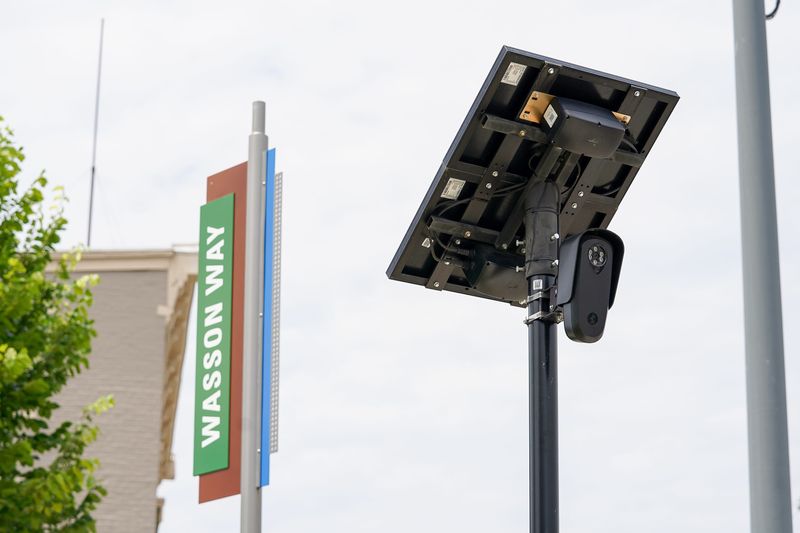
A Flock camera – a nationwide system of motion-activated license plate readers – appears to have helped police capture Julius Edwards, the man suspected of stabbing a woman July 7 in Canton before heading north into Summit County, where chaos unfolded.
The Ohio State Highway Patrol said it was told to be on the lookout for Edwards, who was initially driving a gray Kia Telluride, about 3:20 p.m. Tuesday.

It’s unclear where Flock cameras first picked up Edwards’ SUV, but Stow police said its cameras alerted officers at 7:17 p.m. that the SUV had just entered its city.
State troopers next spotted the SUV about 10 minutes later on Darrow Road in Hudson, a wealthy suburb that has no Flock cameras.
When troopers turned on their light bars and tried to stop the SUV, a short pursuit began before Edwards drove through a red light on Terex Road, causing a crash that seriously injured others, a highway patrol press release said.
The suspect ran into nearby woods while firing shots at a trooper who had been chasing him. The trooper returned fire, the release said.
Flock cameras were useless then because they only capture still images of passing vehicles, documenting license plate numbers along with the make, model, color, and unique features of a vehicle, like bumper stickers or damage.
That let the suspect slip away until he carjacked a Chrysler Town & Country minivan.
Law enforcement hasn’t revealed if Flock cameras helped them find Edwards a second time. But a trooper saw Edwards driving the stolen minivan just before 8:30 p.m. and tried to stop him. Again, Edwards fled, the release said.
Over the next 10 minutes, a wild chase involving multiple agencies ensued, with the fugitive leading a line of law enforcement vehicles through Fox Den Golf Course in Stow.
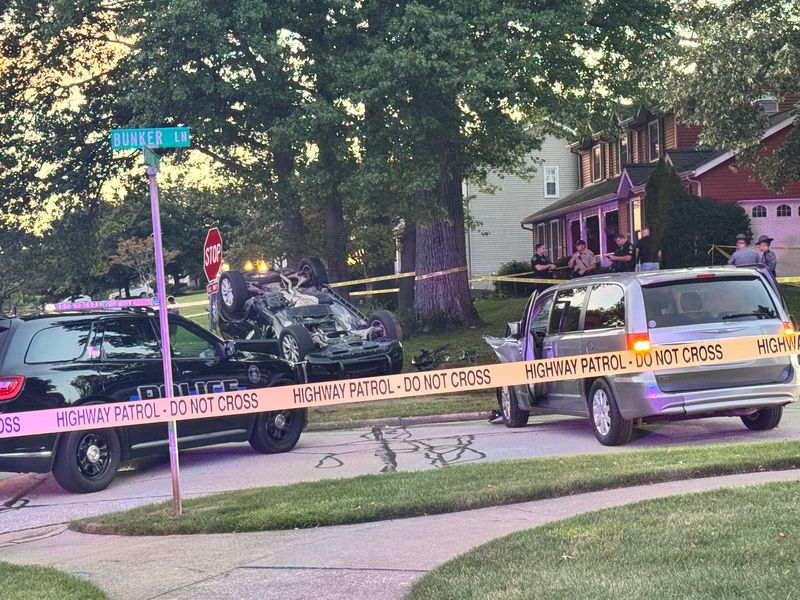
The chase finally ended when the driver hit a Summit County Metro Parks cruiser, flipping the cruiser onto its roof at Saybrook Boulevard and Bunker Lane in Stow.
Stow police arrested Edwards after a brief chase on foot.
How do Flock cameras work?
Flock cameras are celebrated by many in law enforcement, who say the information they provide helps them find people on the run like Edwards and enables them to look back and reconstruct the movements of vehicles connected to crimes.
The Flock system continuously compares the vehicle data its cameras capture against Amber Alerts and federal and state police watches.
When a vehicle associated with a crime, a missing person, or a stolen vehicle passes by a camera, the system immediately alerts local law enforcement officers.
Critics of Flock cameras raise privacy concerns
Not everyone is a fan, however. Some privacy advocates and others say the cameras raise significant privacy concerns.
Because Flock operates a vast, interconnected national network where different where law enforcement share information, critics argue Flock creates a massive dragnet system that can track the daily movements of people who have done nothing wrong.
Worries only grew after it was revealed that Flock developed another system called Condor that not only tracks vehicles, but humans.
Aside from the new privacy concerns that raises, security analysts have warned that the safeguards to protect this information from hackers are insufficient and that people could not only hack into the live camera feeds, but into the 30-day archive showing where someone drives, where they walk down a street with and whatever else the cameras may pick up on.
The ACLU has criticized Flock for treating these worries as a public relations issue instead of addressing privacy concerns.
This article originally appeared on Akron Beacon Journal: What are Flock cameras? System helped police nab Canton stabbing suspect
Reporting by Amanda Garrett, Akron Beacon Journal / Akron Beacon Journal
USA TODAY Network via Reuters Connect
By Amanda Garrett, Akron Beacon Journal | USA TODAY Network