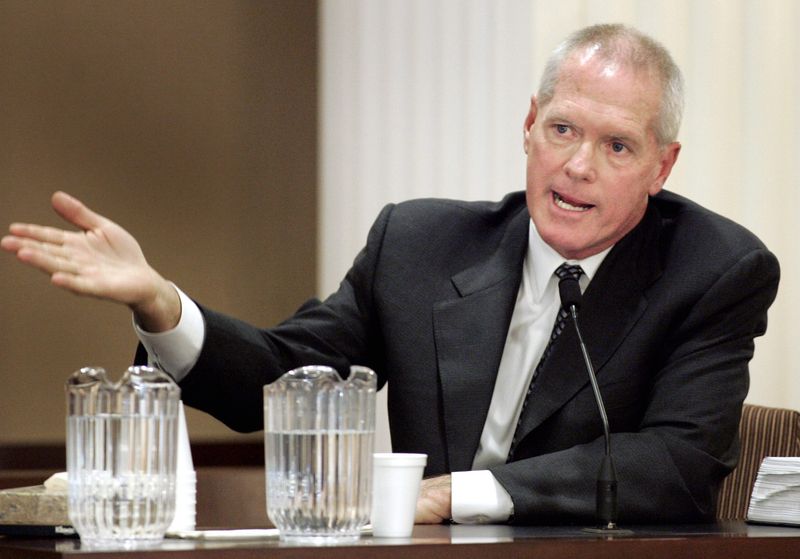
In a Franklin County courtroom in 2005, former Ohio State men’s basketball coach Jim O’Brien took the stand to defend his career.
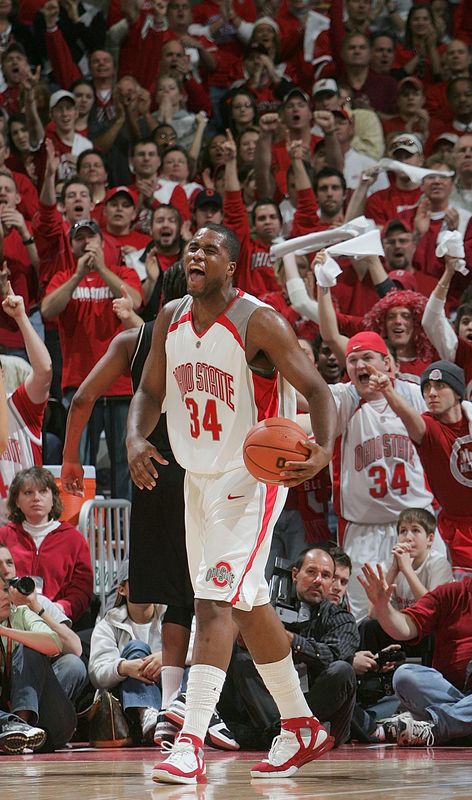
But back on another court was a Buckeyes team that, if you ask Terence Dials, had been “pretty much left for dead.”

The 2005 trial was a pivotal moment in the years-long saga that came to define an era of Ohio State basketball, ultimately paving the way for the Buckeyes to hire their all-time winningest coach in Thad Matta. The team had parted ways with O’Brien – described by players of his time as an “old-school,” “demanding but fair” Boston Southie – after Ohio State said he committed material contact breach by loaning $6,000 to the family of potential recruit Aleksandar Radojevic in 1998 and concealing it for five years.
It didn’t take long for O’Brien, who claimed he had made a humanitarian loan to cover burial expenses for Radojevic’s father, to sue the university over wrongful termination and ultimately win. But the case, which dominated the media spotlight for years, had an impact that rippled well beyond the walls of the courtroom.
The university had self-imposed a one-year postseason ban for the upcoming season. The team’s confidence was shot, following a losing season marked by boos from its own fans and the players being kicked out of the locker room after their coach told them they hadn’t earned the right to be there. And on top of all that, a new hire was about to step in.
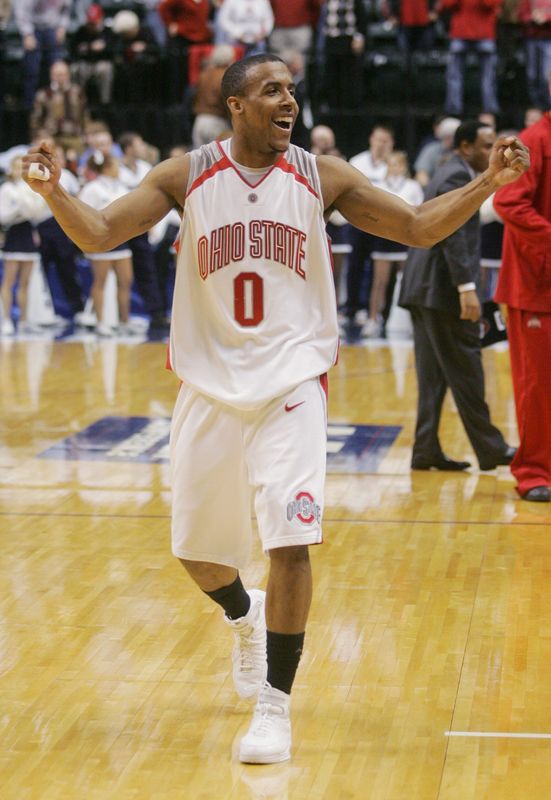
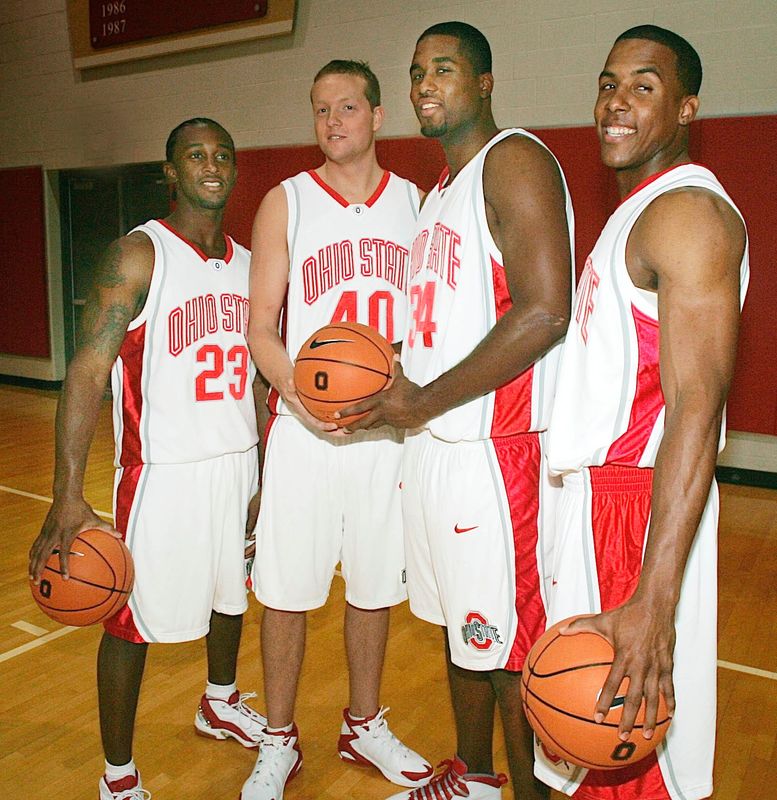
“We weren’t allowed to go to the NCAA Tournament, and it was because of a situation that everybody on my team had nothing to do with,” said Dials, then a junior forward/center. “We were caught in the middle of it regardless of whether we wanted to be or not, and we thought it was unfair that this happened to us, when we just wanted to play basketball.”
And yet, as those at the center of it all say now, 20 years later, that practically written-off 2004-05 season became one of the most transformative in the program’s history.
What happened to Jim O’Brien?
When a last-minute meeting was called at the home of the director of basketball operations in the summer of 2004, junior forward Matt Sylvester’s first reaction was fear over whether or not he’d gone to class.
“Typically whenever there’s a surprise meeting being called, players are scared because they start thinking about all the dumb stuff they had done recently,” he said.
As the Buckeyes quickly learned, the meeting had nothing to do with academics.
O’Brien, who had spent seven seasons with the Buckeyes, told his team he’d been fired. In what then-junior guard J.J. Sullinger characterized as his typical “buttoned-up” fashion, O’Brien simply said he wouldn’t be returning for another season. He wished them the best, and that was that. It was shocking, Dials recalled, but most players chalked it up to a losing season.
Ultimately, it turned out, the story was not that simple.
As the case unfolded and details trickled out through 2005, many of O’Brien’s former players began to question the university’s explanation for his firing – even those who weren’t especially fond of him.
An Ohio Court of Claims judge sided with O’Brien in an August 2006 ruling, saying that while the former coach acted improperly, what he did was not a material breach of contract. Ohio State was ordered to pay him nearly $2.5 million. Both parties appealed, with O’Brien claiming he was owed more money and the university maintaining he was owed none. The Franklin County Court of Appeals upheld the lower court’s decision in a September 2007 ruling.
The Dispatch could not reach O’Brien.
‘An easy scapegoat’
Sullinger’s relationship with O’Brien was different from most.
Others might have seen the yell-in-your-face-because-he-cared type, but Sullinger said his dynamic with O’Brien was marked by friction – not helped by their starkly different approaches to the game.
“O’Brien was one of the best at thinking the game,” Sullinger said. “He wanted guys to do exactly what he wanted them to do, and he wasn’t too much into improvising. My game unfortunately was a lot of improvising, and I was a 21-year-old kid very much stuck in his ways, and so was he I guess.”
Still, a complicated relationship didn’t entirely change how Sullinger viewed O’Brien’s exit.
“I think he’d lost the locker room,” Sullinger said. “We were in a bad spot; we were defeated; we did not feel good about ourselves as basketball players, as men. I think it was time for a change, and I think that was just an easy scapegoat.”
“A ton of schools have violations and they go on probation; they continue, they move on,” Dials agreed. “They don’t fire the coach if they’re a winning program.”
Enter Thad Matta
“I remember sitting in [Ohio State] president Holbrook’s mansion, in her solarium, and the beat writer from the Cincinnati paper was in the bushes, looking in,” Matta said, recalling his interview for the head coach job.
“I thought, ‘Oh my god, what have I gotten myself into?'”
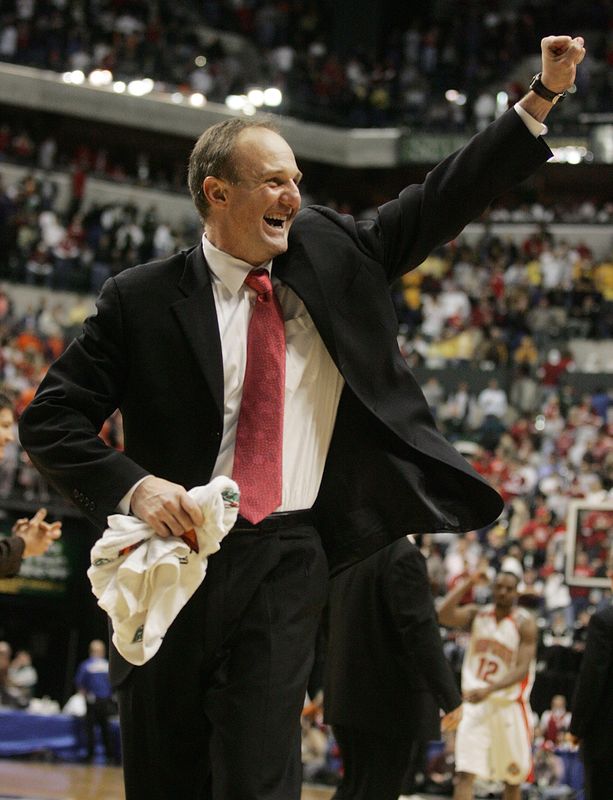
It wasn’t long after O’Brien’s departure that Ohio State hired Matta away from Xavier. And he was “a breath of fresh air” to a team eager to move on, Sylvester said.
“I was kind of oblivious to it all,” Matta said. “We were going full-speed ahead, and we turned it a heck of a lot quicker than we thought we were going to.”
Dials, Sylvester and Sullinger said they tried to tune out any noise surrounding the lawsuit, something their new coach made easy.
“Coach Matta had an unbelievable talent at making you believe that nothing else mattered behind you,” Sullinger said. “Almost immediately, he made us feel like we not only belonged, but he wanted us there. That shifted the culture immediately.”
And for a team with no postseason hopes, Dials said Matta was still able to motivate significant wins out of the Buckeyes, including an upset of then-No. 1 Illinois.
“He told us, ‘Hey, we’re not going to be able to go to (the NCAA) Tournament this season, so this season is going to be a season where we ruin other people’s seasons,'” Dials said. “He gave us something to play for.”
After the fallout
When Dials graduated from Ohio State in 2006, he got an unexpected phone call from the man he says “changed the trajectory of [his] life.”
“He said, ‘You did it. I’m really proud of you. This is big for you and your family,'” Dials said of the call from O’Brien. “I remember those words.”
Dials wasn’t alone. He said several other players received phone calls or hand-written notes then, and some have reconnected in the years since. Sylvester, for instance, said O’Brien wrote to him after his daughter died in 2016.
“If anyone has for a second doubted Jim O’Brien and his morals and the type of person he is for what happened back then, they’re crazy,” Sylvester said. “He was one of the best guys I’ve ever known.”
Sullinger says he has reached out to O’Brien a few times, mainly to apologize for the “selfish” attitude he had in college, but to no reply. But there are no hard feelings, he added.
“I hope he’s doing great,” Sullinger said, “but I heard he has an earring in his ear now, so if that’s the case, he definitely owes me an apology, because he hated my earrings.” He chuckled.
Though the ongoing legal saga between O’Brien and Ohio State may have made the bigger headlines, the players of the era tend to agree that’s not what they remember best about the 2005 season.
Matta went on to guide Ohio State to nine NCAA Tournament appearances and two Final Four runs, turning a group of struggling Buckeyes into a national championship game team just two seasons later.
“It was a real time of change,” Sylvester said. “You just felt the trajectory of the program was going up. I think that we helped really lay some groundwork there for what coach Matta built, which was, for a while there, a dynasty.”
Reporter Emma Wozniak can be reached at ewozniak@dispatch.com or @emma_wozniak_ on X, formerly known as Twitter.
This article originally appeared on The Columbus Dispatch: ‘We just wanted to play basketball’: 2005 Buckeyes on OSU-O’Brien lawsuit
Reporting by Emma Wozniak, Columbus Dispatch / The Columbus Dispatch
USA TODAY Network via Reuters Connect


By Emma Wozniak, Columbus Dispatch | USA TODAY Network