LOUISVILLE ‒ As Sierra-November-Charlie-007 stepped up to the course, the four-person team had one goal — to do a little dance.
Not busting TikTok moves or a popular dance but rather a square dance with an unusual partner.

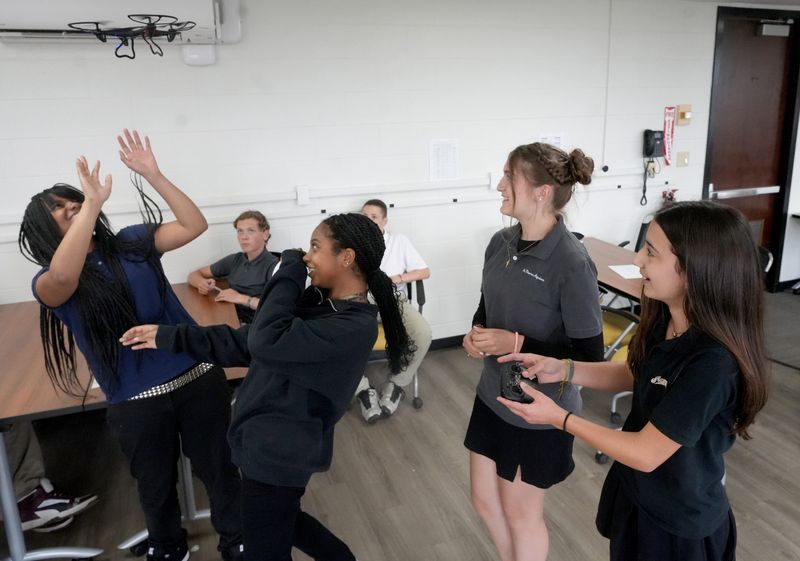
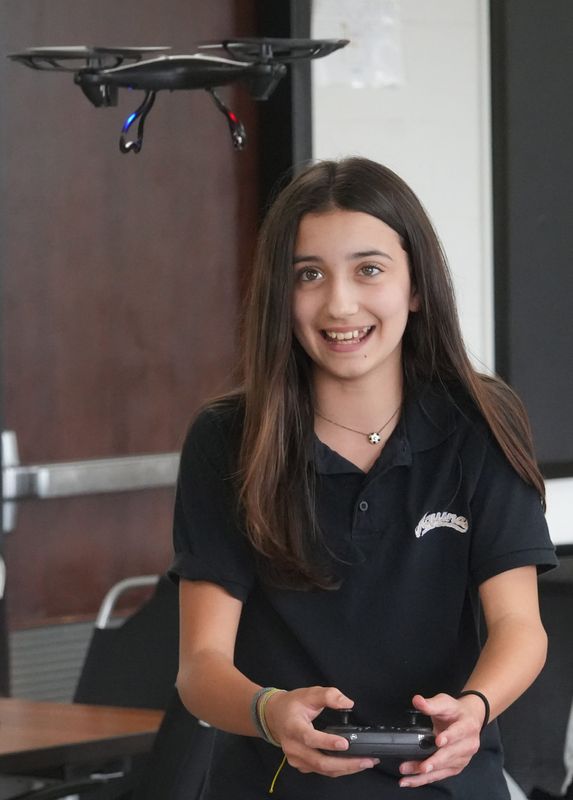
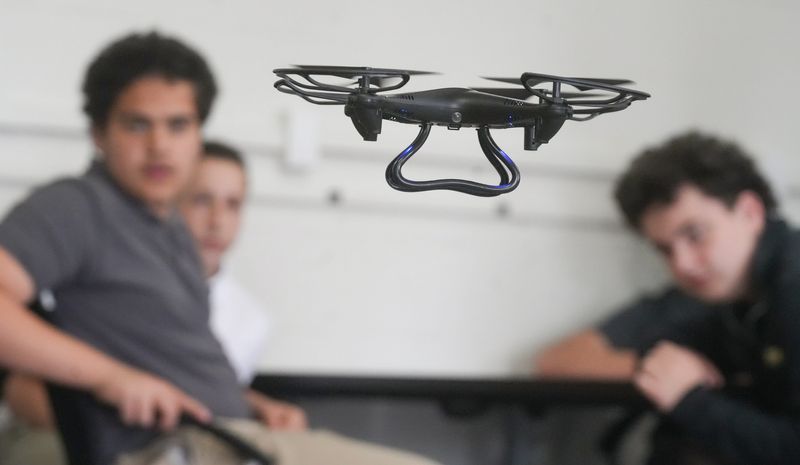
Teams of eighth graders at St. Thomas Aquinas grabbed their partner — a drone.
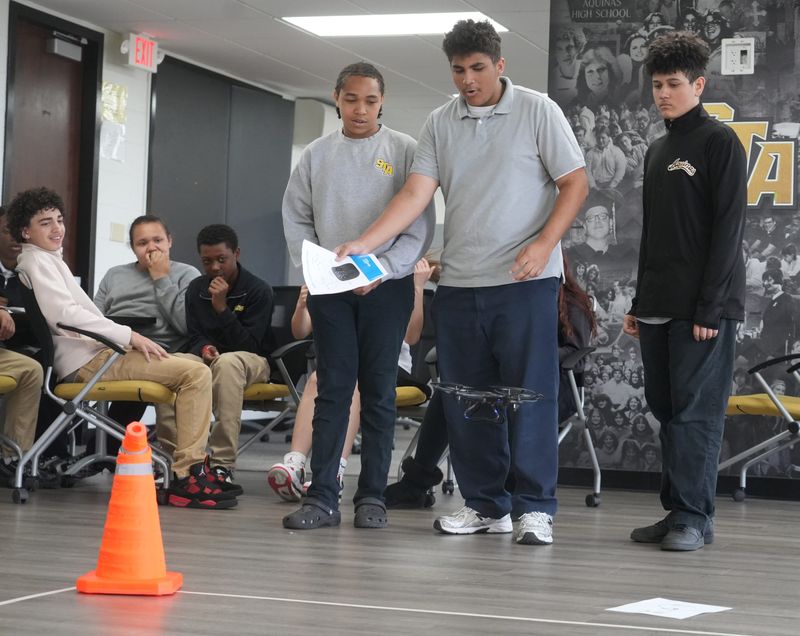
The goal was to see how quickly they could make the drone “dance,” traveling from a southeast pole to the northeast pole, then traveling west to the northwest pole and south back to its starting point.
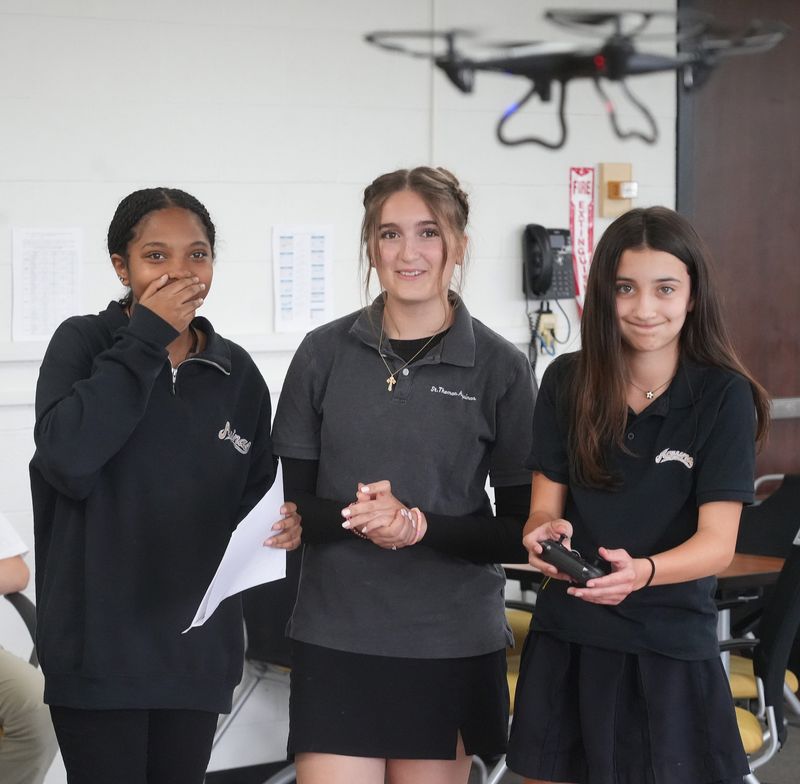
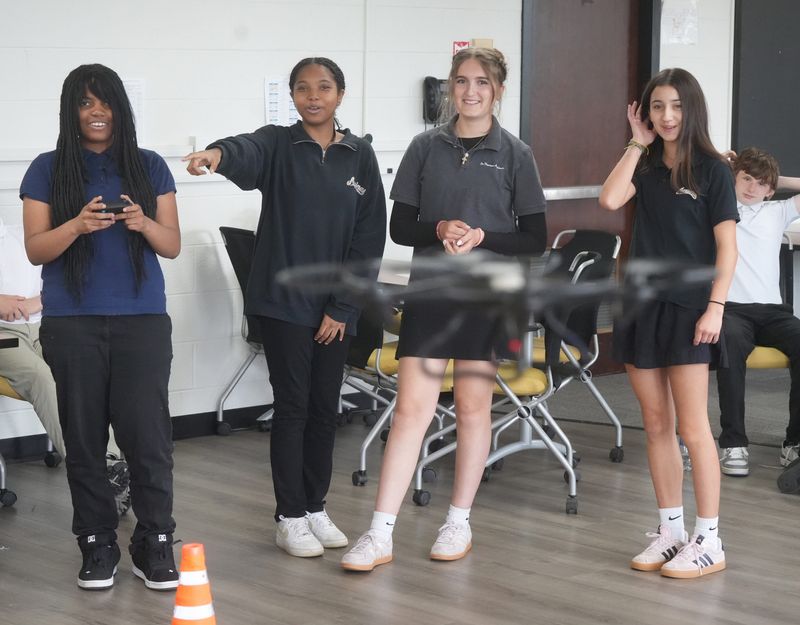
One student piloted the drone while the others on the team — through oral cues — helped guide the pilot to move the drone around the course to complete the mission-based challenge.
This school year, St. Thomas Aquinas began using the Woz ED STEM curriculum — a program designed by Apple co-founder Steve Wozniak to give students necessary skills for a technology-driven future by using hands-on learning.
The program has been integrated into the math and science curriculum for students in sixth through 12th grade.
After getting a chance to learn more about the Woz ED program, Stark County Catholic Schools President Joe French said it was the type of tool that would help increase math and science scores.
“One of our goals is to increase math and science scores,” he said. “There is a lot of data showing how this curriculum will enhance those areas, so we went ahead and said we were interested.”
French said St. Thomas is the only school in Ohio that utilizes the STEM program, which can be cost prohibitive.
Through a partnership with Cobalt Ed, which assists private schools grow enrollment with custom STEM curriculum, strategic marketing and enrollment growth services, the school was able to purchase the program. Stark Community Foundation also contributed grant funding.
Having fun and learning
Eighth grade science teacher Asia Everett is having a blast with the new curriculum. Her students are learning valuable skills but also having fun.
“They are learning without even realizing it,” she said.
Before the drones took flight, students learned how drones can be used and what types of careers use drones.
They talked about how drones are being used by first responders and the military. Drones can deliver packages, medication and other supplies.
“We focused on the innovation and getting ready for careers,” Everett said. “When they step out of high school, how can you use this information? In every area of our life right now, a drone can be used.”
They learned the phonetic alphabet and how it translated into flying the drone.
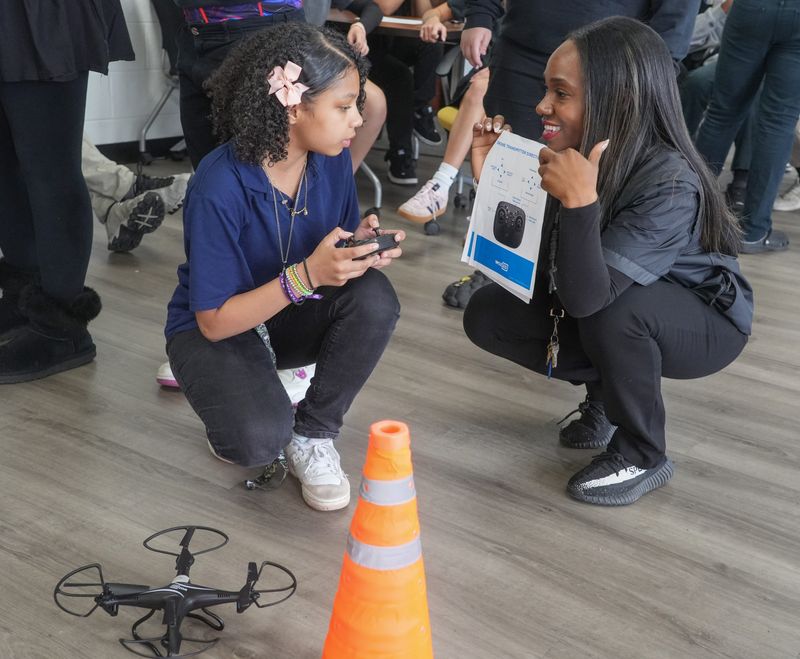
Finally, before they were ready to take flight, students had to assemble the drones — labeling parts and charging batteries. They had to learn how to control the drone using the remote control.
“We didn’t just go out and fly it. They had to work and earn that,” Everett said.
When they were ready to fly, students were tasked with a number of mission-based challenges to showcase their skills.
One mission tested the speed around a set course, while others tested their ability to control the drone while it hovered or located a target.
The students had to work as team to complete their missions.
Fourteen-year-old Colleen Robertson is having fun flying the drones, but she didn’t realize how complex the drones were when it came to controlling and flying them.
There have been some interesting flights where the drone ended up in a tree.
Elliott Walker would prefer to leave the flying to someone else. The 14-year-old would rather serve as the visual observer helping to guide the pilot on the mission.
“They look pretty hard to fly especially when we are outside and there is wind,” he added.
The drones are able to make abstract concepts like physics or aerodynamics easier to understand, French added.
Everett said they are learning the same concepts outlined in their textbooks, but the hands-on-learning experience is helping them to understand the concepts in real time.
“Ultimately this is fun, but the big gain is the engagement and learning from each other,” French added.
A hands-on experience is proven to be the most effective way to learn in school, he added.
“They loved doing it,” French said. “There is an excitement and this curriculum is something that we can separate ourselves with and that makes our school different.”
Besides the drones, some classes are using virtual reality to learn about anatomy, while others are using animation to teach different concepts.
Woz ED coordinator Mike Vaughn said science classes are using 3D printers to print a DNA structure, while another student created a piano and another a video game.
French said the decision to bring on the STEM program was intentional. They hoped it would fit into the existing curriculum and enhance what they were already doing.
“The proof is in the pudding. Our test scores are up. On the middle school side, our writing, math and science scores are all up,” French said. “I can’t say it is all the Woz ED, but we want to enhance a student’s learning at St. Thomas and this is allowing them to have a good time while learning. We are giving them experiences that are resonating with them.”
Reach Amy at 330-775-1135 or amy.knapp@indeonline.com.
This article originally appeared on The Independent: Up, up and away. St. Thomas Aquinas adds drone program to teach STEM skills
Reporting by Amy L. Knapp, Massillon Independent / The Independent
USA TODAY Network via Reuters Connect