It’s funny how the ancient concept of the cheese and charcuterie board took on such “it girl” energy during the past half decade. They were de rigueur during the pandemic as a way to splurge on something elegant to eat at home while watching such COVID-era classics as “Tiger King” or the Michael Jordan documentary. And these chevre and soppressata superstars continue to shine on long afterward.
In Greater Cincinnati there are dozens of specialty shops and catering companies offering elaborate cheese and charcuterie boards. Heck, you can even find them at Kroger and Aldi. But it was Instagrammers and TikTokers who started the trend, assembling them with everything from salami roses, to butter, to fast food.

What might have been lost in the cheese board renaissance, ironically, is the cheese and charcuterie itself. Many of the most popular board purveyors use commercial cheese and meat from the grocery stores such as Aldi and Trader Joe’s. So says Stephanie Webster, owner of The Rhined cheese shop at Findlay Market.
“All of a sudden, it really wasn’t about the cheese or the products on the board or how local they were or the producers who made them,” Webster said. “It was just about the aesthetics of it and how cheaply it could be done. Cheese should be respected, gosh dang it!”
Before we go any further, let me clarify something. Charcuterie boards and cheese boards are traditionally two entirely different things. A charcuterie board usually features cured meats and pates, while a cheese board, well, you know, has cheese. These days, cheese boards usually include charcuterie boards and vice versa, so I will refer to them interchangeably from this point on.
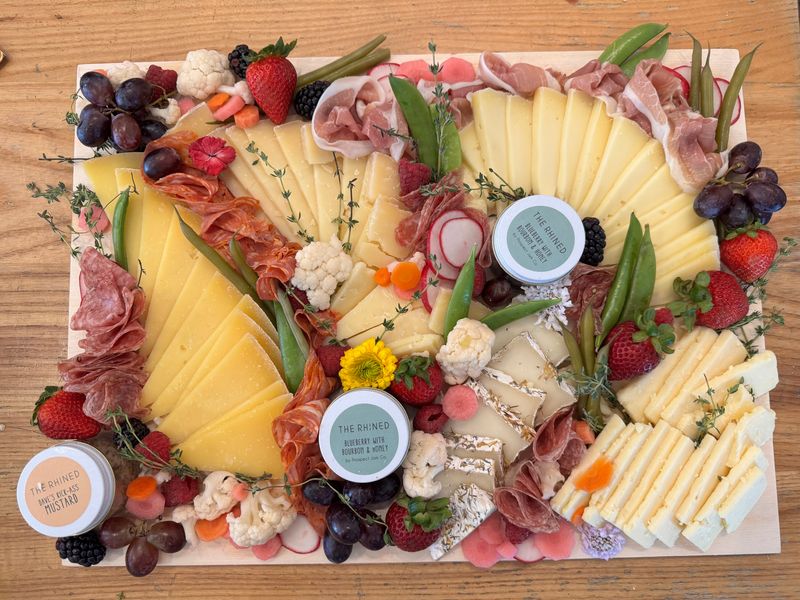
At The Rhined, Webster focuses on cheeses from tiny Midwestern producers who use equally tiny dairy farms to make their products. Her charcuterie also comes from Midwestern producers such as Smoking Goose, in Indiana, and Underground Meats, in Wisconsin. The Rhined’s jams are made locally, and the spicy mustard Webster serves is made by her husband. Even the herbs and fruits she uses on her boards are sourced from Findlay Market, located just across the street. Try finding that at Aldi.
Webster says that when she opened The Rhined in 2017, boards were not a part of her business plan. The Rhined was originally meant to be a cheese shop and tasting room (it also offers excellent sandwiches and snacks). It fell into the cheese board craze mostly by necessity. “When COVID hit, things got crazy,” Webster said. It quickly became a large percentage of her sales.
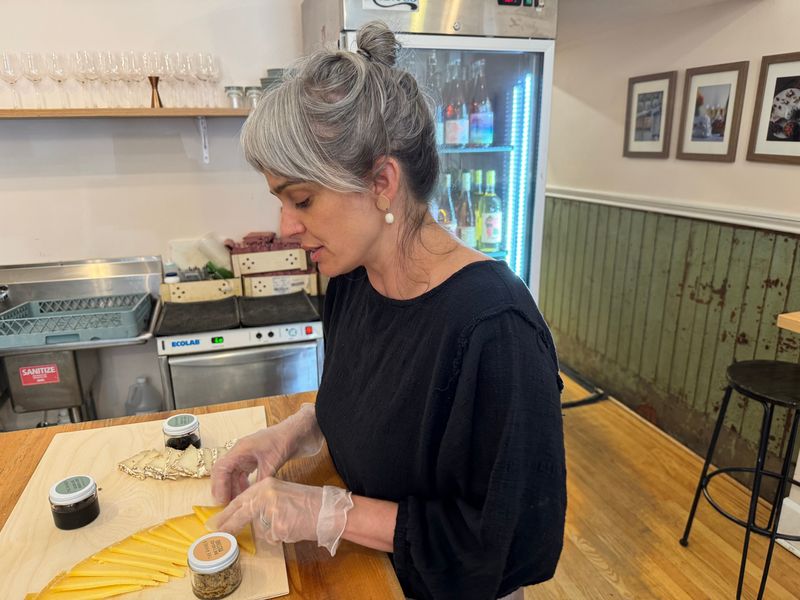
The difference between The Rhined and the kind of charcuterie board businesses you might find online is that Webster and her team have an intimate knowledge of the products they are selling. They use special packaging, state-of-the-art equipment and their observational skills to make sure the cheese they’re selling is top notch. They can also tell you the story of every cheese producer and every dairy farm that helped produce the cheeses they carry. And they’ll help you find the perfect glass or bottle of wine to drink with them.
To get a sense of what a specialist can add to the cheese-eating experience, I asked Webster if I could stop by The Rhined so she could share some of her favorite products with me.
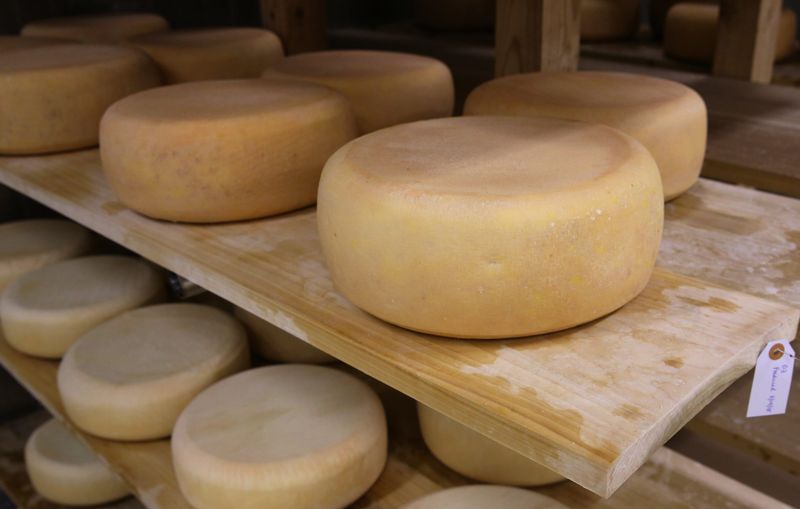
She told me that a good cheese board starts with how the cheese is shipped and stored. The Rhined treats its cheese like a good zoo treats its animals, letting it out several times a day to “breathe” by unwrapping it from its cellophane packaging. It’s stored it in a state-of-the-art case that maintains a perfect temperature.
Listening to Webster tell the story of each cheese reminded me of how much work goes into the process of cheesemaking. And why purchasing cheese is more about the story behind it than it is about bringing home something pretty for a dinner party.
Among the cheeses we tasted that day was Prairie Breeze, a sweet, crunchy cheddar, from Milton Creamery in Iowa. It’s The Rhined’s best selling cheese, Webster says, and I can see why. Crystals formed by the amino acid tyrosine during the aging process provide crunchy pops. And its flavors of almonds and citrus linger on the tongue. Milton is owned by the Musser family, who pay Iowa dairy farmers a premium price for their milk from small Amish and Mennonite family farms in the area.
Another of my favorites was the Pleasant Ridge Reserve, a Wisconsin Alpine-style cheese from Uplands Cheese, with toasted nuts, fresh-cut grass, citrus and pepper. Pleasant Ridge is the most-awarded cheese in American history, which made me joke that it was the Meryl Streep of cheeses.
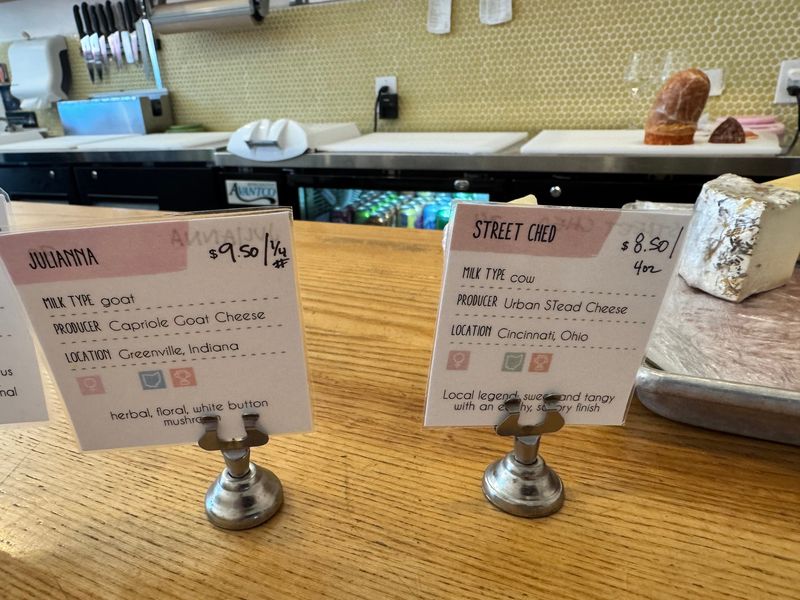
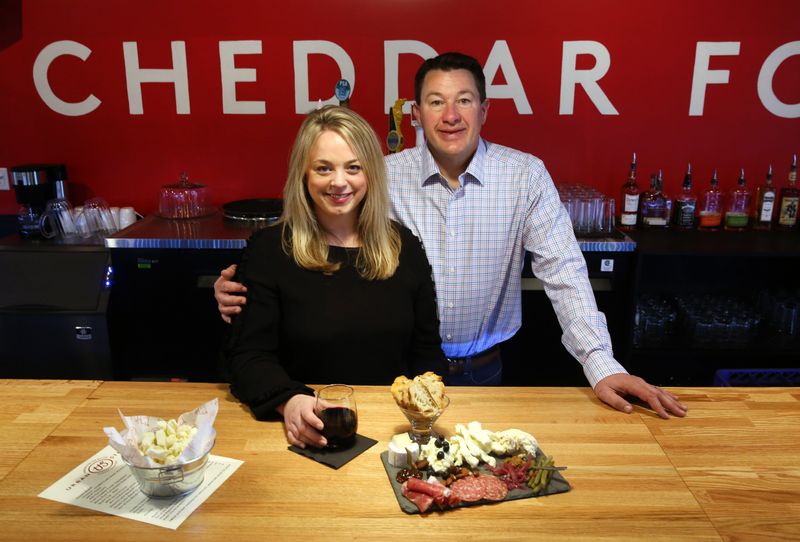
You will find a similar ethos across town at Urban Stead, an award-winning cheesemaker and wine shop in East Walnut Hills. Along with a focus on cheeses made regionally with local dairy milk, Urban Stead co-owner Andrea Siefring-Robbins shares many of Webster’s concerns about current charcuterie board trends.
“The value of going to The Rhined or coming to us is that we will talk about the dairy farm and the cheese making process,” Siefring-Robbins, who owns Urban Stead with her husband, Scott Robbins, said. “I feel like the cheese board craze went from being about the cheese and the enjoyment of the product and went toward making salami roses. Don’t even get me started on salami roses.”
Still, both cheese pros admit the board trend isn’t all bad. “A rising tide lifts all ships,” Siefring-Robbing said.
To further the point, Webster recently sent me an article in Culture magazine by Morgan Schroeder titled, “I Survived the Charcuterie Board Craze.” Schroeder entered the cheese board movement during the pandemic, taking a class from an Instagram influencer who seemed “joyful, fulfilled, suspiciously happy” while assembling her boards to a pop music soundtrack. It didn’t take long for her to realize that, while the work was fun, she wanted something deeper.
“Joining the charcuterie board cult was one of the best decisions I’ve ever made,” Schroeder wrote. “It didn’t just inspire me to start a business; it gave me permission – permission to participate in my community, permission to get creative with cheese, permission to ask questions, deepen my learning, and eventually join a broader world of cheese professionals who care about storytelling, tradition, and local foodways.”
So while I don’t mind grazing over a bargain cheese and cold-cut board at a gallery opening or a funeral, I’d rather splurge for something that tells the stories of those cheeses; the people who made them; the region from which they hail and their unique characteristics.
While tasting the cheeses Webster shared with me at The Rhined that day, I realized how often I fail to savor what I’m eating (even as a food writer). And at a time when cheese boards can be bought for bargain prices, I realized that, like good wine, cheese is worthy of our time and attention. Take that, TikTok.
This article originally appeared on Cincinnati Enquirer: The Rhined, Urban Stead prove charcuterie is more than salami roses
Reporting by Keith Pandolfi, Cincinnati Enquirer / Cincinnati Enquirer
USA TODAY Network via Reuters Connect
By Keith Pandolfi, Cincinnati Enquirer | USA TODAY Network