For my junior and senior years of high school, I transferred from McKinley High to Timken Vocational High School with dreams of becoming a commercial artist.
No one apparently had the heart to tell me the truth about my level of talent.

However, many of the skills I learned in Raymond Coia’s classroom, I still use to this day.
Today, Canton City Schools and other public districts are concerned because student participation in vocational education is so low that they may be at the risk in the future of having to sell a building like Timken to a charter school for failure to reach a 60% occupancy threshold, according to a measure found in the state’s proposed education budget.
Public districts must formulate more aggressive strategies to engage and recruit more students in pursuing vocational education at an earlier age.
By high school, it’s often too late.
But it’s complicated. For one thing, teachers everywhere are tearing out their hair just to get some kids to pay attention. It’s nearly impossible to compete with social media, which delivers a dopamine hit to the brain with every click.
Vocational education also is hampered by a shrinking number of teachers who are certified to teach the curricula. Those who are qualified often seek jobs in the private sector for higher pay and, frankly, less stress.
According to the Brookings Institution: “National data shows that administrators report having difficulty filling (teaching) positions in career and technical education, 57% of the time, compared to only 39% for openings in academic subjects.”
Another hurdle is that in recent decades, vocational education has not been viewed or valued on par with college but this is a mistake. In Ohio, the need for skilled “tool belt” workers is at an all-time high.
Meanwhile, manufacturers and apprenticeship programs are begging for trainees.
Some countries have it figured out. Throughout Europe, and in Germany in particular, students are exposed to vocational education as early as age 10. They have access to short internships in ninth grade, followed by yearlong, one-day-a-week job placements in their sophomore year.
However, European school systems have become more flexible, allowing students to choose a hybrid, combining college prep and vocational training.
There is some good news. The National Student Clearinghouse Research Center reports that: “The number of students enrolled in vocational-focused community colleges increased 16% from 2022 to 2023.”
The growth is being led by Generation Z, who have grown up hearing horror stories about student-loan indebtedness, which appears rigged to keep people in hock.
That doesn’t mean college has lost its value. You often hear people castigating colleges as incubators for radicalism, and as institutions that aren’t worth the investment.
When rich people stop sending their kids to college, then you’ll know it’s a scam.
That said, if the country was really serious about wanting a more educated populace, student loans would not be attached to exorbitant and punitive interest rates in which a person can pay on a loan for 25 years and barely put a dent on the principle.
With a college graduate rate more than double that of Stark County’s 25%, Delaware County near Columbus is a perfect argument for why college still matters. According to the U.S. Census Bureau, 58% of its residents are college grads. The region can’t build public schools fast enough, as people flock there for jobs at Google and Amazon and such Fortune 500 companies as Nationwide, Cardinal Health, American Electric Power, Huntington Bancshares, and Bath & Body Works.
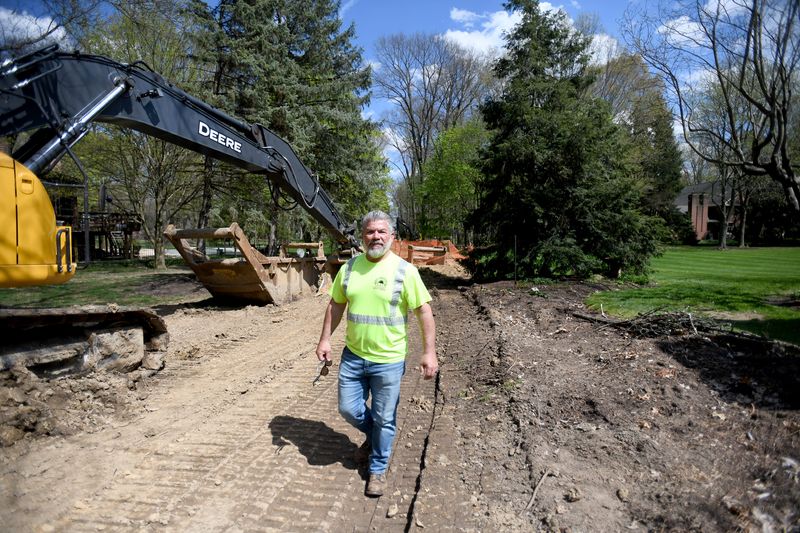
That’s where carpenters, roofers, plumbers, welders, HVAC installers and heavy-equipment operators come in.
Someone has to build those new schools, new neighborhoods, strip malls and corporate campuses.
In the years to come, artificial intelligence will undoubtedly replace some technology jobs, which currently pay well because they require a college degree.
But there’s no such thing as a robot that can shingle a roof or install a toilet.
At least, not yet.
Charita M. Goshay is a Canton Repository staff writer and member of the editorial board. Reach her at 330-580-8313 or charita.goshay@cantonrep.com. On Twitter: @cgoshayREP
This article originally appeared on The Repository: Public schools must rev up student interest in career and technical education | Opinion
Reporting by Charita M. Goshay, Canton Repository / The Repository
USA TODAY Network via Reuters Connect