This story has been updated with new information.
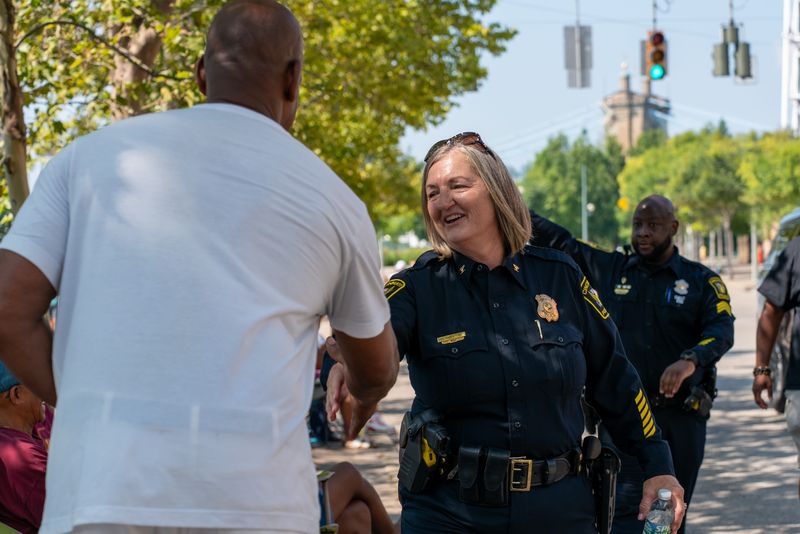
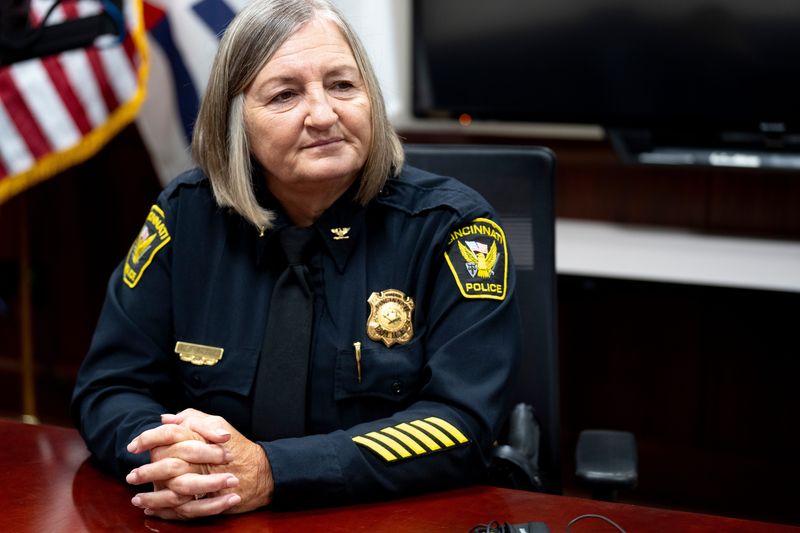
A summer of high-profile violent crimes has led officials at City Hall to question the leadership of Cincinnati Police Chief Teresa Theetge.

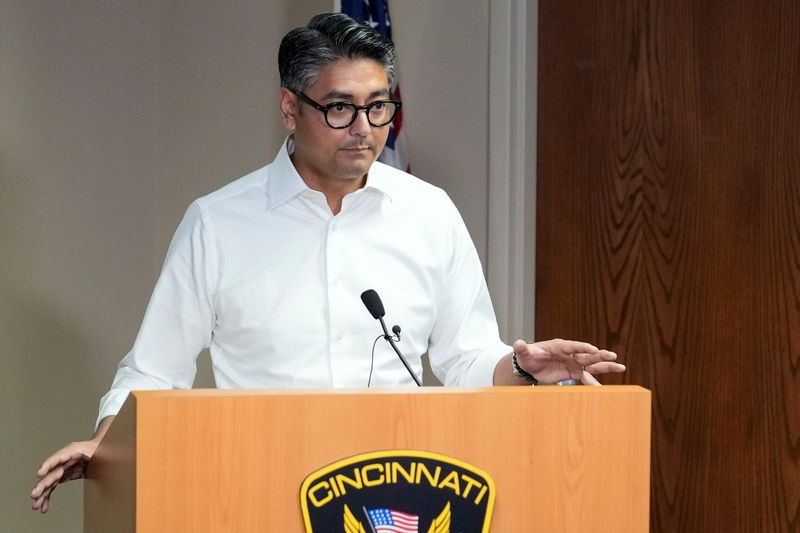
After a double shooting at Fountain Square on Oct. 13, Mayor Aftab Pureval said he wouldn’t rule out the possibility of seeking a new police chief.
While the city overall is experiencing a historically low number of shootings this year, a spate of violent crimes in the city’s urban core, notably the killing of a local gym owner and a viral brawl Downtown, has become a hot-button issue during the Cincinnati mayor’s race. It has also caught the attention of conservative pundits.
There have been 18 people shot in Downtown this year, compared to just 10 during the same period last year, according to police data. None of this year’s shootings were fatal, while three of last year’s shootings were fatal. In Over-the-Rhine, overall crime remains elevated.
“Replacing the chief is not the answer,” Cincinnati police union President Ken Kober said in a text message. “There are three options: Repeal Issue 5 so the police chief isn’t under the thumb of an elected official, convince the mayor to allow the chief to do her job independently or residents vote for a new mayor. Otherwise, we will remain at status quo with violence in this city.”
Here’s a timeline of how crime has unfolded this year, the city’s initiatives to reduce crime, as well as what city officials and others have said about violence in Cincinnati.
June 4
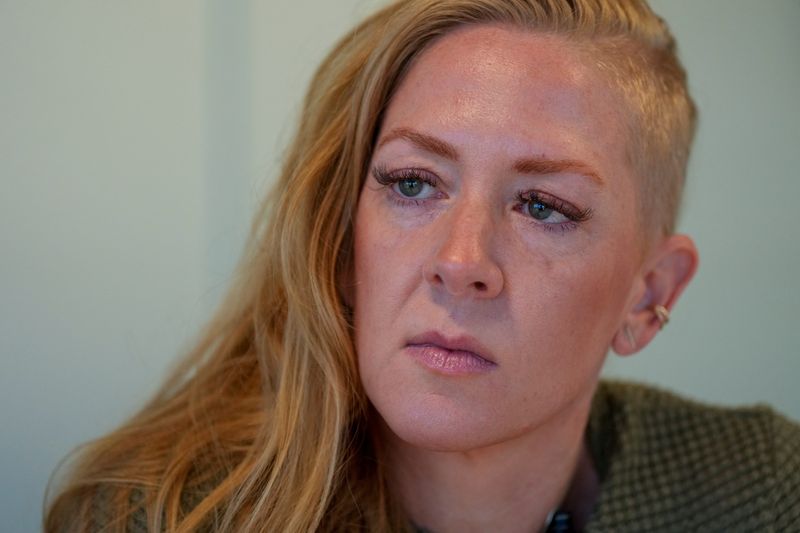
Over-the-Rhine gym owner Patrick Heringer was stabbed to death during a break-in at his home by a felon who officials said cut off the ankle monitor meant to track him since his January release from prison.
Heringer’s death prompted his wife, Sarah Heringer, to publicly criticize Cincinnati officials for their response to crime. She called on the city to increase police patrols, not just Downtown or during events. She also called for more proactive policing in all neighborhoods.
“Public safety is and will always be our first, second and third priority,” Pureval said at the time. “We will never stop working to ensure every neighborhood, and every family, can feel safe and at peace.”
Theetge placed the blame for the stabbing on the state for not telling them the accused killer, on probation, had broken off his ankle monitor months earlier.
June 24
City leaders announced that drones, a roving street crimes task force and a new police recruiting class would be used to combat a rise in crime in the urban core, following Patrick Heringer’s killing and a spate of shootings.
Theetge previously said the task force would be proactive and focused on preventing crimes before they occur, rather than solely reactive. Officers will be covert and respond in numbers to address criminal activity.
“There’s definitely demand for it,” Theetge said. “People in our city shouldn’t have to worry about coming downtown to have dinner and come back to their car to find out it got broken into.”
The chief also said the “drones as first responders” program, one of the first in the region, is meant to eventually have drones respond to calls for service across the city while an officer is on the way to a scene or in place of an officer.
July 26
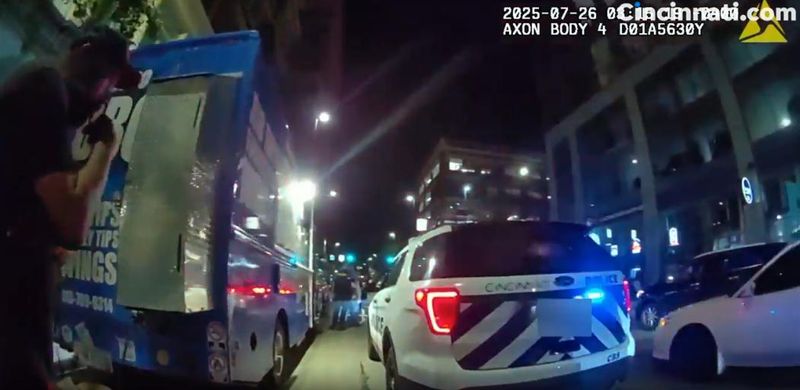
A large brawl broke out early in the morning near the corner of Fourth and Elm streets. Multiple videos of the incident went viral via social media, putting Cincinnati in the spotlight in national conversations about policing, crime and race.
Body camera footage shows witnesses told police they saw some fighting and heard a racial slur. A man who said he was attacked explained the situation had already started when he left a nearby bar. Another said a “mob” was “throwing in” on White people.
Seven people have been charged with felonies in connection with the fights. Another man who was listed in court documents as a victim was slapped with a misdemeanor disorderly conduct charge.
“Too many Cincinnatians don’t feel safe,” Pureval said. “We have to make the city safer right now.”
In response to the brawl and other concerning crime trends, the city began enforcing a stricter curfew for unaccompanied minors.
Aug. 4
GOP gubernatorial candidate Vivek Ramaswamy organized a town hall in Cincinnati, during which speakers remarked on the effects of violence in the city.
“We’re here because less than two weeks ago … there was a group of people going out in their city who were violently attacked by a violent mob in the city of Cincinnati,” Ramaswamy said.
Aug. 25
Cincinnati’s police union unanimously voted no confidence in Mayor Aftab Pureval, citing concerns among members over the response to the viral brawl.
Those votes came from a small fraction of current officers, and the vote carried no official repercussions. However, the move was unprecedented. The union also endorsed Cory Bowman, Pureval’s Republican challenger and Vice President JD Vance’s step-brother.
Sept. 9
More than a month after the downtown Cincinnati brawl and after city officials agreed to take the state’s help to beef up policing, city and state officials made the agreement official.
The city-state memorandum of understanding is limited in scope and time. It says:
Sept. 10
Cincinnati City Council voted 6-3 to pass a funding package to spend an additional $5.4 million on police and public safety. The funding allocated more money toward police overtime, drones, street cameras and lighting, among other crime-fighting measures.
Oct. 13
A disagreement between two parties near the CityBird restaurant at Fountain Square around 7:30 p.m. led to a shooting that injured a 16-year-old and a 19-year-old, police said. Nobody at the restaurant was harmed.
The incident, one of three shootings that night, reignited debate over curfews, gun laws and the role of parents and state lawmakers in curbing violence.
Oct. 14
Pureval called the ongoing violence in the urban core a crisis and he said “everything is on the table” to curb it. He said those efforts include deploying SWAT units Downtown, pushing the youth curfew even earlier and rerouting buses from Government Square.
“If you are in the urban core engaged in illegal behavior, we are going to arrest you,” Pureval said. “Enough is enough.”
Pureval didn’t directly answer a question during a press conference as to whether he still had confidence in the police chief’s leadership. As recently as August, the mayor didn’t hesitate to say he had confidence in Theetge’s leadership.
Oct. 15
Theetge was called back to the city as the mayor signaled possible leadership changes amid rising concerns over violent crime.
Theetge, who was in Denver for a national police chiefs conference, was asked “to return to Cincinnati immediately to address departmental matters,” City Manager Sheryl Long said in a statement Wednesday evening. A spokeswoman confirmed Long requested Theetge’s return.
At about 1:15 p.m. to 1:20 p.m. Oct. 15, minutes before the city council meeting, City Manager Sheryl Long goes individually into the council members’ offices to meet with them briefly. The council meeting was set to begin at 1:30 p.m.
After an hour of public comment, the council meeting lasted for a few minutes. At about 2:30 p.m., the mayor told the media they are looking at all options for the chief.
This summer, Theetge announced that the Hamilton County Association of Police Chiefs was planning a series of public meetings to bring all aspects of the criminal justice system together to discuss solutions for crime.
The chiefs’ association held one of these community meetings with area clergy on the night of Oct. 14. Theetge was not in attendance. Assistant Chief Bridget Bardua went in her place.
Oct. 16
A source with knowledge of the situation spoke to The Enquirer on the condition of anonymity and confirmed negotiations were underway regarding the chief’s resignation.
Oct. 17
Attorney Steve Imm of the Finney Law Firm, confirmed to The Enquirer that he is representing Theetge. He said he could not comment further at this time.
Imm is among the attorneys representing former Cincinnati Fire Chief Michael Washington in his wrongful termination lawsuit against the city and City Manager Sheryl Long.
Enquirer staff writers Patricia Gallagher Newberry, Kevin Grasha and David Ferrara contributed.
This article originally appeared on Cincinnati Enquirer: Timeline of Cincinnati crime, issues leading to questions about police chief’s leadership
Reporting by Quinlan Bentley, Scott Wartman and Cameron Knight, Cincinnati Enquirer / Cincinnati Enquirer
USA TODAY Network via Reuters Connect