David J. Jackson is a professor of political science at Bowling Green State University.
Melissa K. Miller is a professor of political science at Bowling Green State University.

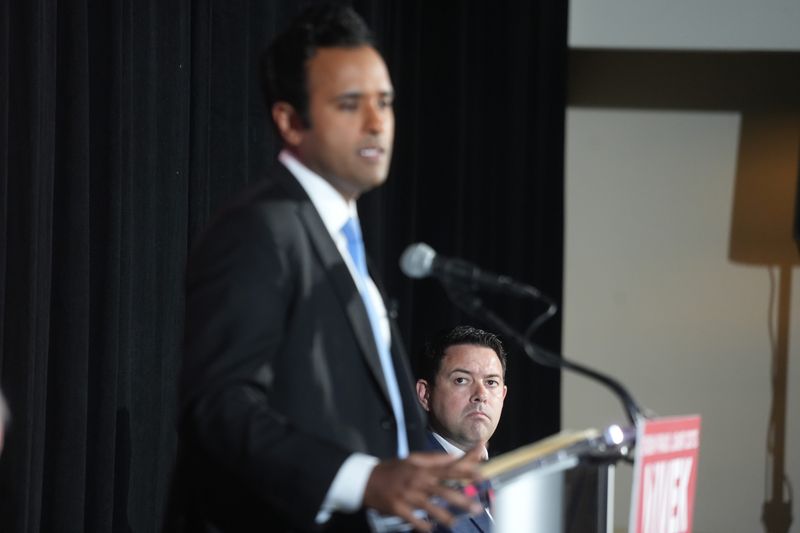
Vivek Ramaswamy, Republican nominee for Ohio governor, is all in for data centers. He’s embraced a “drill baby, drill” strategy to power them in the Buckeye State.
This distinguishes him from other nominees for top offices in November.
Dr. Amy Acton, Ramaswamy’s Democratic opponent, declared in May that “data centers need to work for Ohioans not the other way around.” Not exactly a ringing endorsement for the A.I. juggernauts – but also not a denouncement.
Meanwhile, in the U.S. Senate race, Democrat Sherrod Brown, who is seeking to return to the chamber, has said it is not his place to say whether large data centers should be encouraged.
On the Republican side, incumbent U.S. Sen. Jon Husted has not definitively stated if he believes the data center boom should continue, but he supported their construction while serving as Lieutenant Governor.
Ohioans are clear on data centers
On the other hand, Ohio voters have made their beliefs clear, and the major-party nominees may wish to take notice.
New data from our latest BGSU/YouGov Poll indicates that one of them is out of step with voter opinion on data centers, while the others are far more equivocal than those who will decide the winners in November.
Bowling Green State University’s seventh web-based survey, administered by our Democracy and Public Policy Network, gathered insights from 1,000 Ohio registered voters from April 7-14. The sample is weighted to reflect a +11 recalled vote margin for President Trump in 2024, and the poll has a margin of error of +/- 3.9 percentage points.
On indicator after indicator, Ohio voters are clear. Vast majorities are highly skeptical of data centers and the possible repercussions they pose for Ohio communities.
Not only that, but fully 84% have heard something about the massive projects. And the more they’ve heard, the more concerned they are.
What unites us
Among those who’ve heard a lot about data centers: 80% believe they are “mostly bad” for home energy costs; 76% believe they are “mostly bad” for the environment; and 73% believe they are “mostly bad” for people’s quality of life nearby.
With numbers like these, it’s clear that Ohioans are not simply sorting into the usual partisan camps over the issue.
In fact, vast majorities of Democrats (77%), Independents (68%) and Republicans (67%) favor a moratorium on data center construction until more information can be gathered about their effects.
Support for such a temporary ban transcends demographic, socioeconomic and other key divides.
Majorities of men, women, young, old, Black, White and Hispanic voters all support a moratorium.
Majorities of those who are college-educated as well as those who are not favor a ban, as do members of both union and non-union households.
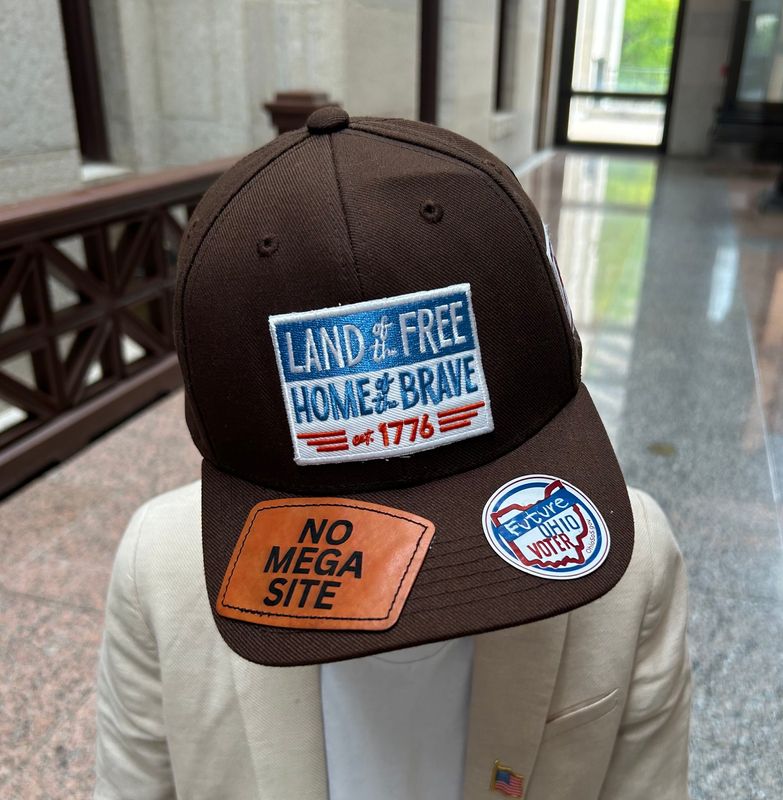
The widespread popularity of a temporary ban no doubt stems from Ohio voters’ opposition to data center construction in their communities, which stands at 62%.
Nearly half of Ohio voters (47%) don’t even want them elsewhere in the state or, for that matter, in the United States at all (42%). Clearly, the closer to their own home a data center might be, the more opposed Ohio voters become.
What the candidates have said about data centers
With this kind of voter opposition, it is interesting that Ohio’s top-of-the-ticket candidates have either not taken significant public notice or, in the case of Ramaswamy, taken a firm stand at odds with voters.
Brown may face cross-cutting pressures from unions whose members benefit from data center construction versus environmental groups and nearby residents who are opposed for reasons shared by so many of our respondents.
Acton may face similar cross pressures.
She has said that any data center-created jobs should be unionized and our data indicate that voters may feel a little less negatively about the effects of data centers on local jobs and tax revenue.
Husted featured prominently at a White House event where tech giants signed the Ratepayer Protection Pledge – a commitment to spare utility customers from rising energy costs driven by surging data center demand. He is likely feeling pressure from both his backers, who support data center construction and expansion, as well as far more skeptical voters.
What could be coming next
As with most issues that involve big business and organized labor – the data center controversy is complicated and divides voters and candidates based substantially on who is most likely to benefit.
While there is some contrast between the major Democratic and Republican statewide candidates in Ohio in 2026 – with Ramaswamy an outlier among them – the distinctions are otherwise not dramatic.
Gov. Mike DeWine has placed a moratorium on the state sales tax break for data centers. Traversing the rocky data center terrain is likely easier when you’re not on the ballot.
Ohio’s top-of-the-ticket candidates may start to feel the pressure to call for bold action if opposition to data centers remains strong.
Some Ohio communities have placed short-term prohibitions on the controversial developments. A petition drive is underway to put a ban on large data centers on the November ballot.
Stay tuned. With terrain this treacherous, expect the unexpected.
David J. Jackson is a professor of political science at Bowling Green State University.
Melissa K. Miller is a professor of political science at Bowling Green State University.
This article originally appeared on The Columbus Dispatch: Poll shows Vivek Ramaswamy is among few Ohioans not leery of data centers | Opinion
Reporting by David J. Jackson and Melissa K. Miller, Guest Columnists / The Columbus Dispatch
USA TODAY Network via Reuters Connect
By David J. Jackson and Melissa K. Miller, Guest Columnists | USA TODAY Network