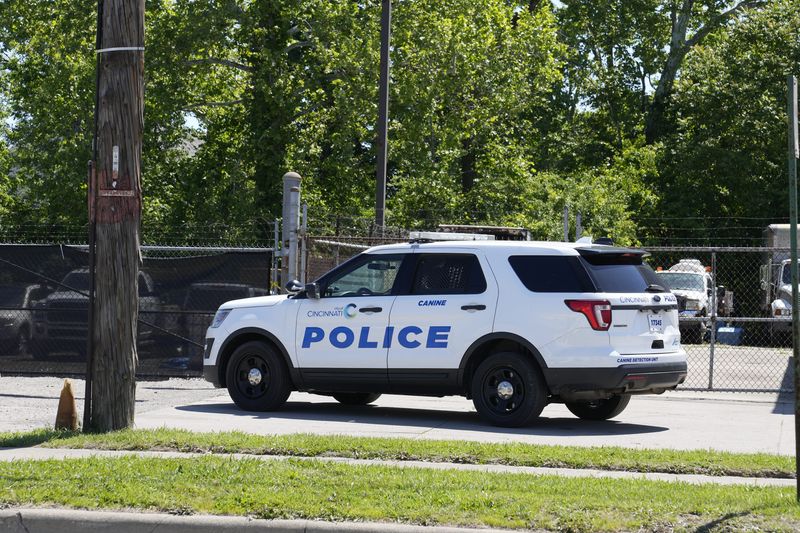
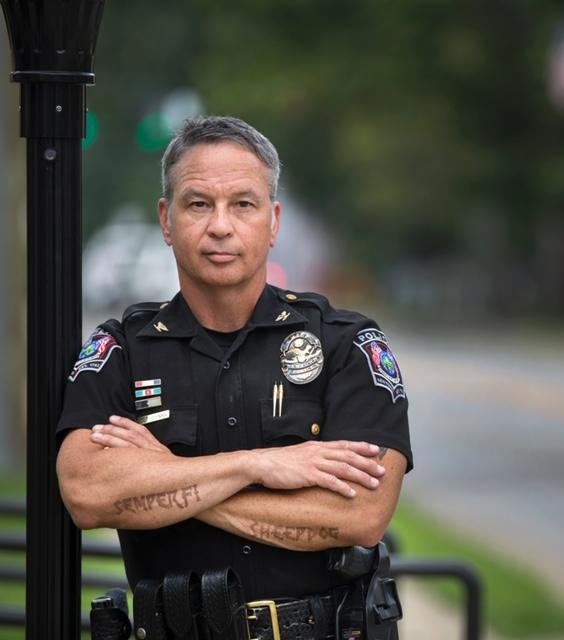
As the Chief of Police for Newtown, Ohio, and a Marine Corps veteran, I have dedicated my entire career to serving the public, believing I could make a difference in the lives of others. That belief was tested in a very real way when a family in our community − a mother and three sons − lost their lives one by one to addiction, despite repeated interactions with law enforcement.
We showed up every time. And every time, it wasn’t enough.

That experience forced me to confront an uncomfortable truth: The tools we carry − a badge, a gun, handcuffs, and a squad car − cannot treat addiction, resolve a mental health crisis, or undo the conditions that make violence more likely.
The calls police were never trained to handle
Over the course of my career, I have watched the role of law enforcement evolve in ways that are both challenging and necessary. The job has always been about protecting public safety, but the nature of the calls we respond to has changed in ways that are impossible to ignore.
Officers are increasingly stepping into situations involving mental health crises, substance use, and individuals in acute distress − circumstances that demand time, judgment, and compassion, but rarely have a clear law enforcement solution. We are being asked to solve problems we were never equipped to solve alone.
Now, for the first time, we have hard data to show what officers on the ground have known for years. The first-ever national survey of active-duty law enforcement officers on safety and justice found near-unanimous agreement: 92% say their departments are burdened by social problems beyond crime, and between 80 and 92% agree that neighborhood-based programs − violence intervention, mental health response, addiction recovery − reduce that burden, make their jobs safer, and improve safety for the communities they serve.
These are not the opinions of politicians or policy advocates. These are the voices of hundreds of officers who put on a uniform every day and deal with the consequences of an underfunded prevention system firsthand.
Hamilton County changed its approach
What those officers know, I know too. In Hamilton County − which includes both Newtown and the city of Cincinnati − we hit a record high in overdose deaths in 2017. It was devastating. But instead of doubling down on enforcement alone, we changed our approach.
By forming the Hamilton County Addiction Response Coalition and building genuine partnerships with community-based service providers, we shifted my role from primary responder to connector − linking people in crisis to the organizations that actually had the tools to help them. The result: a more than 66% reduction in addiction-related deaths and hundreds of lives saved.
I have seen what care from the right source can do. I have watched people go from the brink of death to holding down a job, rebuilding relationships with their children, and living with purpose and dignity. That transformation does not happen because of an arrest. It happens because someone got the right help at the right time. Law enforcement can open that door − but we cannot walk people through it alone.
These community-based programs are not a substitute for policing. They are what make policing work. When violence intervention workers are in the field, they defuse conflicts before shots are fired. When mental health crisis teams respond alongside officers, situations that could turn dangerous are resolved safely. When addiction recovery programs are funded and accessible, the same individuals stop cycling through 911 calls, emergency rooms, and jail cells. The burden on law enforcement goes down. The safety of communities goes up.
Prevention makes communities safer
What makes this moment particularly urgent is that many of these programs are now facing serious funding pressures, even as their effectiveness becomes more widely understood. When those resources are cut, the effects are immediate and entirely predictable. The calls come back to us − more complicated, more volatile, and harder to resolve. Officers absorb the cost in stress, in hours, and in risk. Communities absorb it in harm.
Policing alone cannot prevent violence, treat addiction, or stabilize a mental health crisis. But partnerships with community-based organizations allow us to do something closer to that − to move from reacting to emergencies to preventing them. These are not fringe programs or political priorities. They are proven public safety strategies, validated now not just by outcomes in places like Hamilton County, but by the lived experience of law enforcement officers across the country.
This report reflects what those officers already know. It is past time for our funding and policy decisions to catch up.
Colonel Thomas W. Synan Jr. is a United States Marine Corps veteran, the Chief of Police for the Newtown Police Department, and Co-Founder and Co-Chair of the Hamilton County Addiction Response Coalition. He has served with the Newtown Police Department for 31 years, including 18 years as Chief.
This article originally appeared on Cincinnati Enquirer: Police officers know public safety requires more than arrests | Opinion
Reporting by Thomas W. Synan Jr., Opinion contributor / Cincinnati Enquirer
USA TODAY Network via Reuters Connect