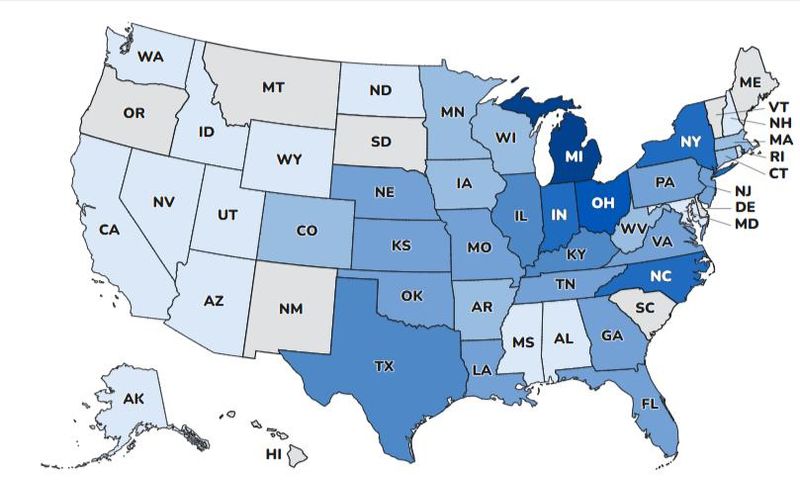
The cyclosporiasis outbreak continues to ravage Ohio and many other states. The U.S. Centers for Disease Control and Prevention has received reports of 13,895 confirmed domestic cases and more than 10,455 cases requiring further analysis to confirm cyclosporiasis. And that is likely an undercount since the CDC numbers don’t include probable cases and that on its own Ohio reported close to 1,200 cases as of July 16.
The spread of cyclospora, an intestinal parasite causing explosive diarrhea among other symptoms, has sickened many people across the nation. Meanwhile, officials work to pinpoint the cause of the outbreak.

How long will the cyclospora season last? When could cyclosporiasis case numbers start to go down? This is what the CDC says.
Ohio’s cyclospora numbers
Ohio’s cases continue to rise. As of Aug. 13, the Ohio Department of Health has reported 5,452 cases in 84 counties. That’s up from 4,949 cases in 82 counties as of Aug. 6.
All but nine of the cases occurred since June 20.
How long could the cyclosporiasis outbreak last? How long is cyclospora season?
Per the CDC, cyclosporiasis season is considered to last from May 1 through August 31. According to the American Medical Association, May–July are the months that traditionally have the most cyclosporiasis diagnoses.
Timeline of the cyclospora parasite outbreak
When did all of this start? Here’s a quick rundown of the Cyclospora parasite outbreak:
What is cyclosporiasis? Illness from cyclospora cayatenensis parasite causes explosive diarrhea
Cyclosporiasis is an intestinal illness caused by the microscopic parasite cyclospora cayetanensis, also known as cyclospora, according to the CDC. The illness is not usually life-threatening.
The parasite spreads when people eat food or drink water that was contaminated with feces. People may be at an increased risk for infection when living or traveling in tropical or subtropical regions of the world where cyclosporiasis is regularly occurring.
In the U.S., outbreaks of cyclosporiasis have been linked to various types of fresh produce.
How is cyclosporiasis treated? With Bactrim? Does it clear up on its own?
According to the CDC, Trimethoprim-sulfamethoxazole (TMP-SMX), which is sold under the brand names Bactrim, Septra or Cotrim, is the treatment of choice for the illness caused by the parasite.
Sulfamethoxazole and trimethoprim are a type of antibiotic used to treat bacterial infections, according to the Cleveland Clinic. Available as a tablet, it belongs to a group of medications called sulfonamide antibiotics.
The infection can often clear up on its own in healthy individuals, though symptoms may last several weeks.
What are the symptoms of cyclosporiasis?
Symptoms of cyclosporiasis may include:
Less common symptoms may include:
Symptoms begin about a week after being infected and can last anywhere from a few days to a month or longer without treatment. Some symptoms, such as diarrhea, may go away and then return.
How to prevent cyclosporiasis
The CDC says the best way to prevent cyclosporiasis is to avoid food or water that may be contaminated with feces.
And to help do that, the agency recommends safe food-handling practices when dealing with produce, including:
This article originally appeared on Cincinnati Enquirer: Ohio’s cyclospora cases continue to climb. See outbreak timeline, numbers
Reporting by Mariyam Muhammad and Chad Murphy, USA TODAY NETWORK / Cincinnati Enquirer
USA TODAY Network via Reuters Connect
By Mariyam Muhammad and Chad Murphy, USA TODAY NETWORK | USA TODAY Network