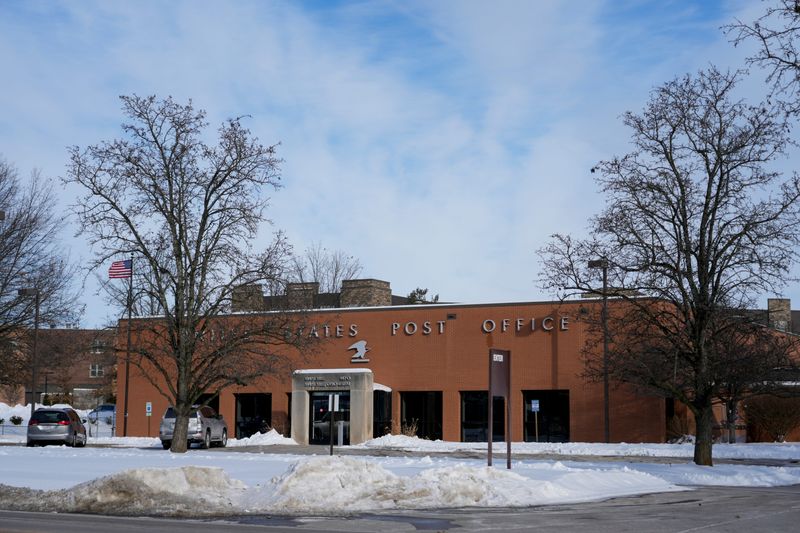
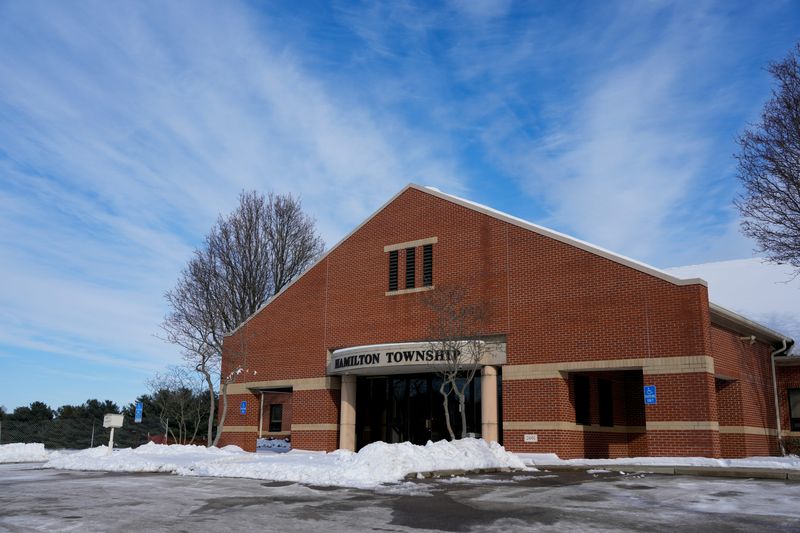
If efforts to abolish property taxes in Ohio are successful, townships may have only one option to continue funding services: become cities.
Townships are mostly funded by property taxes ‒ about 66% ‒ according to the Ohio Township Association. They use those taxes to pay for services like police and firefighters, road and cemetery maintenance, and waste disposal. As a city or municipality, those governments could impose income taxes on residents to fund those services instead.

“We would be bankrupt within six months” if property taxes were abolished, said Darryl Cordrey, a trustee in Hamilton Township in Warren County. “And that’s every township in Ohio. That’s all we have, is property taxes.”
A constitutional amendment to abolish property taxes could appear on the November ballot if the grassroots group pushing the effort collects the necessary 413,000 signatures.
The idea does not have wide support in the statehouse. In recent campaign speeches, Vivek Ramaswamy has focused more on eliminating income tax, despite saying he’d like to lower property taxes “eventually down to zero” when he first announced his run for governor.
But the debate, spurred by soaring property taxes in recent years, has prompted fear for townships and schools, and a new bill from two Republican lawmakers.
New bill could help townships ‘survive’ if property tax is eliminated
Under current Ohio law, for some townships to become cities, they need approval from nearby cities or municipalities. A new bill proposed by two state lawmakers would eliminate the need for that approval, putting the decision in township voters’ hands.
“This concept came to me from some of my local governments who wanted more options and possibilities to serve taxpayers better and also be prepared in case the voters abolish property taxes next year,” Rep. David Thomas in Jefferson, Ohio said in a statement. “This legislation would make the decision of transforming a township into a municipality up to the voters of the township, not allowing that choice to be blocked by surrounding cities or villages.”
Townships are eligible to become cities if they meet certain population, density, size and property tax criteria set by the state. Under this bill, townships would need at least 5,000 residents to incorporate as a city, and at least 1,000 people per square mile.
A few dozen townships have been eliminated, either through annexation or conversion into cities, according to the Ohio Township Association. At one time, there were as many as 1,340 townships in the state, according to the Ohio History Connection, a statewide historical organization, and today there are 1,308.
There aren’t many recent examples of Ohio townships becoming cities. Green Township, near Akron, voted to merge with Green Village in 1991, and converted into a city the following year.
Rep. Adam Mathews, who represents a portion of Warren County, said the legislation could help townships “survive” if voters abolish property taxes next year.
“Their main concern (township trustees and residents) is one that I share: We want to make taxes simple, reasonable and tied directly to the services that are provided, and this legislation would be able to achieve those goals,” he told The Enquirer.
City governments can annex, or incorporate, bordering land inside townships, growing their income tax base. So, cities may not want to allow a bordering township to become its own municipality.
“It seems odd to have citizens of a township beholden to the electoral decisions of people outside of their township,” Mathews said. “This gives more control to the actual voters who live in, whether it’s West Chester, Hamilton or Green townships, instead of asking their neighboring cities that they may have a contentious relationship with.”
Trustee: Abolishing property tax would ‘devastate’ townships
In Hamilton Township, a Warren County community with just under 30,000 people ‒ bigger than cities like Lebanon and Monroe ‒ trustee Darryl Cordrey said the township’s conversations about incorporating as a city have become more pressing as fears about annexation and property tax grow.
Cordrey likes living in and working for a township.
Cordrey sees townships’ three elected trustees system as a more efficient form of government than a city council. The area, roughly 35 square miles, is mostly residential, with parks, access to the Little Miami River and a small-town feel. Like other townships, money generated from mostly property taxes funds police, fire and road maintenance.
But if property taxes are eliminated, Cordrey said being able to quickly convert into a city, and start collecting income taxes, would mean residents could keep their services.
“It would devastate every township statewide, because we don’t have a mechanism to bring in revenue,” Cordrey said. “Basically, as soon as we draw down on our reserves, we would be bankrupt.”
West Chester, Ohio’s most populated township with more than 65,000 people, relies heavily on property tax, said fiscal officer Bruce Jones. Previous resident-led efforts to convert the township into a city have failed.
Becoming a city and collecting income tax would be a “last resort,” Jones said.
“Not having an income tax has contributed to West Chester being the crown of the Queen City,” he added.
But services would still need to be funded.
“Hopefully people will see through the fallacy of eliminating property taxes,” he said. “It doesn’t mean they’re going to pay less all in all, it’s just shifting the expenses elsewhere.”
This article originally appeared on Cincinnati Enquirer: Ohio townships ponder becoming cities in order to ‘survive’
Reporting by Victoria Moorwood, Cincinnati Enquirer / Cincinnati Enquirer
USA TODAY Network via Reuters Connect