America will mark its 250th anniversary next year with each state being asked to celebrate its contribution to the country.
Ohio has landed on a curious topic for its role – film.

But upon scrutiny, the reasoning behind it stands up and is the onus for the Ohio Goes to the Movies initiative, headed by program director Molly Kreuzman.
Ohio Goes to the Movies is slated to begin in February.
What are Ohio’s claims to film fame?
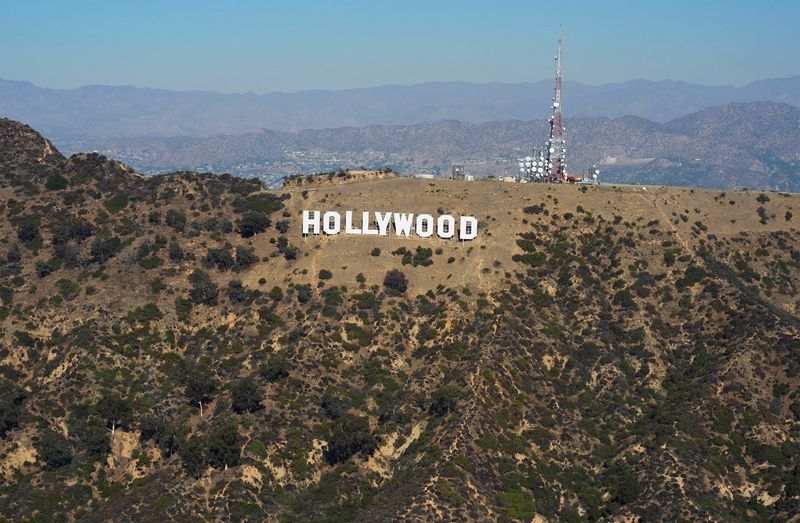
Potentially there would be no Hollywood without resident Daeida H.W. Beveridge of Hicksville, Ohio.
She co-developed and named the Los Angeles suburb with her then husband H.H. Wilcox in 1887 and would later help develop much of the civic infrastructure.
Harry, Albert, Sam, and Jack Warner – the founders of Warner Bros. Studios – built their theater business showing films in Youngstown and western Pennsylvania. They lived other places before heading West to found their iconic film house in 1923.
There’s also the list of actors, directors and films in general that have connections to Summit, Stark and Cuyahoga counties and other Ohio locations.
What are the criteria for a film to be an Ohio movie?
What is considered an Ohio film? Well, there are some obvious ones such as the cases of actors Paul Newman (Shaker Heights), Clark Gable (Cadiz) and director Steven Spielberg (Cincinnati), who were born in the state. But there are many more considerations, Kreuzman said.
Plenty of people toil behind the scenes and behind the camera. Akron’s Paul Tazewell, for instance, recently won an Oscar for costume design for the film adaptation of “Wicked.”
Some would call that a liberal definition, but along the way to its creation, Kreuzman realized a few things other than the story of Hollywood’s founding.
“What I have learned is just off the charts, just all of the talent and all of the… there are statistics like Denison University graduates more screenwriters than any other college in the country. Who knew this?” she said. “I had to figure out what made you ‘in Ohio.’ So, my role is either you were born here or you lived here for more than three years, which means you went to school here.”
That gets a lot of people and things counted.
“I say to folks, Look, if the actor or the director or the composer or the producer, or we even have a section [in the Ohio Movie Database] of our films made from Ohio novels,” it counts, she said.
Creating an Ohio film festival one county at a time
Kreuzman’s job, which is no easy task, is to provide the threads that weave this tapestry together throughout the Buckeye State’s 88 counties.
Her 25 years of experience in the film industry as a producer, documentary filmmaker and film festival organizer led the head of the Ohio Arts Council to recruit the Columbus native, with the goal being staging 30 events. That didn’t last long.
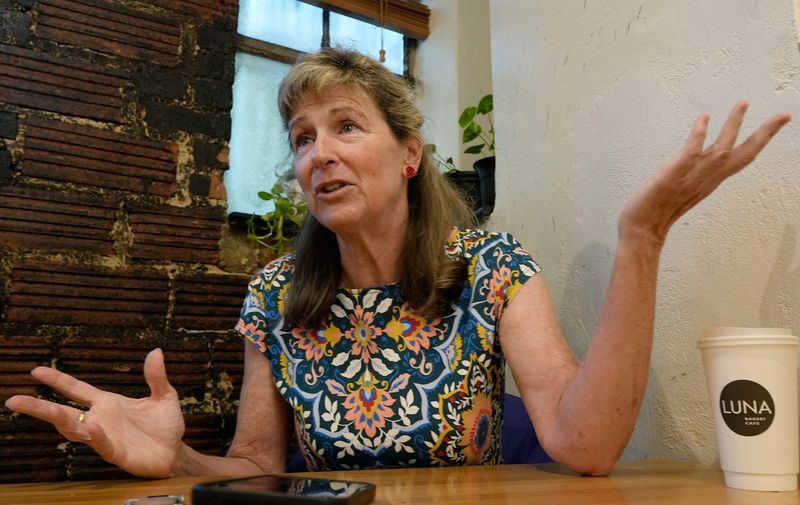
“I said, ‘Well, y’all hired me and I don’t go small.’ So, I like to tell people that either I’m brilliant, a super genius, or I need to go play in traffic,” she said during an interview at a Cleveland Heights coffee shop. “At this point, we have all 88 counties involved. We have close to 250 venues showing almost 280 films, all Ohio-centric, which means they have some kind of tie to Ohio.”
Venerable, historic theaters such as the Akron Civic Theatre, Lions Lincoln Theatre in Massillon and The Cedar Lee Theatre in Cleveland Heights, along with movie houses in the major chains, will show films.
Finding those venues in Northeast Ohio doesn’t necessarily offer a significant challenge when there are several regional areas focused on three metropolitan areas – Cleveland, Columbus, Cincinnati and other cities near them – but in other counties, that may not be the case.
Kreuzman cold called many venues throughout the state, offering a stipend (backed by different funding sources – the federal government and philanthropic efforts), that initially engendered laughs from some and hangups from others, she joked. But in more rural areas, theaters are gone.
“What we’ve done there is we’ve reached out to the library systems, and so we have a lot of libraries that have stepped up, which has been extraordinary,” she said “We also have, for instance, in one county, they’re doing theirs at their county swimming pool, and they’re calling it a ‘dive in.’ People are getting super creative. There’ll be outdoor screenings. There’s a lot of different collaborations that are happening.”
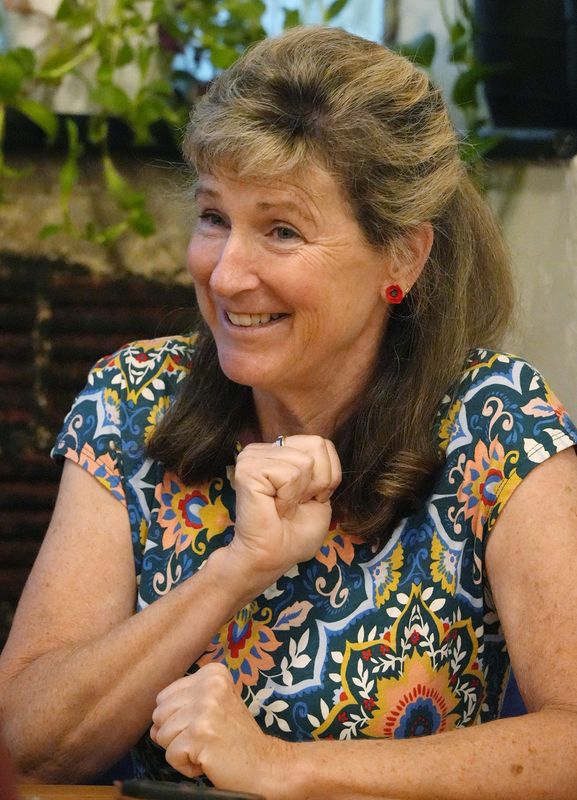
When talking about those collaborations, Kreuzman, who possesses an infectious enthusiasm, perks up even more. However, she appreciates and understands the reality of the other side of filmmaking – business.
Gov. Mike DeWine saved the Ohio Motion Picture Tax Credit from being phased out in the most recent state budget, using his line-item veto. DeWine argued the tax credit is essential to attracting productions to the state. As of this month, 27 productions from stage to television to film have been awarded $46 million.
What are the economics of film in Ohio?
According to the Greater Cleveland Film Commission, that tax credit has had a tremendous impact on the economy and in the local filmmaking community with blockbusters such as “Superman” filming in both Cleveland and Cincinnati last year filming here.
The tax credit directly contributed $1.4 billion in gross economic output, creating 7,100 full-time jobs. Including commercials, documentaries, TV shows and other projects, more than 300 productions have filmed in the state since 2007, according to the commission’s statistics.
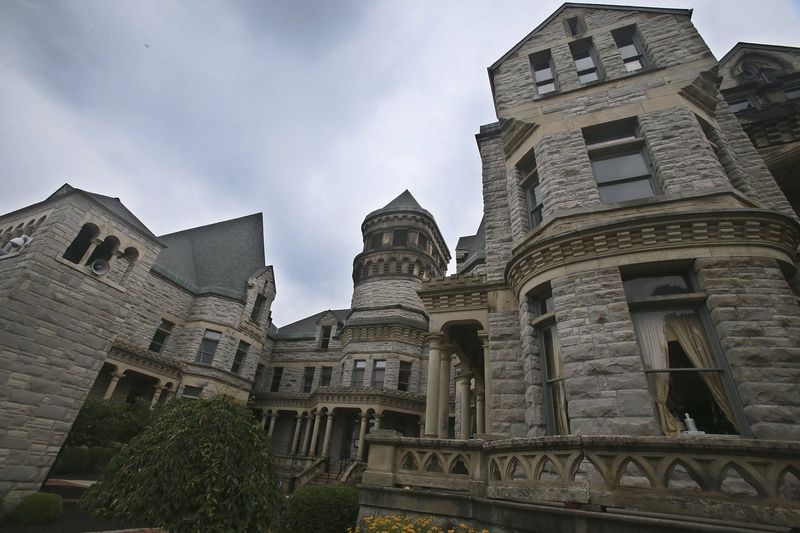
If a film such as “The Shawshank Redemption,” enters the cultural zeitgest, the effects can linger. The film likely saved the Ohio State Reformatory in Mansfield from the wrecking ball and helped to create a tourism hub that the city benefits from. According to a report, 170,000 people visit the reformatory each year, translating into tourism dollars.
Something such as this and the current initiative enhances the state’s claim to be a centerpiece for film, Kreuzman said.
“The governor loves film, so there were some things that he redlined. And my hope is, yes, absolutely,” she said, “that this shines a spotlight again [on Ohio] – economics, economics, economics. That’s what folks need to know.”
She also understands that despite the February start date, her job is far from done for setting up what is essentially coordinating an 88-county film festival. They are still seeking venues. And she loves it.
“I have the best job ever. I’m not even kidding,” she said. “I mean, I get to go to these small towns and create celebrations in this day and age. What the world is like right now where everybody sort of feels bad and worried and all these things. I get to show up and say, ‘Hey, you guys want to have a party? Want to a show of film?’”
George M. Thomas covers a myriad of things including sports and pop culture, but mostly sports, he thinks, for the Beacon Journal.
This article originally appeared on Akron Beacon Journal: Ohio to celebrate America’s 250th anniversary with state’s place in film in focus
Reporting by George M. Thomas, Akron Beacon Journal / Akron Beacon Journal
USA TODAY Network via Reuters Connect