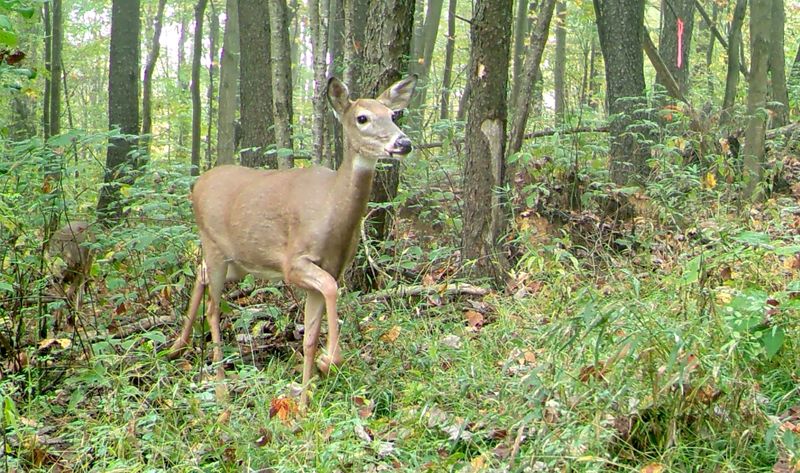
The continued spread of a deadly deer disease through Ohio will likely impact the upcoming deer hunting season, according to a state wildlife expert.
Clint McCoy, a deer biologist with the Ohio Division of Wildlife, said over 20 counties have confirmed cases of epizootic hemorrhagic disease (EHD), a virus spread to deer by infected midges. He called the 2025 outbreak the largest he’s seen in his career.

“We’ve got lots of mortality and so this fall will probably look quite a bit different for some of those folks in the most heavily hardest hit areas,” he said.
The largest outbreak is in southeast Ohio, where hundreds of dead or sick deer have been reported across Athens, Meigs, Washington, Morgan, Noble and Monroe counties.
The result will likely be a changed hunting season with fewer deer available to hunt in those areas, according to McCoy.
To help deer populations bounce back from the disease, hunters can avoid killing deer without antlers. Male deer, which have antlers, “don’t really matter” when manipulating populations because they can mate with several females, according to McCoy.
McCoy is set to address Ohio’s hunters in an online presentation about EHD and another deer disease, chronic wasting disease, scheduled for Sept. 9 at 7 p.m.
He’ll discuss the status of the diseases, the state’s disease surveillance area, testing procedures, and how hunters can monitor the diseases, as well as answer questions from the audience, according to the presentation’s event page.
What is epizootic hemorrhagic disease?
EHD is a virus spread by infected midges that bite deer. Once infected, deer develop symptoms such as respiratory distress, swelling, disorientation and fever.
The fever affects the deer’s cognitive functions, making them confused and unafraid of humans, McCoy previously told The Dispatch.
“People can approach them. They can be kind of just standing still for a long period of time, hanging their head, just maybe acting kind of disoriented,” he said.
Ohio’s deer have little resistance to the virus and will often die within three days of showing symptoms. The disease does not impact humans, according to ODNR.
The disease typically emerges in the summer and disappears by the first frost of fall when most midges die or become inactive, according to McCoy.
When does deer hunting season start in Ohio?
Here’s when deer hunting season starts this year, according to ODNR.
Breaking and trending news reporter Nathan Hart can be reached at NHart@dispatch.com and at @NathanRHart on X and at nathanhart.dispatch.com on Bluesky.
This article originally appeared on The Columbus Dispatch: Ohio Division of Wildlife to outline impact of deadly deer disease on hunting season
Reporting by Nathan Hart, Columbus Dispatch / The Columbus Dispatch
USA TODAY Network via Reuters Connect