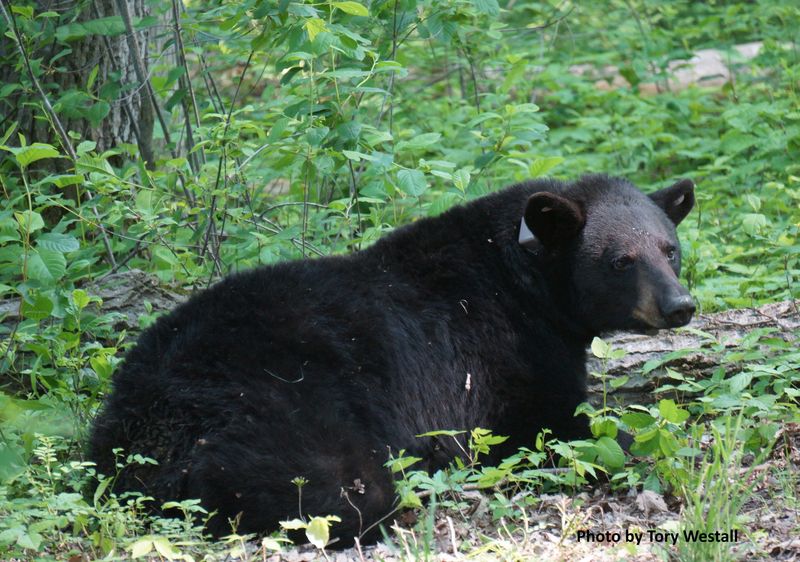
Black bear sightings are increasing around Ohio, according to the Ohio Department of Natural Resources.
One was spotted near Pataskala in Licking County on June 10, roaming a field about 20 miles east of Columbus. It was the first sighting in the area in 20 years.

Another black bear was tragically struck by a pickup June 14 in Richfield County, about 14 miles south of Mansfield. It didn’t survive.
Since then, a black bear was spotted outside Dayton, and another in Gallia County in Southern Ohio. Two were spotted recently in Northeast Ohio, one in Geauga County and another in Streetsboro in Portage County.
And for the first time, ODNR has collared a female black bear to help learn more about how a species that’s considered endangered in Ohio is expanding its range in the state.
Here’s what you need to know about bears in Ohio, and how to stay safe.
Black bears in Ohio
Black bears were considered gone from Ohio by the 1850s, per ODNR, due to deforestation and hunting by Ohio settlers.
However, more recently they have been spotted wandering through the state as populations in Pennsylvania and West Virginia grow, according to the Ohio Black Bear Monitoring Report. And they are making a small comeback, with an estimated in-state population between 50 and 100.
Their name can be misleading, because “black” bears can be black, chocolate brown, cinnamon brown, blue-black, and even white.
An adult can weigh anywhere between 150 and 700 pounds. Males average 300 pounds while females are smaller, averaging around 175. Males, when standing upright, measure between five and six feet tall. And again, females are smaller, measuring four to five feet.
Adult males have a home range of 100 to 120 square miles in upland hardwood habitats, while females’ home range can cover 24 to 50 square miles. Movements of 125 miles from a denning site have been documented.
Bears are omnivores and will eat a variety of foods; grasses, berries, carrion and insects are typical foods. Bears will also raid crops, if available.
Black bear reports growing in Ohio
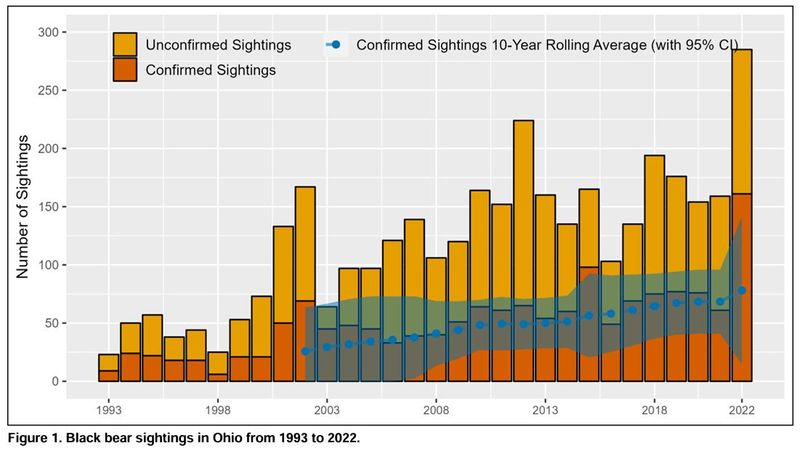
The Division of Wildlife has been tracking sightings of black bears in the state since 1993, according to the monitoring report. Most bears spotted are young males, wandering long distances in search of a mate and territory, per ODNR.
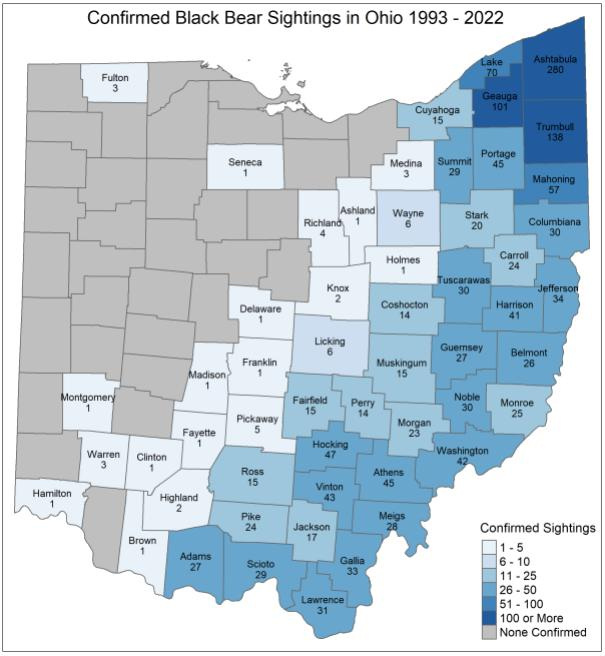
Reports are growing, according to ODNR, with most observed in northeast and southeast Ohio. In 2022, the most recent year data is available in the monitoring report, Ohio had both the highest sightings and confirmations of black bears on record.
Confirmation methods include trail or security cameras, photos or videos from eyewitnesses, multiple reports of a bear, a dead bear, evidence of damage, scat or tracks, or observation by an expert, per ODNR.
Around the state, black bears were spotted in 2022 near Akron in Northeast Ohio — one in Hudson and another in Copley and Bath townships. In 2023, a black bear was spotted near Obitz, south of Columbus. ODNR has records of bear sightings in Ohio dating to the 1930s.
How to protect your house, backyard from black bears
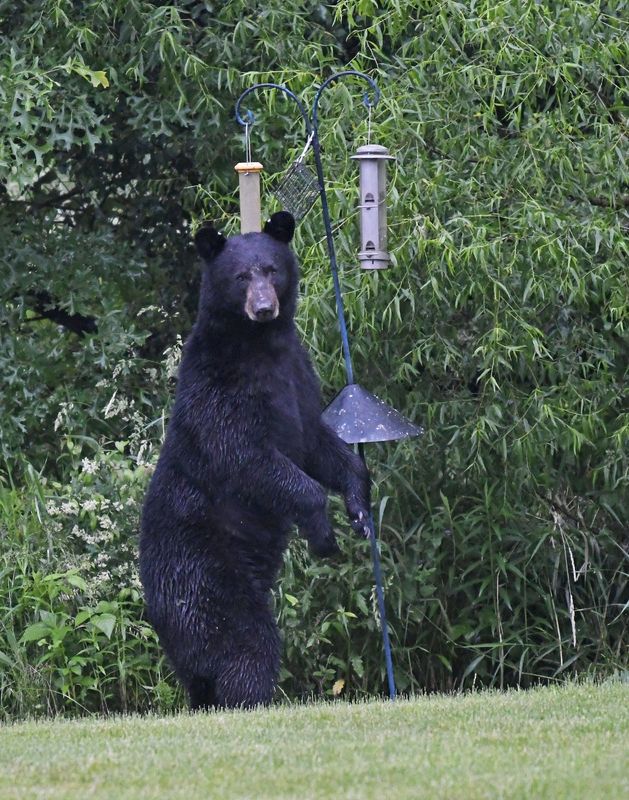
Black bears can cause significant damage while searching for an easy meal. Here’s how you can protect your backyard if one is in your area, per ODNR:
Black bear research in Ohio involves GPS tracking collars
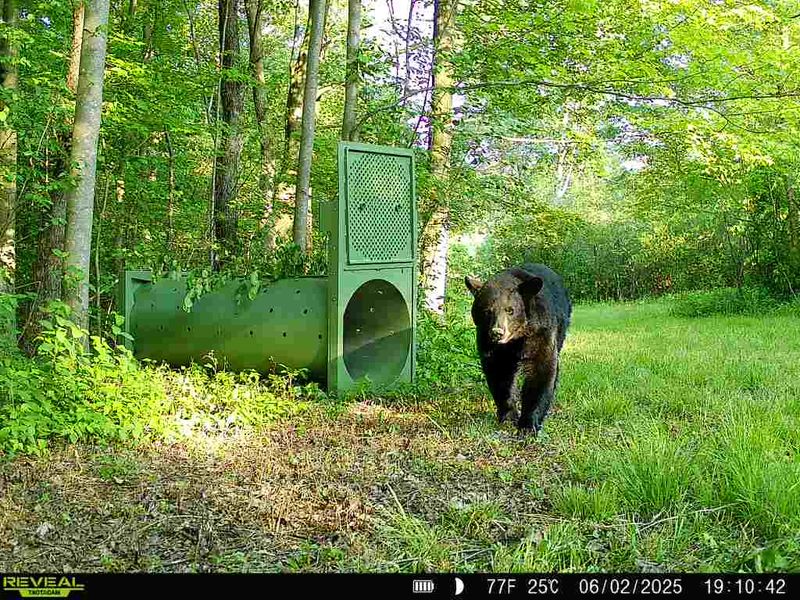
The ODNR Division of Wildlife, in partnership with biologists at the University of Dayton’s Gantchoff Lab, trapped a 5- to 10-year-old female black bear weighing 198 pounds in Ashtabula County on June 3, fitted it with a GPS collar and released it back into the wild.
GPS collars remotely transmit location data, helping researchers to learn about the habitat use and preferences of individual bears. Researchers using the location information can also learn about a bear’s home range size and space requirements, survival rates, and their reproductive status, including litter size and frequency of reproduction. The collar is programmed to fall off the bear before its battery dies, typically after about 18 months.
The project aims to put GPS collars on 10 to 20 Ohio resident black bears in the coming years to monitor their movement and reproduction. The project also hopes to estimate Ohio’s black bear population trajectories, habitat suitability, and factors impacting human-bear conflicts. In addition to the female bear collared this month, the project is monitoring the movements of a male bear collared in northeast Ohio in July 2024.
What to do if you see a black bear
Black bear attacks are rare; they are usually fearful of people. As long as they are given space and not cornered, bears do not seek to attack or kill children or pets. The bears are generally not aggressive and prefer to flee if they are aware of your presence.
So if you see a black bear, remain calm. If it hasn’t noticed you, back away slowly and leave the area. If it is aware of you, avoid direct eye contact and give it an easy escape route. Don’t run away or climb a tree, which may provoke a chase.
ODNR recommends remembering this using the acronym AWARE:
Spot a bear in the wild? The Ohio Department of Natural Resources Division of Wildlife wants to know
Did you see a bear? The ODNR Division of Wildlife wants to know. Report sightings online at wildohio.gov or the Wildlife Species Sighting Report. You can also contact your local county wildlife officer or regional District Wildlife Office.
This article originally appeared on The Columbus Dispatch: Ohio black bear sightings up as state studies their population growth. How to stay safe
Reporting by Chad Murphy, Columbus Dispatch / The Columbus Dispatch
USA TODAY Network via Reuters Connect