Frank Sinito, the son of an infamous mobster, is set up nicely with his Waite Hill estate, a 65-acre property that includes a 14,000-foot-mansion and two other homes near the border of Lake and Geauga counties.
About 200 miles away, Gerald Krueger finds comfort in the three-generation family compound he built on the shores of Lake St. Clair in suburban Detroit.

Throughout Akron, some of their tenants sit in filth and disrepair out of their control.
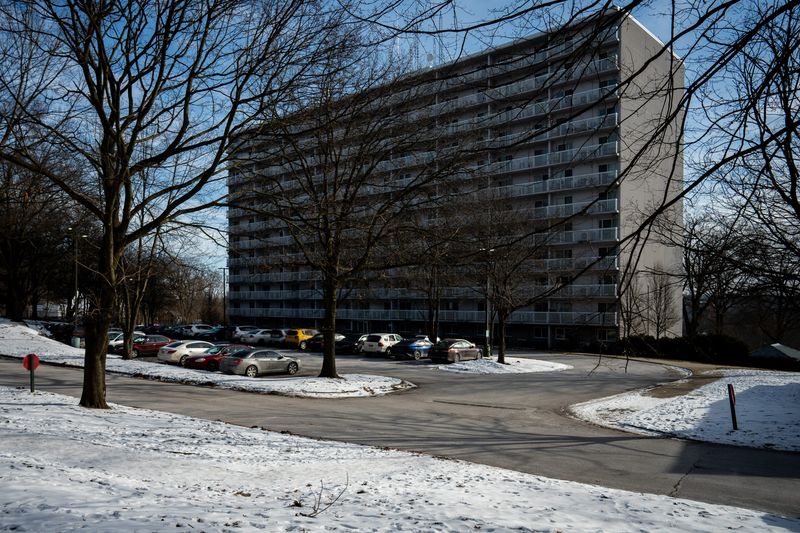
Cockroaches, mold, broken appliances and nonfunctional locks are just some of the complaints voiced by tenants of Spring Hill Apartments, owned by Krueger’s company, and Summit Ridge, owned by Sinito’s company.
Somehow, that’s not even the worst of it. Both men own housing in which there have been fatal explosions.
Neither explosion occurred in Akron, though one happened in Cleveland. But it’s hard not to be a tenant of Spring Hill or Summit Ridge reading about those explosions and wondering if you may be next.
Does either man care about the state of their properties and the people living within them? Or are their tenants − some of whom are low-income − simply pennies that add up to the bottom dollar?
It’s hard to say, as neither answered our reporter’s calls for comment. It’s easy to think the worst.
Perhaps it didn’t start that way. Sinito, who also runs a prison ministry, once told a publication that he decided to begin rehabbing properties after he studied subsidized housing in college. “It really appealed to me that I could impact people in that way,” he told LaGazzetta Italiana in 2017. “I loved the social mission of it and decided this is what I wanted to pursue.”
Marco Somerville, who now chairs the Akron Metropolitan Housing Authority, vouched for Kreuger, saying he never had to call him for any problems related to the property until this year.
When he did call, it went unanswered.
We may never know the truth behind why either man pursued housing.
What we do know is both got rich off the backs of both people in poverty and our tax dollars.
Attorney Lynn Clark, who is representing the Summit Ridge tenants who recently put their rent into escrow, explains it this way: Developers buy affordable housing properties, get millions of dollars in tax credits to rehabilitate them, and then take their cut of profit through rent and deferred maintenance. When a property no longer offers a return and residents start complaining, owners will sell the property to a different developer, who will get tax credits to overhaul the property again.
Supporters of this system say without the tax credits, no one would be willing to spend the money to develop affordable housing.
It’s a dilemma I’ve pondered over the months of our reporting on housing issues. We certainly need more affordable housing, but we need it from developers who care more about the living conditions than the money they make from it.
Of course, being a landlord is no easy task, either. Tenants can sometimes damage properties or fail to pay rent. It requires significant investment.
And somewhere along the way, even the most well-intentioned landlords may become blinded by greed.
There’s no easy solution, but there’s at least one glaring problem that should be addressed. If the U.S. Department of Housing and Urban Development catches wind of serious issues at a site funded by low-income tax credits within the first 15 years of receiving those credits, the IRS can claw the money back.
After that, oversight drops off.
This is a clear playbook bad-faith landlords can follow: Get the credits, rehab the facility, maintain it just long enough to get HUD off your back, squeeze the final dollars out of the tenants, then sell it off and enjoy the profits.
We need to tear this playbook to shreds. It’s harming people who get swept up in the downward spiral, many of whom are likely trying to claw their way out of poverty. This is a tough task made much tougher when you can’t meet your basic needs because of broken pipes and stoves.
Those living in Spring Hill and Summit Ridge deserve far better. Landlords simply shouldn’t be swimming in wealth while their tenants suffer – even if they start with good intentions.
Have thoughts to share? Email me at tbennett@usatodayco.com, and make sure to sign up for our opinion newsletter, The Middle Ground.
This article originally appeared on Akron Beacon Journal: Landlords have a playbook to let low-income housing fail | Opinion
Reporting by Theresa Bennett, Akron Beacon Journal / Akron Beacon Journal
USA TODAY Network via Reuters Connect