As artificial intelligence continues to advance, religious leaders are creating guidelines and principles for using the new technology that align with their beliefs and values.
“Our association with religious institutions is ancient wisdom, and so the notion that they are using cutting-edge technology probably is incongruent to people,” said Rabbi Daniel Bogard, who works at Central Reform Congregation in Saint Louis.

Local clergies are not alone in these decisions, as their peers and superiors across the world grapple with the same question: Where does AI fall into our religion?
Pope Leo XIV addresses AI
There are many reasons behind why a pope chooses their name, but Pope Leo XIV’s reason was AI.
He chose it to honor Pope Leo XIII, who published a landmark encyclical — a letter that guides the Catholic faith — titled “Rerum Novarum” that addressed the dignity of workers at the beginning of the Industrial Revolution.
Days after his election, Pope Leo XIV addressed the College of Cardinals about “developments in the field of artificial intelligence,” that pose “new challenges for the defense of human dignity, justice and labor.”
On May 25, Pope Leo XIV published his first encyclical titled “Magnifica humanitas: On Safeguarding the Human Person in the Time of Artificial Intelligence,” with similar concerns cited by Pope Leo XIII.
While the document does not forbid or give clergy free reign to use AI, it does state: “Technological innovations, including artificial intelligence, are not neutral, for they can either foster participation and justice or exacerbate inequality, control and exclusion. For this reason, they must be evaluated by asking a crucial question: Do they truly help individuals and peoples to become more humane and fraternal, while respecting our common home and future generations?”
Pope Leo XIV’s encyclical addresses the new technology’s impact on the environment, employment, disinformation, privacy, employment and weapons, among many other subjects. Chief among them was concern that humans will be reduced to “an object to be manipulated or a resource to be optimized, removing all safeguards against the unchecked pursuit of profit.”
Sinai and Synapses takes on AI
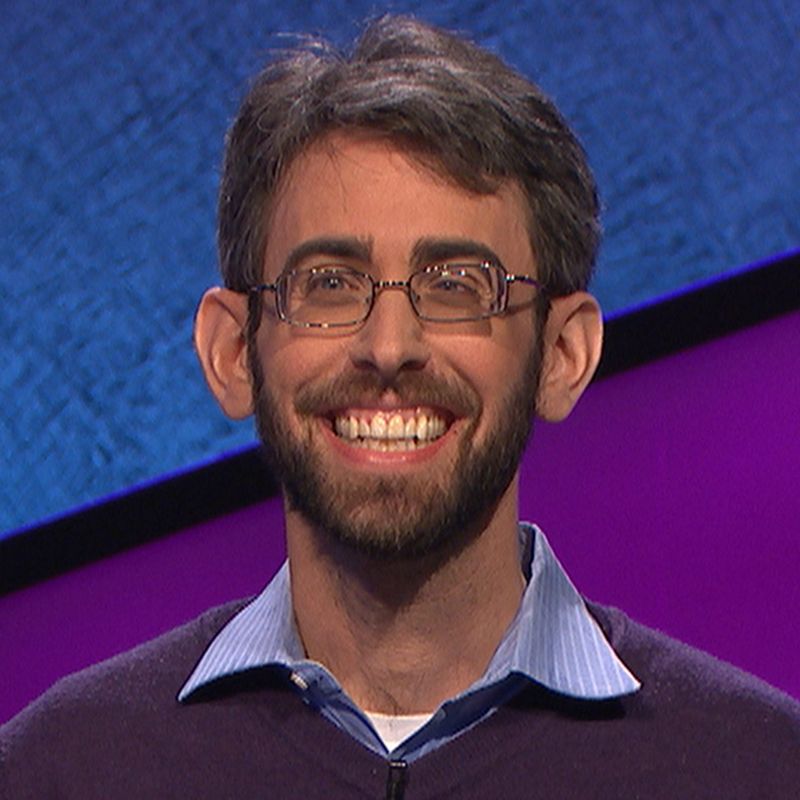
Rabbi Geoffrey Mitelman started Sinai and Synapses in 2013 to bridge the worlds of religion and science while exploring some of their biggest conundrums: Who are we? How do we act in this world?
Over the last few years, artificial intelligence has become a major part of the organization’s focus. Sinai and Synapses is studying not only how AI is changing what it means to be human, but also the biggest philosophical, ethical and practical questions that accompany its use.
One big question is: When you use AI, how do you respect those who have created all the information that’s out there so that it’s not plagiarized?
Mitelman’s answer: When using a large language model, have it provide the exact source it’s using so that proper credit can be given.
Mitelman predicts that there will be “tremendous change and challenge” in the role language plays in religions based on text, such as Judaism, Christianity and Islam. Similarly to how the printing press and eyeglasses were catalysts for the protestant reformation, Mitelman said, AI will democratize knowledge and allow people to look at and study texts in a different way.
“Technological innovations change religion,” Mitelman said.
Using AI to advance religion, not compete
Sinai and Synopsis partnered with Clal to create its “Deepening Jewish Education in the Digital Age” project, which focuses on the ways new digital tools, including AI, can deepen values and virtues in the Jewish community.
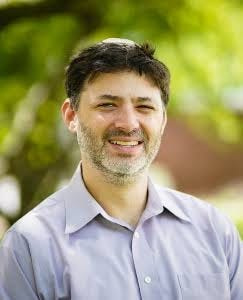
One of the project’s grants was awarded to Rabbi Daniel Bogard from Central Reform Congregation in St. Louis in August 2025. Bogard is also on the Central Conference of American Rabbis’ new task force on artificial intelligence.
Since last year, Bogard has taught hundreds of rabbis and Jewish educators best practices for AI, covering everything from chatbots and coding to office work and even its use as a thought partner.
He has also created AI tools to help rabbis “surf” the technological wave that AI is becoming. Those include a Torah Heatmap that visualizes the most-discussed verses in the Torah and Chevruta.AI, an AI partner for creating Jewish text sheets.
When it comes to the guardrails around AI, Bogard said that instead of creating rules that will quickly become outdated, they must be driven by values. Determining the ethical line of AI use, he said, comes from answering this question: Is the end result a product of a person’s thinking, or is it a result of AI doing it on its own?
Bogard believes AI will be even more transformative than the Industrial Revolution. But in the end, he thinks AI will make religious traditions more important in people’s lives, not less.
“You know, ultimately, the Industrial Revolution and the Agricultural Revolution and all these revolutions have changed human existence, and yet being a partner and a friend and a child and a sibling and someone who lives on this earth for a limited number of days, like the core pieces of being a human, haven’t changed,” he said.
Got a story recommendation? Contact Beacon Journal reporter Tawney Beans at tbeans@usatoday.com and on Twitter @TawneyBeans. And follow her adventures on TikTok @akronbeaconjournal.
This article originally appeared on Akron Beacon Journal: Is AI the next Industrial Revolution? Religious leaders think so
Reporting by Tawney Beans, Akron Beacon Journal / Akron Beacon Journal
USA TODAY Network via Reuters Connect
By Tawney Beans, Akron Beacon Journal | USA TODAY Network