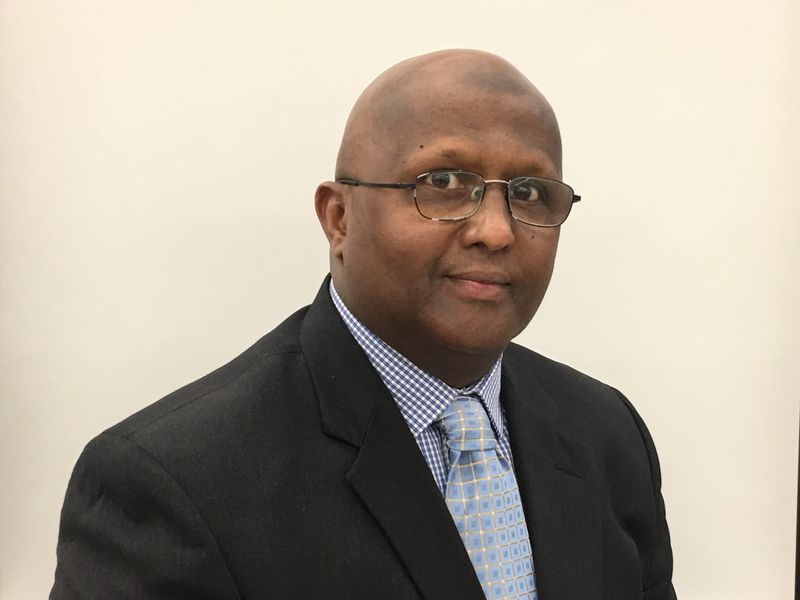
Ali-Guban Mohamed is founder and editor of Gubanmedia.com, an online source of news and commentary about the Horn of Africa based in Lewis Center.
News of the years-long scandals involving the massive welfare fraud of the Somali community in Minnesota has stunned many Americans.

President Donald Trump has used it to justify calling Somalians “garbage” and Minnesota, home to this nation’s largest Somali community, ahead of Columbus, “a hub of fraudulent money laundering activity.”
.
For those who lived under Mohamed Siad Barre’s Marxist dictatorship of Somalia, the welfare fraud scandal itself feels grimly familiar. Patterns of patronage, racketeering, and outright theft of public and foreign aid money — concealed from outsiders — were a way of life for regime loyalists.
When Siad Barre seized power in a 1969 coup, he tore up the constitution, consolidated rule through a vast security apparatus, and systematized clan favoritism.
Public contracts, U.S. aid meant for the vulnerable, and refugee assistance often went to regime insiders. At the same time, suspected dissenters faced arbitrary detention, torture or disappearance at the hands of the National Security Service.
As opposition grew, the state weaponized these dynamics with increasing brutality. By the late 1980s, officials accused the Isaaq clan in the north of aiding the Somali National Movement, a rebel group fighting for democracy, unleashing campaigns of mass violence.
Human rights organizations estimate tens of thousands of Isaaq civilians were murdered, and hundreds of thousands driven to exile as cities like Hargeisa were devastated by bombardment. The United States, prioritizing Cold War alliances, supplied Barre with more than $2 billion throughout his rule.
Repression culminated in the summer of 1989. Government troops opened fire on peaceful protesters in Mogadishu, killing roughly 400 people and wounding about 1,000, according to the Washington Post. The next night, under orders from Gen. Maslah Mohamed Siad Barre — Barre’s son and military chief — elite Red Beret units numbering 5,000 from Siad Barre’s Darod-Marehan clan conducted midnight raids that seized and executed more than 145 Isaaq men at Jazeera Beach.
The atrocity is remembered as the Jazeera Beach Massacre.
Living openly in Columbus
When Barre’s government collapsed in January 1991, chaos ignited the country. Some perpetrators and top officials quietly blended into refugees, sometimes using fake birth dates and names — vanishing into the diaspora.
One such figure, Col. Abdi Aden Magan – a former NSS chief — was only discovered years later in 2002 by a torture survivor and held liable by a U.S. court in Columbus, underscoring serious vetting failures.
In central Ohio, former regime enforcers — including Ayanle Siad Barre, a former National Security adviser, and former Red Beret soldiers — live openly in Columbus, recognized by survivors in stores and mosques.
Mass migration from states affected by corruption, clan conflict and endemic violence inevitably carries risks. Some individuals may attempt to reproduce the same corrupt networks or predatory behaviors they practiced in their countries of origin. Some cases within the Somali diaspora illustrate how these patterns of clan patronage, racketeering, bribery, and illicit economic activity can remerge in the United States.
In Minnesota, federal prosecutors described a $250 million scheme using shell nonprofits, fabricated meal counts and fake invoices to defraud child nutrition funds intended for American children. These facts echo not just bureaucratic oversight, but the habits of exploitation ingrained under dictatorship: public money intended for the needy diverted by insiders, the vulnerable left unprotected, and leaders reluctant to act for fear of controversy.
Minnesota Democratic leaders, wary of offending core voters, seemed to keep a blind eye or were hesitant to confront these realities.
America is not a dictatorship
U.S. Congresswoman Ilhan Omar, whose district was ground zero for the fraud, minimized the issue and reframed federal prosecutions as racial targeting, even after dozens of Somali individuals were charged, convicted and sentenced.
She dares to accuse a duly elected president of acting like a dictator and warns that the United States is “sliding into dictatorship.” But as someone who lived under a dictatorship, I can say plainly: America is not Somalia under Siad Barre.
But she rarely acknowledges the uncomfortable presence of Barre-era enforcers in her own community. Perhaps because her late father was a colonel who served under Siad Barre’s military, or her loyalty to her tribal enclave, Puntland. She holds a rare platform to demand accountability but has yet to use it fully.
Somali Americans overwhelmingly love this country
This is not about stigmatizing Somali Americans as a whole.
Somali Americans overwhelmingly work hard, take pride in their communities and love this country. I am grateful to America for providing the security and opportunities that were not available in my birthplace, Mogadishu.
The United States has the tools to confront the broken refugee vetting problem.
Immigration authorities should re-examine refugee and naturalization files linked to the Barre-era military, intelligence, and security structures, using updated country expertise and modern databases.
Officials should work with Somali human-rights groups, survivor networks and scholars to document units, facilities and chains of command associated with past abuses. When concealment or fraud is confirmed, the Justice Department should employ existing legal remedies, including denaturalization.
Finally, we must ensure that America’s promise to protect the persecuted is never extended to their persecutors, fraudsters, or those who exploit our generosity.
Refugee vetting must be both compassionate and effective — and our leaders must have the courage to ensure accountability.
Ali-Guban Mohamed is founder and editor of Gubanmedia.com, an online source of news and commentary about the Horn of Africa based in Lewis Center.
This article originally appeared on The Columbus Dispatch: I survived Somali dictator’s rule. US refugee vetting flawed | Opinion
Reporting by Ali-Guban Mohamed, Guest Columnist / The Columbus Dispatch
USA TODAY Network via Reuters Connect