About a month ago, I realized I’ve been slowly circling a real estate trend for years without fully realizing it − one that’s come up in countless conversations with sources, and crossed my inbox regularly. It has to do with Greater Cincinnati nonprofits.

I recently uncovered that nonprofits have quietly affected a billion-dollar building boom in our region since 2015.
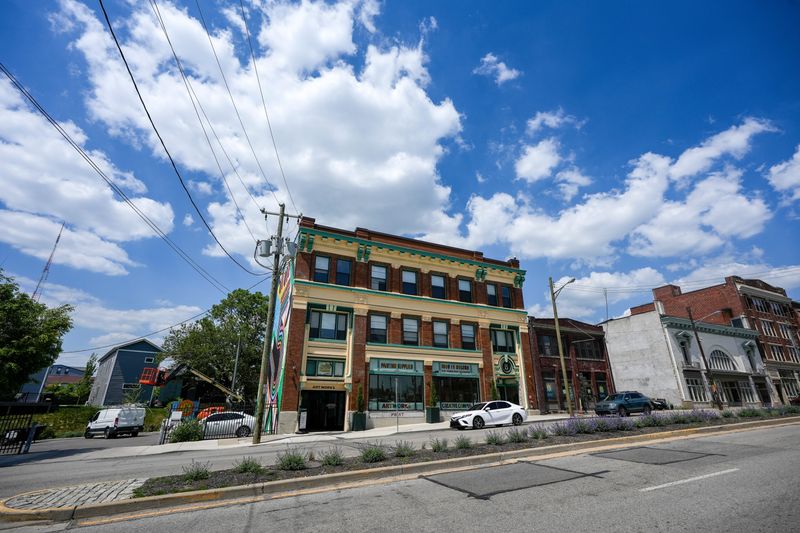
Now, to give myself some credit here, I only started working at The Enquirer four years ago. But in that time period, I’ve covered a minimum of 26 different nonprofit developments around town. Some were big-deal pieces of architecture, like Cincinnati Public Radio’s mass timber studio in Evanston. Others were historic renovations of existing buildings like ArtWorks’ $12 million Creative Campus in Walnut Hills.
Each announcement felt like a one-off project to me. Eventually, the pattern became hard to ignore.
Nonprofits are also developers now
For my latest article, I decided it was time to figure out why so many nonprofits were building at once.
So I started asking sources: How are they all financing these extremely expensive projects? And why are these buildings so nice? Does so much competition matter in fundraising?Once you start asking these questions, the answers become obvious. What also becomes clear is that, unfortunately, many of us underestimate how nonprofits handle money.
A 2024 study conducted by the UC Economic Center proves my point: In fiscal year 2022, 312 Greater Cincinnati nonprofits generated over $2.9 billion in total economic impact, employed 41,000 people and paid them over $1.3 billion combined.
That’s a lot of money for just one year.
Today, nonprofits operate like major economic players. They buy land, manage large budgets, navigate complex deals − all things private developers do. And I have the proof in a working list of around 50 nonprofits that have built something in the last decade, largely thanks to donations.
My list, and what you’ll read in this piece, is by no means exhaustive. I had to leave so many examples out.
But what I do include gives you a glimpse into the business of managing a nonprofit and why, for many, buildings have become an integral part of their 21st-century mission. Real estate can impact both how they communicate with the world, and most importantly, welcome the people they serve.
This article originally appeared on Cincinnati Enquirer: How we discovered a $1B building boom hiding in plain sight
Reporting by Sydney Franklin, Cincinnati Enquirer / Cincinnati Enquirer
USA TODAY Network via Reuters Connect