Correction: A previous version of this story misidentified the length of the contract Heath schools have with ZeroEyes after the district initially provided incorrect information. The contract is for five years.
(This story has been updated to include the cost of the contract.)

The Heath City School District installed artificial intelligence gun detection at its facilities as part of an effort to better shield faculty and students from a possible school shooting.
The district signed a five-year contract with ZeroEyes, which uses AI software to detect weapons, to implement the latter’s software on its cameras. ZeroEyes installed the software in the spring and summer before both parties tested it in July, Superintendent Trevor Thomas told The Advocate.
The district is paying ZeroEyes $97,270 – a little more than $19,500 per year – for the software, according to the contract, which The Advocate obtained through a public records request after both the company and the district initially declined to disclose the information.
“Our biggest goal right now is to keep people safe,” Thomas said in an interview. “We have a staff that cares deeply about that, and so if there’s technology that can help us protect students from one of the most horrific things that happens in schools – and it’s absolutely awful every time I hear about one – then I’m inclined to use it.”
Thomas said he first heard of the software from staff at Licking Memorial Systems, which also uses AI tech to identify what a person is bringing into the facility.
How ZeroEyes AI-powered gun detection works
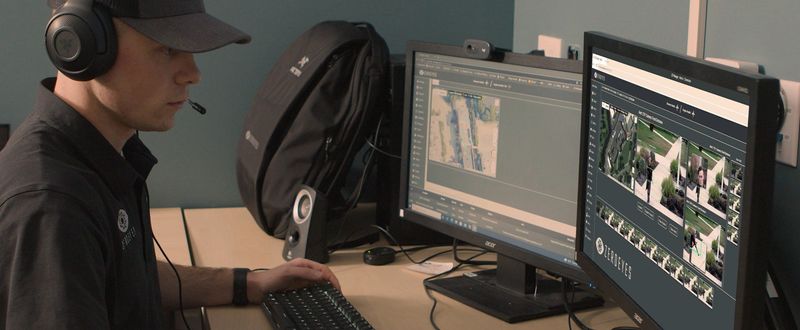
ZeroEyes integrated its software onto the district’s security cameras, and the software shares images with a ZeroEyes staffer if the equipment detects a weapon. ZeroEyes staff can’t access the cameras live feed – to follow privacy laws – and only view images when the software shares them, Vice President of Sales Bryan St. Bernard told The Advocate.
If the staff member determines a threat is valid, they alert the school district and 911 center, sharing information about a possible suspect, their last known location and the gun type, the release states. ZeroEyes says the process is instant, with staff members relaying the details seconds after receiving the image.
The images transfer to one of ZeroEyes’ operations centers, which is staffed around the clock with former military and police officers, the release states.
ZeroEyes’ server doesn’t recording anything, St. Bernard said. Instead, it captures an image if it suspects a brandished firearm; staff will review that image and consult with other staff if they aren’t certain.
The servers use artificial intelligence, and St. Bernard said that the company has made its own images of guns so that the AI understands how to spot a weapon.
In the release, the company said the equipment helps address modern security challenges. In 2025, ZeroEyes had more than 140 positive detections across the company. St. Bernard mentioned some of those detections have been in New Mexico and Chicago in which police identified suspects, but he couldn’t share more details, citing client privacy.
“We’ve caught many real firearms in places where firearms should not be pulled out and brandished,” St. Bernard said. “Those are things, in certain circumstances, law enforcement and the people there would have never been aware of had we not been there. The potential for somebody getting seriously injured or killed is very high.”
What happens with the AI gets it wrong?
The equipment has had some false detections, including in Florida, when the software mistook a clarinet for a gun, The Washington Post reported. Some argued having the software enhances safety, even if the detection was false, and others say the false alarm puts kids in dangerous situations since police are responding and searching for a suspect.
St. Bernard said the AI is trained to differentiate between firearms and other items that might look like one. If staff have trouble analyzing the image, they’ll ask another staff member for help, he said.
The potential for false alarms is not a big concern for Thomas, who said he feels confident in the software and staff after seeing the results during testing. The district also doesn’t have its own staff monitoring the cameras 24/7, Thomas said, which he feels elevates the need for this type of system.
“There is no other goal except keeping kids safe,” Thomas said. “I understand concerns, but the privacy laws are being followed, and there are protections in place.”
The district serves 1,600 students and has 250 staff members across its four facilities. St. Bernard wouldn’t say whether other school districts in Licking County are using the software, citing client privacy.
ZeroEyes, founded in 2018, is headquartered in Philadelphia with customers in several locations across the U.S., as well as in Mexico, Latin America and India.
Advocate reporter Josué Perez can be reached at jhperez@newarkadvocate.com.
This article originally appeared on Newark Advocate: Heath schools adds AI gun detection at facilities to improve safety
Reporting by Josué Perez, Newark Advocate / Newark Advocate
USA TODAY Network via Reuters Connect
By Josué Perez, Newark Advocate | USA TODAY Network