I’m a journalist and the daughter of two teachers. I know firsthand how special and arguably rare it is to be truly passionate about your job.
And it’s just as special to get to witness someone else in their element, working a job they’re also passionate about.

That was the main takeaway from my experience shadowing Cincinnati Zoo & Botanical Garden zookeeper Shae Burns, as she led a crew of Enquirer reporters through the winding paths and hidden facilities zoo staff often use to care for the over 500 species of animals at the zoo.
Our visit came ahead of National Zookeeper Week, celebrated each year during the third week of July. With a decade of work at the zoo under her belt, Burns is now the manager of wild encounters. So, her days consist of a mix of overseeing staff, directing offsite visits, such as when she takes animals to see patients at Cincinnati Children’s Hospital Medical Center, and the less-than-glamorous grounds work she does feeding, monitoring and cleaning up after various species.
Burns’ sheer dedication to the animals and the roles they play in promoting wildlife conservation was on full display in our morning visit, when she took us through a giraffe feeding, an encounter with one of the zoo’s ambassador animals and behind the scenes at the goat yard and the Galapagos tortoise exhibit.
Here’s a recap of the day.
A backstage look at the giraffes
Our morning began with what felt like having a zoo backstage pass. Burns led us through some narrow pathways toward the facility where they store food for their giraffes, better known as the Masai Giraffe, the largest subspecies of giraffe.
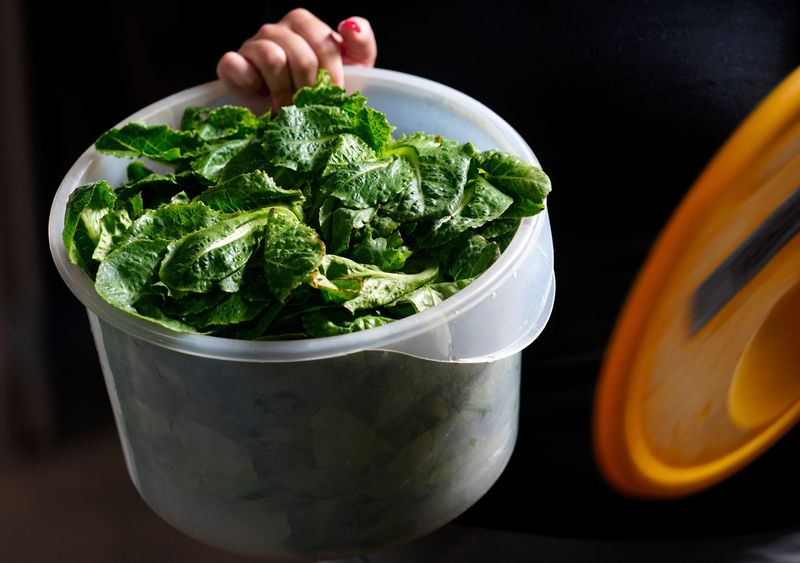
Surrounded by industrial-size refrigerators and food scales resembling what you’d find in an upscale restaurant’s kitchen, Burns spoke with great detail about the lettuce they feed the giraffes. What type it is. How they grow it on the zoo grounds. How it’s weighed to suit the diets of each of the four giraffes living there: Tessa, Zoey, Fennessy and Zeke.
I knew the Cincinnati Zoo had a robust staff of veterinarians and other specialists, but this day I learned that there’s a full-time nutritionist as well who designs diets for each individual animal based on factors like age, weight and activity level.
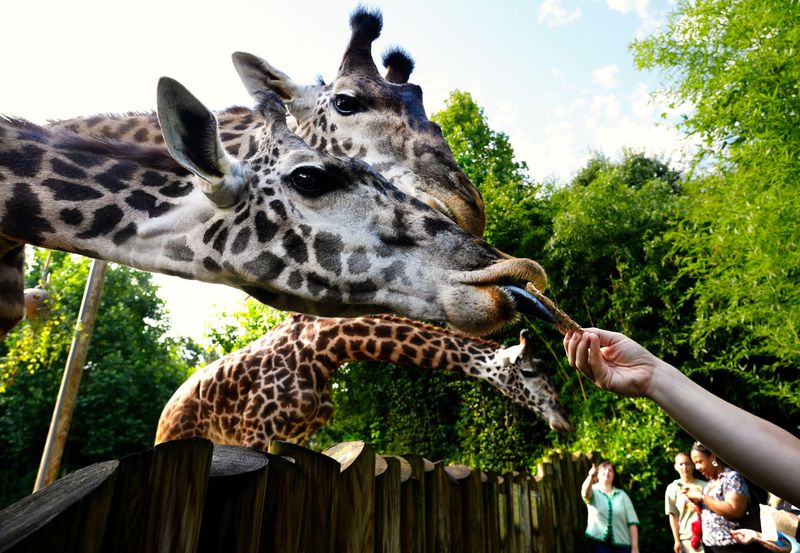
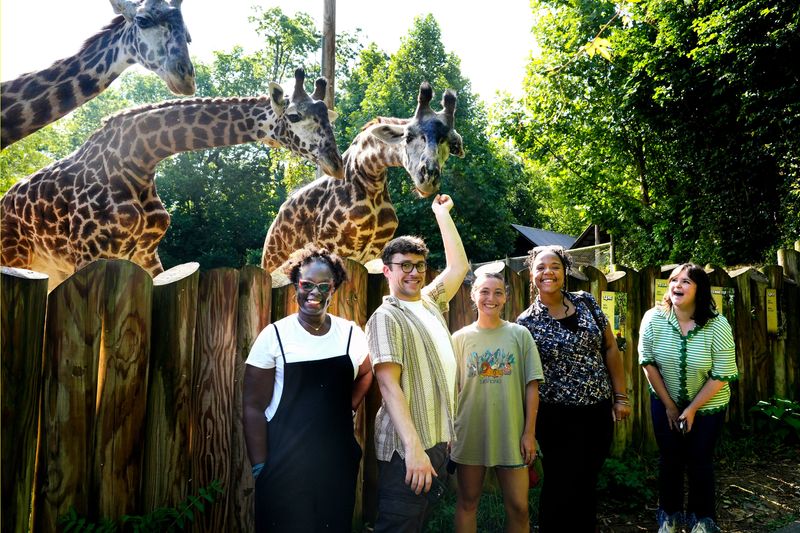
We then ventured to the Giraffe Ridge habitat to feed the animals a mid-morning snack of rye crackers. There, Burns expertly broke down the physical and personality characteristics that differentiate the four animals. Tessa, for example, is the queen bee, as she’s the giraffe who’s lived in the habitat the longest. Zeke, on the other hand, is a younger, smaller, more rambunctious type, with a tendency to scale valleys and other parts of the habitat he’s not supposed to venture into.
What’s the saying? To be seen is to be loved? And Burns definitely loves these giraffes.
The exciting part came when we got to extend the crackers toward the curious giraffes, who were more-than-eager to lean their six-foot-long necks over the edge of the habitat to sniff the treat. Like an animatronic, the giraffes extended their tongues in a cartoonish fashion to grip the cracker and maneuver it back into their mouths. If only they knew that seeing them eat a morning snack is, for us, a breathtaking sight.
On to the animal playground and ‘fraternity’ of goats
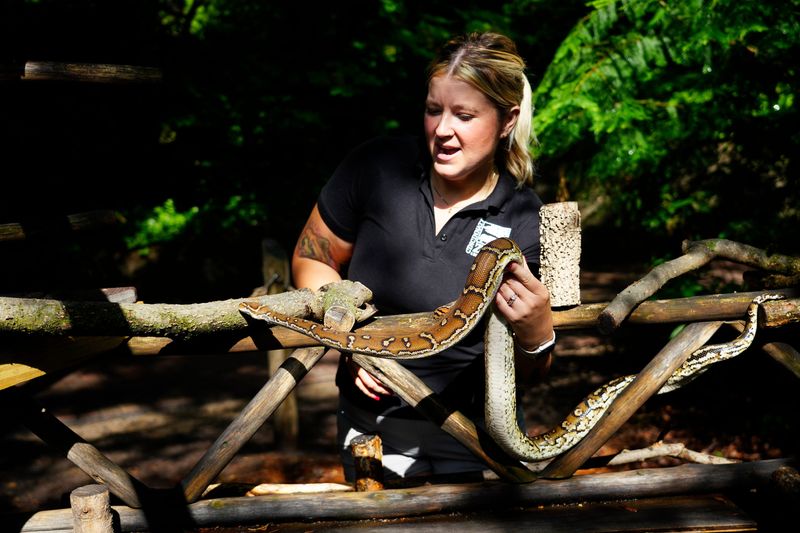
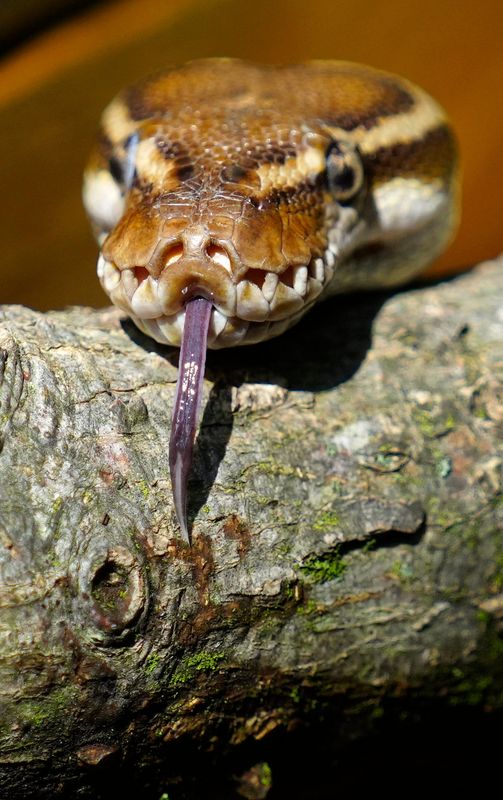
We then ventured to what’s dubbed the Animal Flexibility Zone, a playground-esque wooden structure for animals to explore beyond their habitat. Waiting there for us was Rhubarb the python snake, who’s a member of the zoo’s animal ambassador program, which means she was selected to help promote the zoo’s conservation efforts and represent her species.
But on this particular morning, Rhubarb, or “Rhubie” as zoo staff lovingly call her, was off duty, slithering through the playground and taking in all the smells of whichever squirrels or raccoons were there the night before. She’s a beautiful snake, Burns explained, pointing out her sparkling skin and her propensity to stick her little head in all the dark crevices of the playground.
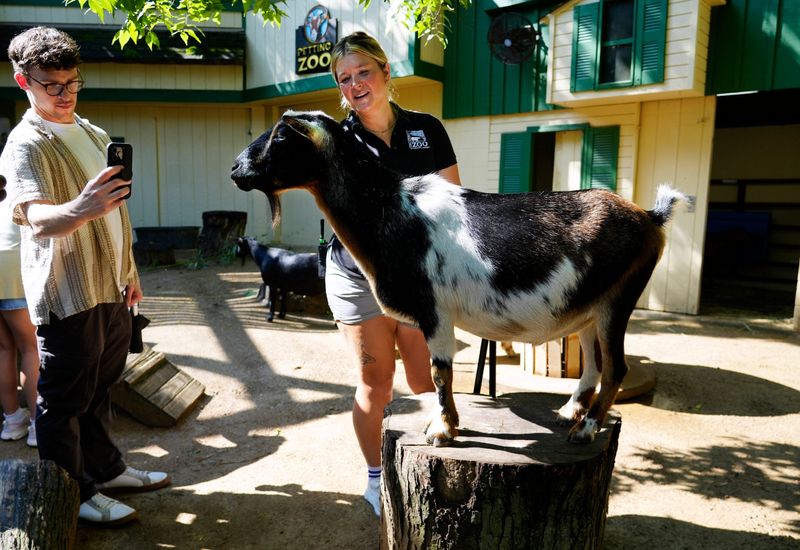
Our next stop was the Goat Yard, which houses what Burns called a “fraternity” of all-male goats who are mischievous at times but friendly always. Burns walked us through how she disposes of the fraternity brothers’ frequent excrements, recalling one gruesome night during the PNC Festival of Lights when she accidentally dropped a bag of … waste.
This particular area is open for all zoo guests, meaning the brotherhood of goats have built up lots of patience with being pet and prodded by kids. Though, they have been known to try to snatch plastic water bottles and other treasures from guests’ belongings (seems like fair revenge to me).
Meeting the Galapagos tortoise trio
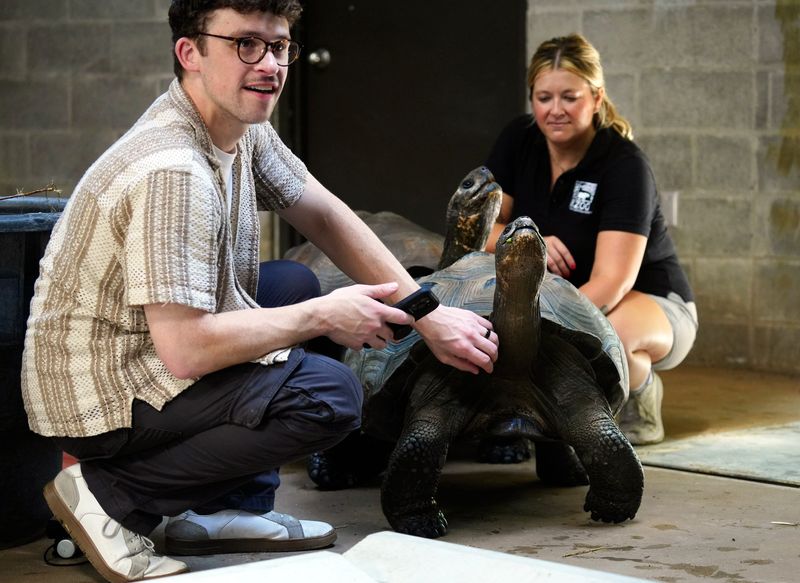
In the final visit of the day, we visited the indoor area of the Galapagos tortoise exhibit, where a trio of tortoises, Bruno, Mishell and Husker, spend most of the wintertime. This might’ve been the most awe-inspiring part of the day, crouching down in front of these ancient-looking beings, studying the meticulous geometric pattern on their shells and the way they greedily stretch out their necks for plenty of scratches from their zookeepers.
There we met zookeeper Dustin Piontek, the head keeper of reptiles, who explained how he and his team take care of the animals, even detailing a case when the zoo’s veterinary team was able to diagnose one tortoise with scoliosis.
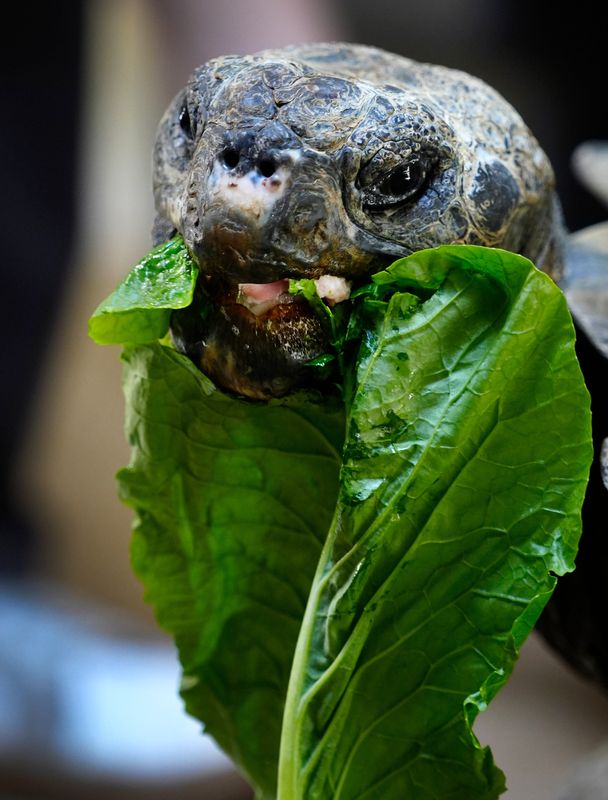
The day evidently began and ended with lettuce. We got the chance to feed Bruno, Mishell and Husker some crunchy greens, which they bit with adorable fervor but then gobbled up slowly, in true tortoise fashion. The trio of animals moved like molasses around the room, steadily scaling rocks and different obstacles to eat up every last shred of lettuce.
With each obstacle scaled, the tortoise would land back on its legs quite clumsily, its nearly 200-pound body sounding like it smashed to the ground.
Piontek was quick to ease our concerns about the sound.
“They’re fine, they’re like a tank,” he said.
This article originally appeared on Cincinnati Enquirer: From giraffe feedings to spilled poop: The luxurious life of a Cincinnati zookeeper
Reporting by Grace Tucker, Cincinnati Enquirer / Cincinnati Enquirer
USA TODAY Network via Reuters Connect