The scar left by Ben Christman’s death is measured in time, not distance. The lesion runs for years, not inches, from last February into a future with no foreseeable end to the ache. How long will the healing take? Ten years? Twenty? More likely the mark will last for as long as the Christman family lives and breathes.

The initial wound occurred Feb. 11, 2025, when a phone call cut so deep that Brian Christman could not get through our conversation, a year later, without breaking down.
“It’s a pretty tough day. They’re all tough right now,” Christman said, pausing. “I don’t want people to have to go through what we did.”
Last February, a phone rang in Northeast Ohio and the voice on the other end, belonging to then UNLV football coach Dan Mullen, delivered the heartbreaking news: Ben Christman had been found dead in his Las Vegas off-campus apartment, one day short of his 22nd birthday, a victim of cardiac arrest.
The how and why of what caused the death of the former Ohio State lineman remain extremely important, but also extremely sensitive, due to potential litigation.
“I can’t talk about a lot of that kind of stuff, but we are working on something relative to that,” Christman said.
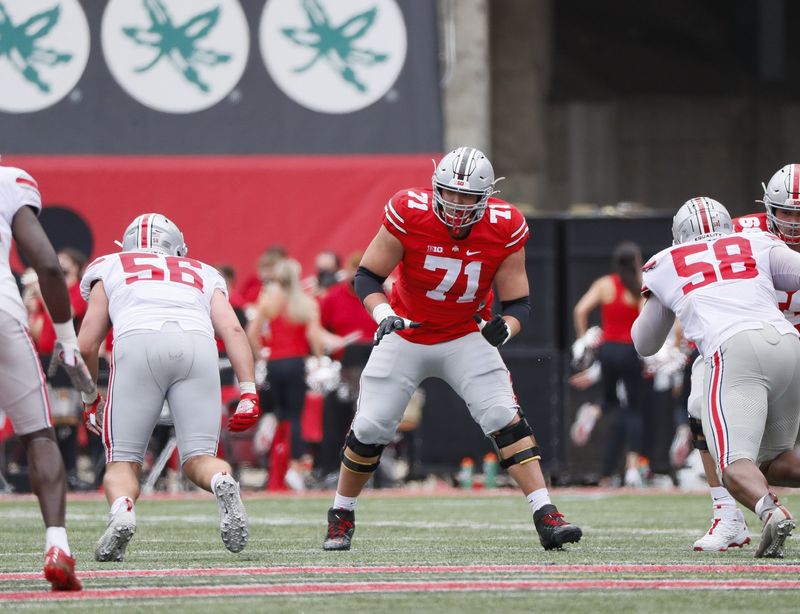
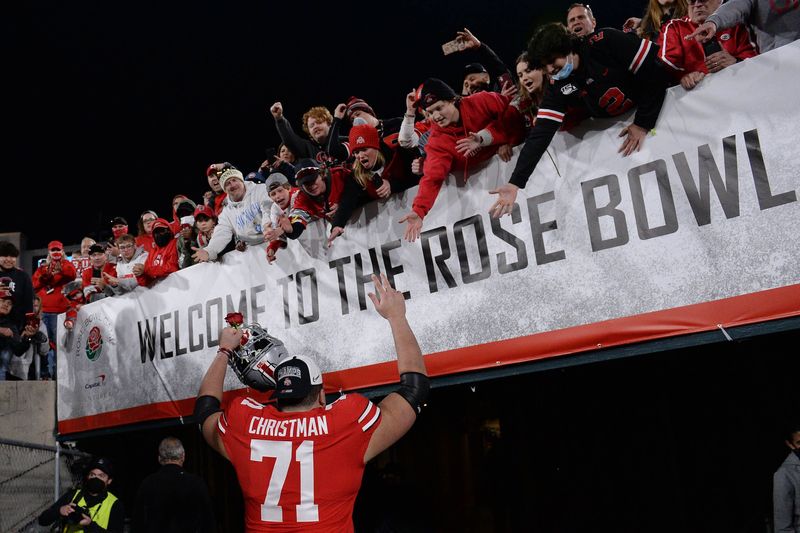
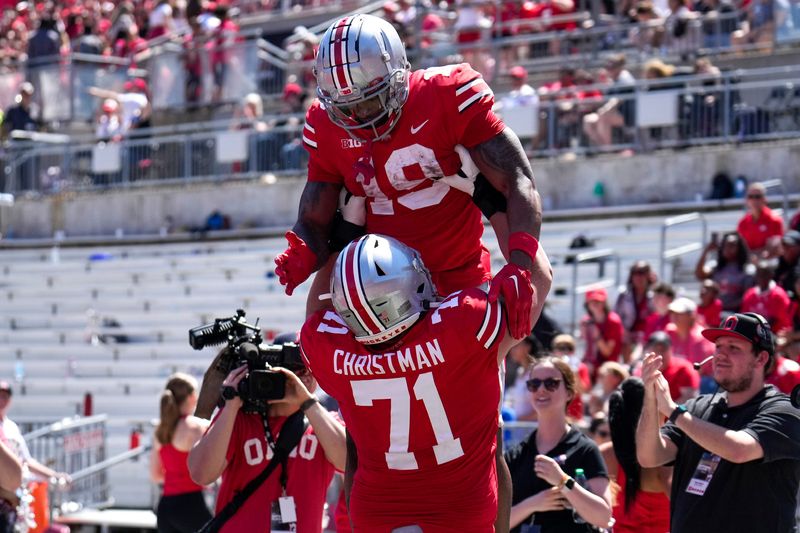
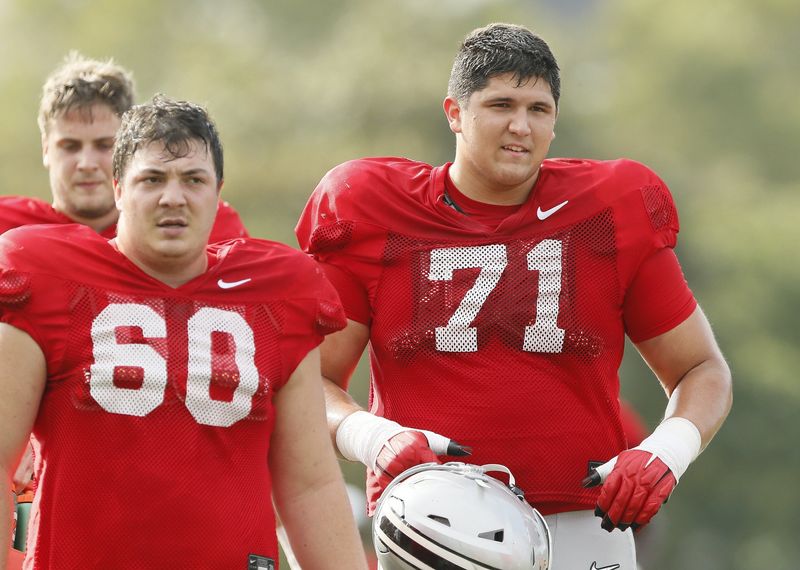
What he can talk about is his son, who was Ohio’s top-ranked offensive lineman out of Revere High School when he signed with Ohio State in the class of 2021. Christman spent two seasons with the Buckeyes before transferring to Kentucky and later UNLV.
“He was the best of us in so many ways,” Christman said.
What a devastated father must talk about is the cardiac condition that ended Ben’s life.
“He was remarkably healthy, and even that last week was doing incredibly athletic stuff at a high level of endurance and fitness,” Christman said.
Ben Christman experienced chest pain day before he died
And then he wasn’t. Even as the 6-foot-6, 315-pound tackle from Akron went through UNLV workouts as usual, his heart was preparing to fail. The day before he died, Christman reportedly complained of chest pains. An assistant coach had him undergo an electrocardiogram at the team facility. The results were sent to the team cardiologist, according to the report. Less than 24 hours later, he was gone.
The coroner’s office listed both cardiac arrhythmia, which is an irregular heartbeat, and cardiomyopathy, a disease of the heart muscle, as causes of death.
“The number one cause of death for student-athletes is sudden cardiac arrest, but we don’t screen for it,” Brian Christman said.
That needs to change. Christman is working on it.
Tragedy sends emotions crashing like a car into a guardrail. There is the immediate impact, the rebound and finally the complete stop. Only in the quiet aftermath can a person begin to assess the damage.
Brian Christman’s assessment of his own condition includes the changes he sees in himself following his son’s sudden death.
“I don’t know if I have a good answer,” he said. “For the worse, it makes you a little bitter. For the better, it makes you try to talk to anyone who is interested in talking to you about things they, or you, can do to help.”
Christman, his wife Karen and sons Thomas and Brooks – Ben’s younger brothers – turned their agony into action. As strangers approached, sharing the heartbreak of having lost children of their own, the family vowed to do everything in their power to prevent others from losing sons and daughters, brothers and sisters, to heart problems.
“How do we help to save the next Ben?” Christman said. “Think if even one student-athlete could see a one-minute view of their heart [via echocardiography, a.k.a. cardiac ultrasound] it shows that structurally something is [wrong] there, it would help change the direction of their life. I don’t know what that would cost, but that would be meaningful.”
Christman learned during the fall that Ohio politicians Tristan Rader and Jean Schmidt were scheduled to introduce House Bill 437, a beefed-up version of “Lindsey’s Law,” a 2017 Ohio mandate designed to prevent Sudden Cardiac Arrest in athletes 19 or younger.
Cardiac screening requires more than ‘checking boxes’
Wanting more than an updated law that amounts to “checking boxes,” as he put it, Christman “injected myself” into the proceedings. He reached out to Bill Roemer, his local representative in the Ohio House, telling him, “You have to get me in front of these people.”
Roemer, a family friend, threw his support behind the bill.
“As someone who watched Ben play both basketball and football and taught him in upper-level math, I know how important cardiac screening for our athletes is,” Roemer said. “Anything we are able to do to enhance cardiac screening will save lives in Ohio.”
Wheels began turning. Christman was invited to provide an in-person testimonial during a House hearing committee, where he laid out the need for each Ohio high school to provide cardiac ultrasound testing for every high school athlete.
The testimony began, “Our son Ben Christman was an amazing young man … his enthusiasm for life was infectious, and his loyalty to those who cared about him knew no bounds. He even had the word loyalty tattooed on his massive forearm; it meant that much to him. Sadly, when he passed, it was one of the things we had to use to confirm it was him. It’s devastating losing a child. … As a father who lost a son, not only do you think of them every day, but also you go over in your mind nearly every detail of their lives, trying to understand if there was anything I could’ve done differently. What could I have done differently to prevent that moment and the unbelievable pain his mother and brothers are going through?”
Losing a child ranks at the top of life’s most heartwrenching calamities. After it happens, the grieving process begins and multiple coping paths emerge. Some family members turn inward, working through their sorrow in silence, often unable to accomplish anything beyond basic existence. Others flash anger, resentment and bitterness, which is understandable. There usually is regret, and perhaps hardest of all is the pain of missing what has been lost while lamenting what could have been.
The Christmans have experienced all the emotional stages but also turned proactive by placing what energy they can muster into helping others.
“After Ben passed, we did what any parent would do by checking his brothers right away,” Christman told the committee. “We’re fortunate to have resources enabling us to run every cardiac test imaginable to ensure they are OK. As I watch and go through these tests with them, a thought keeps coming back to me: cardiac screening.”
House Bill 437 remains in committee, and while it is a step in the right direction, requiring increased education for coaches, checking family health history and mandating that medical personnel pay closer attention to signs of cardiac abnormalities, Christman is adamant that anything short of using cardiac ultrasound to capture images of the heart during annual sports physicals fails to address the main issue.
“We need better screening at the point of the physical,” he said, reminding that Ben’s heart condition went undetected through the usual method of reviewing family history and filling out medical questionnaires.
“If you look at the heart, 90% of the time you can see the defect,” Christman said, repeating what he said doctors told him.
Christman’s concern is that politicians, school officials and the public in general will strike down as cost-prohibitive any solution that requires all high school athletes to undergo echocardiography testing. With nearly 300,000 Ohio high school students participating in sports, the estimated cost of funding such a plan would be about $30 million, though that number could be offset by corporate donations.
Christman acknowledged that any progress in athlete safety is better than none, and he stressed that the politicians involved with HB 437 “have all been respectful and professional.”
“It’s refreshing to see politicians, both Democrat and Republican, working together on something like this,” he said.
But that work cannot end in a watered-down bill, he said.
“These screenings will inevitably detect issues in student athletes,” he said. “It may be significant enough to sideline them from the sport they love and played their whole life. It will be a difficult call, but not nearly as difficult as the call I received. I want to help make sure no parent has to receive that call. I’d rather see a student-athlete walk away and live a great life than have the joy of victories and cheers turn into the tributes and tears of family and friends.”
Those tears still stream for the Christmans and will continue to even after the salve of time turns scars into beauty marks representing the sweet memory of their son. But bravo to them for pushing to keep family tragedy from happening to others.
“Big Ben” would have done the same.
Sports columnist Rob Oller can be reached at roller@dispatch.com and on X.com at @rollerCD.
This article originally appeared on The Columbus Dispatch: Father of deceased Revere grad Ben Christman wants heart testing
Reporting by Rob Oller, Columbus Dispatch / The Columbus Dispatch
USA TODAY Network via Reuters Connect