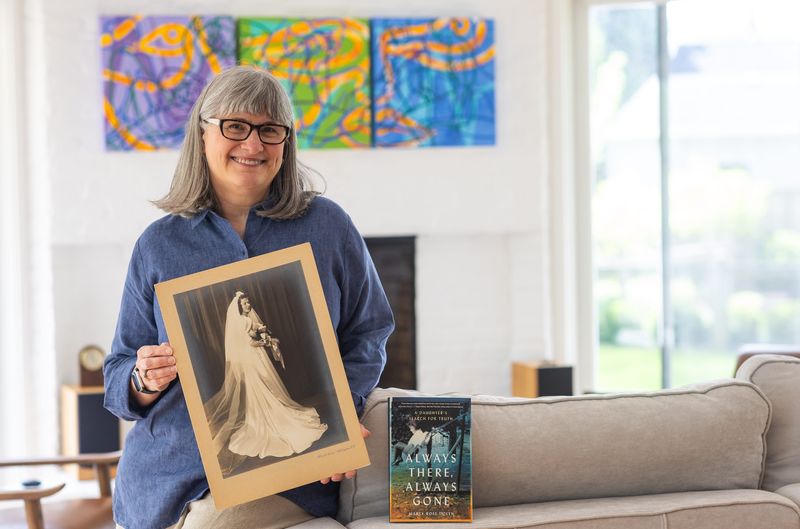
In December 1960, Highlights for Children magazine executives Garry Myers Jr. and Mary Martin Myers were killed in a commercial airline collision over New York City. They were 38 years old and left behind the family business they had spent the past decade building and leading.

They also left behind five small children, ages 8 to 16, who were sent from their home in Marble Cliff to be raised by an uncle in Austin. As was common at the time, the children were expected to bravely move forward from this shattering event, and the tragedy was rarely discussed in any depth in family or company circles again.
Connect with the Columbus you don’t know. Subscribe to Columbus Monthly’s weekly Top Reads newsletter.
In 2010, at the 50th anniversary of the accident, there were memorial events and articles of remembrance. It was then that Garry and Mary’s granddaughter, Marty Ross-Dolen, began writing, a helpful tool to process her family’s experience of grief and trauma and understand more about the lives of the grandparents she never knew. What started out as a personal essay became a memoir that took Ross-Dolen the next 14 years to write.
Named in honor of her grandmother, Ross-Dolen was born just six years after the accident, when her mother left college to marry her father and start a family. From a young age, Ross-Dolen observed her mother’s unspoken grief and grew deeply protective of her. She also developed a deep longing to know more about her namesake and the family story that always had been shrouded in silence.
“Always There, Always Gone,” released in May by She Writes Press, is ultimately a tale of discovery. It follows the author’s journey to understand her grandmother and unpack her extraordinary life from her tragic death. It is also a touching mother-daughter story thoughtfully revealed in the fragmented memories of three intertwined lives.
Understanding the meaning we give to memories over time is an important theme in this book: In one chapter, Ross-Dolen and her mother exchange the pieces they can remember of a childhood nosebleed episode, which was strong with emotions of fear and embarrassment, but initially short on details.
Over the course of an afternoon, through phone calls and texts, mother and daughter rebuild the narrative until it is fully seen, reminding us all how incomplete memories are better when shared.
How ‘Always There, Always Gone’ pieces together historical documents
Primary-source materials play an important role in this memoir. After years of sitting with the many boxes of her grandmother’s personal papers and archives, Ross-Dolen takes us through her process of thoughtfully reviewing each piece.
“My grandmother’s letters, the essence of them, the treasure of them, exhaust me,” she writes. Examples of many handwritten letters, summer camp records, family vacation photos and news clippings are reprinted in the book for readers to process.
Through these documents, we learn, alongside Ross-Dolen, about Mary at every stage — from a “1930’s wide-eyed girl turned 1940’s clear-sighted woman turned 1950’s quick-witted mother.” In the many reprinted letters from different parts of her life, we hear directly from Mary in her own voice, which is bright, curious and spunky.
But these documents give us only a partial picture — this is a memoir, not a biography, after all. Ross-Dolen is experimental in her approach to the story, which helps us as readers understand all she is processing. She fantasizes about visiting her grandmother as a girl at Interlochen Arts Camp in Michigan, slipping into a scene in a rowboat just as quickly as she slips out.
To comprehend the curious contents of an accordion file of letters from her grandmother’s many college boyfriends, Ross-Dolen creates an imagined gameshow in the campy style of “The Dating Game.”
Erasure poems are another example of Ross-Dolen’s creativity with the materials she was given. Erasure poetry gives new life to existing documents by blocking out some of the letters or lines to create a poem out of the words that remain.
For Ross-Dolen, these new works leave her stamp on the materials and become a metaphor for her journey, what she calls her version of a craft activity that might be found in the pages of Highlights magazine. “You can’t write about three full lives without cutting something,” she explained in an interview.
And lest you think otherwise, Ross-Dolen is keenly aware you’re not supposed to write fictionally in a memoir. In chapters that speak directly to the reader, the author explains that she is in full control of these liberties, writing, “these became the fun parts in an otherwise painful project.” These experimental sections also allow readers to witness the author’s blossoming relationship with the grandmother she never knew.
Told in vignettes, what the author calls wisps — “wisps of time, wisps of hope, wisps of imagination, wisps of despair” — the book is accessible and digestible. Ross-Dolen uses all of these tools skillfully.
Through retelling personal memories, sharing precious primary source materials and a playful creative license, she thoughtfully pieces these many fragments together like a quilter, forming something artfully whole and totally new. In so doing, Ross-Dolen reclaims the story of her grandmother from her family’s silence and makes it her own.
This story appeared in the July 2025 issue of Columbus Monthly. Subscribe here.
This article originally appeared on Columbus Monthly: Experimental memoir from granddaughter of former Highlights execs pieces together the past
Reporting by Amy Bodiker Baskes / Columbus Monthly
USA TODAY Network via Reuters Connect