Nearly 180 years after rail service first came to the Cuyahoga Valley, electric battery-powered locomotives will move passengers through the national park for the first time.
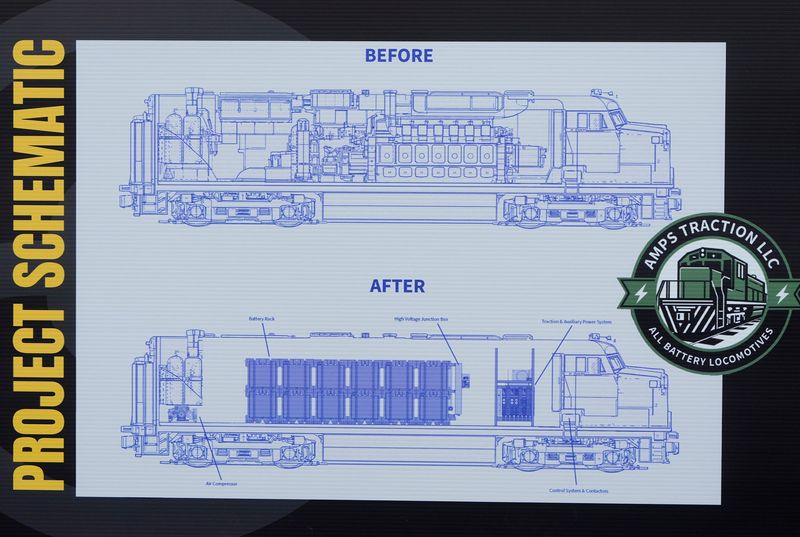
The nonprofit Cuyahoga Valley Scenic Railroad plans to finish its conversion of two diesel-powered locomotives to battery power and have the new engines up and running for passengers by next spring.

With rain in the forecast April 14, inclement weather held off at CVSR’s Fitzwater Maintenance Facility in Independence for a luncheon celebrating the nonprofit’s new endeavor.
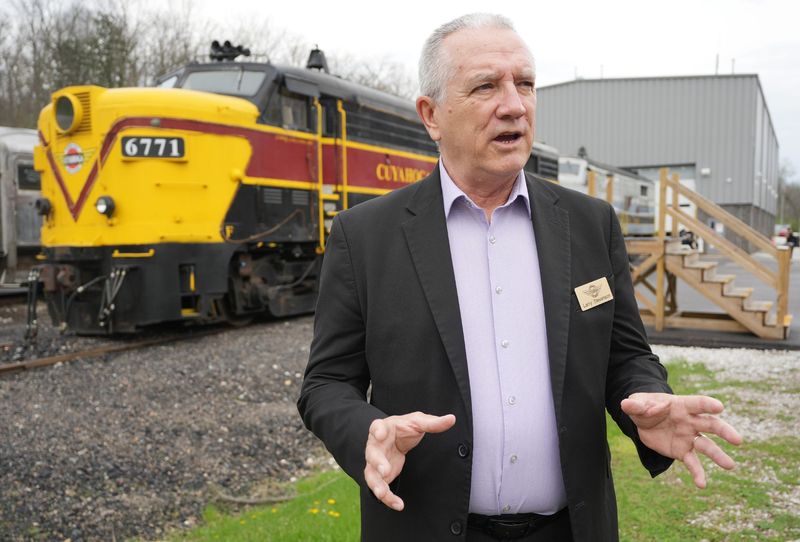
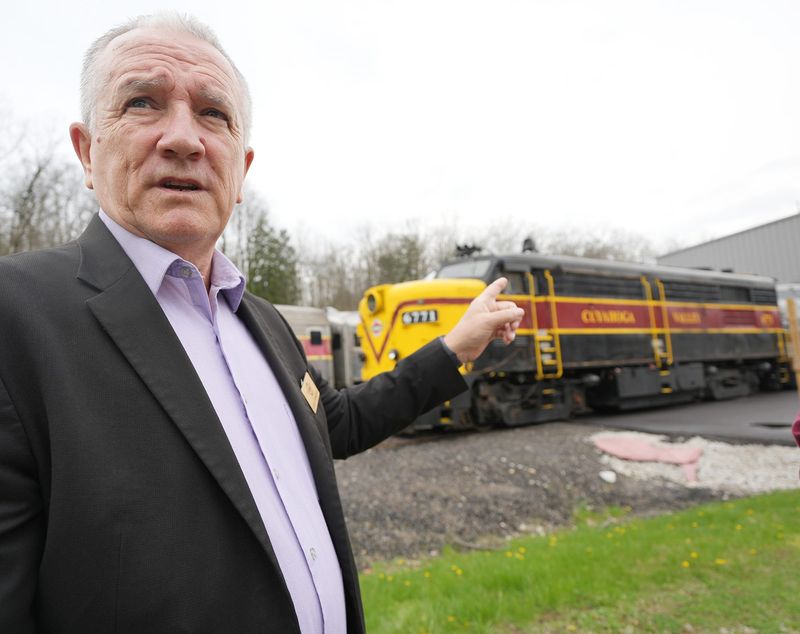
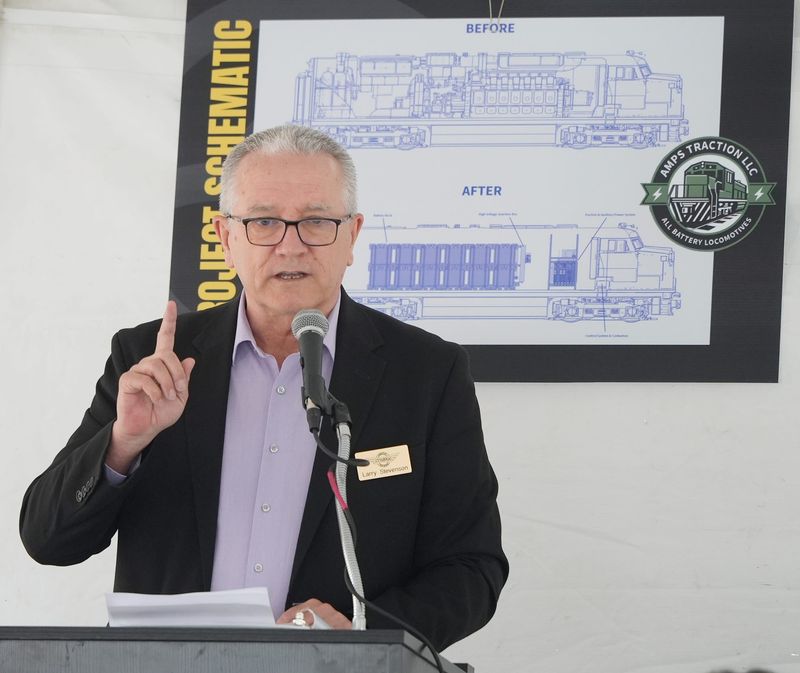
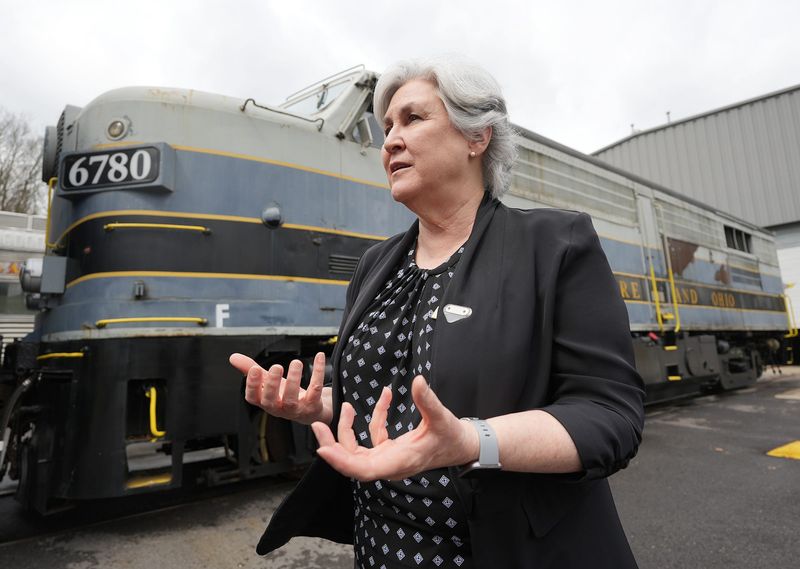
Converting locomotives No. 6771 and No. 6780 to battery power will improve both reliability and sustainability and help with cost savings, CVSR President and CEO Larry Stevenson said, standing in front of the two locomotives.
The Federal Railroad Administration requires inspection of CVSR’s four owned and two leased diesel-powered locomotives every 90 days, Stevenson said. The locomotives are offline for a week for each inspection.
“Just the filter change alone is 5,000 bucks, and you do that every 90 days,” he said. “We’re not doing that anymore. We don’t have to do that. When they come into the shop, they’re going to get looked at, from their braking systems, their air systems, their electrical systems, then they’re back out.”
The locomotives’ horsepower will also increase to about 1,800, Stevenson said. Their current 1959 Alco FPA4 diesel engines’ horsepower has decreased by hundreds over the years to about 1,200.
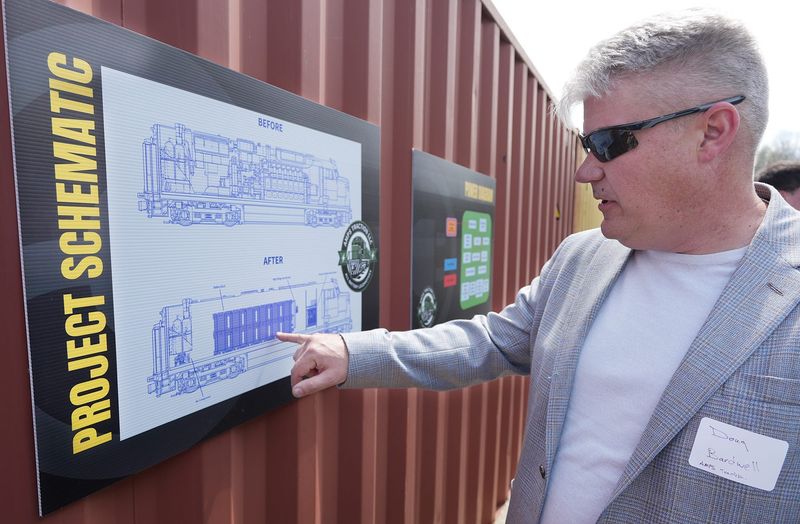
Doug Bardwell, president and founding member of Westerville-based project engineer AMPS Traction, said the locomotive engines will charge using a “standardized CCS1 charging interface,” which is the same system used to charge common electric vehicles.
Moving forward, Stevenson said CVSR could electrify more locomotives “if these perform as well as we think they’re going to perform.”
Ohio EPA grants will reimburse about 60% of project costs
With a focus on the environmental impact of the conversion of locomotives No. 6771 and No. 6780, the Ohio Environmental Protection Agency will reimburse about $2.1 million – or roughly 60% – of the estimated $3.5 million project through grants.
The two diesel engines together emit about 1,400 tons of carbon dioxide annually, said Alauddin Alauddin, Ohio EPA assistant chief of environmental grant assistance.
“This project will repower the existing locomotives,” Alauddin said. “And they’ll have the environmental and efficiency benefits of zero emissions – zero emissions from a locomotive. That’s something to grasp and to visualize in itself.”
Reducing fuel maintenance costs comes out to a cost savings of about 60% to 80% compared to diesel engines, he said.
Alauddin said previous conversations with stakeholders about a potential project spoke to “a 13-year-old still inside me that loves everything about trains.”
“So, it involved trains and a beautiful national forest, and getting people, young and old, to experience them both, showing them environmental stewardship in action rather than just talking to people about it – and of course, in the process, getting tons of pollutants out of the air that we breathe,” Alauddin said.
CVSR will receive Ohio EPA reimbursement for completing various project milestones, Stevenson said. They include putting the old diesel engines out of commission, transporting the locomotives to a facility to be fixed and purchasing the batteries.
Park superintendent shares historical nature of electrification effort
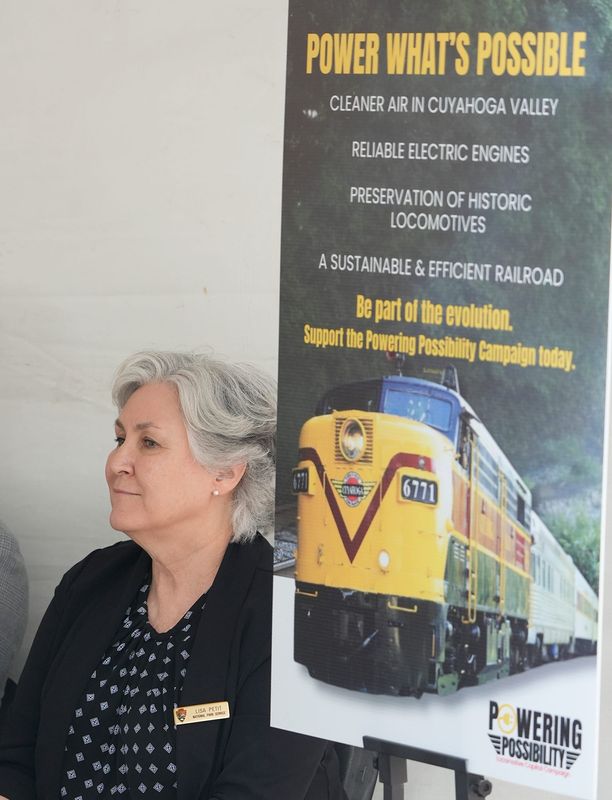
Cuyahoga Valley National Park Superintendent Lisa Petit highlighted that the electrification project is kicking off during the United States’ 250th anniversary.
“And I can’t think of a better way to celebrate American innovation and exceptionalism than to celebrate this modern innovation in clean repowering of a historic train, on a historic railway, in a historic river valley, through Ohio’s only national park,” she said.
Further, she said, “The history of the Cuyahoga Valley is rooted in the history of innovation in transportation as an economic driver. Whether it was Native American trade along the Cuyahoga, the Ohio and Erie Canal propelling the Industrial Revolution or the great era of railroads and the Valley Railway, that has played a role as economic driver for this region and the country.”
Petit called the project “momentous” for the park and CVSR in part because past pollution of the Cuyahoga River served as a factor in the creation of the U.S. EPA.
Further, she said, “It’s rare to have a train that runs through a national park on National Park Service-owned rail.”
In 2025 – its 50th anniversary – CVNP broke a record of bringing in more than 3 million visits, making it the 11th-most-visited national park of the country’s 63 that year, Petit said.
And CVSR expects to welcome about 6,000 children onto its passenger rail line this year, Stevenson said.
Since Stevenson joined CVSR in 2024, Petit said he’s “doubled down” on the CVNP-CVSR partnership.
“They’re what make us very, very special,” Petit said of the partnership. “I mean, we’re special in our own right, aren’t we? But this scenic railroad really is so attractive as a destination in its own right, and to transport visitors through this national park is really magical for the visitors who maybe have never been on a train before or maybe have never been in a national park before.”
Patrick Williams covers growth and development for the Akron Beacon Journal. He can be reached by email at pwilliams@usatodayco.com or on X @pwilliamsOH. Sign up for the Beacon Journal’s business and consumer newsletter, “What’s The Deal?”
This article originally appeared on Akron Beacon Journal: Electrifying makeover will keep Cuyahoga Valley Scenic Railroad chugging into future
Reporting by Patrick Williams, Akron Beacon Journal / Akron Beacon Journal
USA TODAY Network via Reuters Connect