Cincinnati leaders want you to know that money from the $1.6 billion sale of the Cincinnati Southern Railway is being spent.

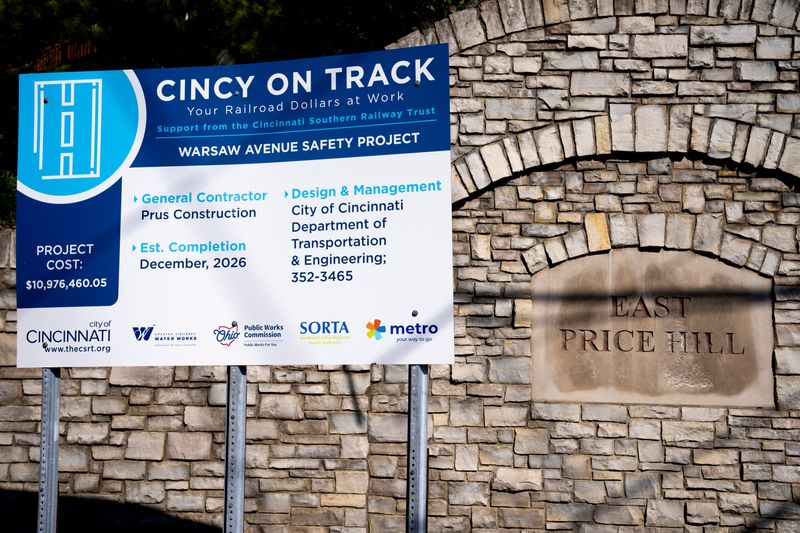
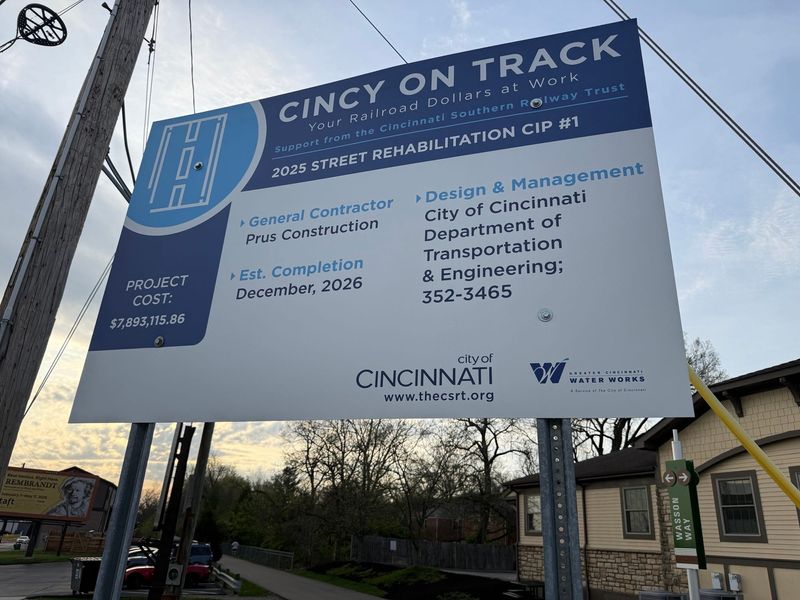
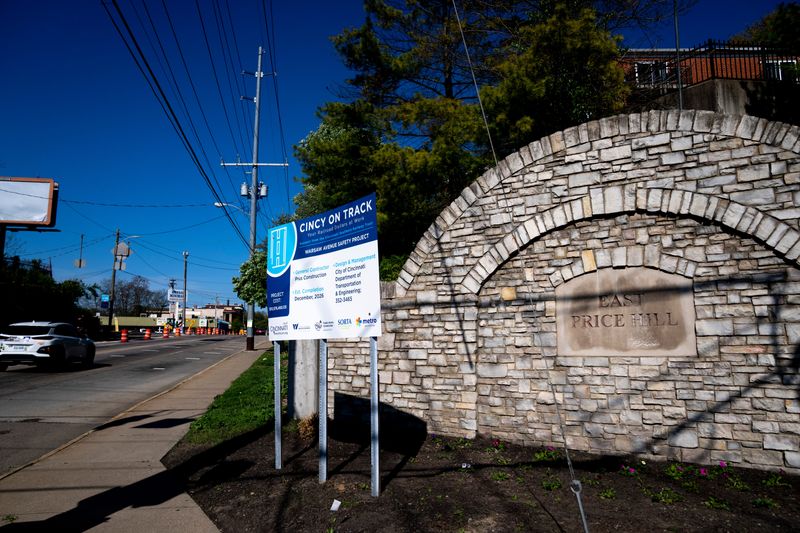
Cincy on Track signs have sprouted around the city, touting the vital statistics of the more than 50 projects underway using the railroad money. They provide a tangible way to see how the money is being spent compared to the city’s online dashboard, which tracks the amount spent on different projects with varying degrees of specificity about the project.
For instance, the city reports $11,050 was spent on the Sawyer Point and Yeatman’s Cove Bike Trail out of the $1 million budgeted. But then the city has lumped street rehabs under one line item showing $2.2 million has been spent of the $12.9 million budgeted.
How much do the signs cost?
The signs cost up to $250 apiece, according to Ben Breuninger, spokesman for the city manager’s office, and are included in the project costs when they are put out to bid.
Why do the projects have signs?
Since voters approved the sale of the city-owned Cincinnati Southern Railway in 2023, a large portion of the funds remain unspent. The $1.6 billion sits in a trust fund that has generated $56 million in the first year, money earmarked for existing infrastructure. The railroad fund will earn $58 million in the next fiscal year for infrastructure projects.
As of January, only 5% had been spent of the $85 million railway money from the past two years. That pace has since picked up since the. As of April 10, the city had spent 14% of the railroad dollars, about $11.8 million.
“We are very focused on deploying these dollars as quickly as possible,” said Mayor Aftab Pureval.
What do the signs say?
Now you can see where the dollars are being spent. The signs are labeled with the name of the railroad fund program, Cincy on Track, and say “Your railroad dollars at work.” The signs include the project name, total cost and estimated completion date.
Where are the signs?
The city could not provide a list of all the signs and their locations.
Breuninger, in an email to The Enquirer, said they started going up in the fall but will be more frequent as the weather, and construction, heats up. Eventually, all the Cincy on Track projects will have signs, he said. Some projects involve road improvements across various neighborhoods.
Among the 50 signs for the current projects are:
Why is the city getting money from a railway?
The decision for Cincinnati to sell its railway, which it had owned since 1880, divided the community. Voters narrowly approved the sale in 2023 with 51.6% supporting. The proceeds are required to go towards existing infrastructure.
Proponents said the city needed to sell the railroad to generate more money to address the backlog of road repairs and other infrastructure projects.
Amid a railroad boom, the city in 1880 built the 337-mile railroad to Chattanooga, Tennessee. The city rented use of the railway to Norfolk Southern for $25 million a year prior to the sale. After the vote in 2023, the city sold the railway to Norfolk Southern for $1.6 billion.
Is the city spending the money faster?
As time wore on, some people who supported the railroad sale grew impatient with how slowly the city was spending the money.
Former Mayor Charlie Luken, who had served on the Cincinnati Southern Railway board, pushed for the sale but told The Enquirer in January the city needs to speed up the process.
“I would suggest that somebody has got to boldly take charge of the promises that I made and others made when we sold the railroad and figure out how to get this money working for people,” Luken said. “God knows when I come up Sixth Street and feel like I’m in a bumper car ride, I know there’s a lot of work that could be done.”
Breuninger, in the email to The Enquirer, said the city has taken steps to spend the railroad money quicker. For instance, the city will begin design work on projects before money is allocated, instead of after, he said.
“Resources do not have to ‘sit and wait’ for a design to be completed,” Breuninger said.
Breuninger said the city also appointed a project manager for Cincy on Track to coordinate projects across departments and “remove barriers.”
This article originally appeared on Cincinnati Enquirer: Signs sprout in Cincinnati touting projects funded by railroad sale
Reporting by Scott Wartman, Cincinnati Enquirer / Cincinnati Enquirer
USA TODAY Network via Reuters Connect