This story is part of the Iconic Brands series, a USA TODAY network project showcasing the companies and brands that helped shape the nation’s identity, economy and culture. The series celebrates American ingenuity with a deeply reported examination of how brands intersect with history, community and everyday life in celebration of the nation’s 250th anniversary. Find more at usatoday.com/usa250/iconic-brands.
One can credit or blame O.D. Thompson for the inevitable day it costs $100 million a year for a decent quarterback.

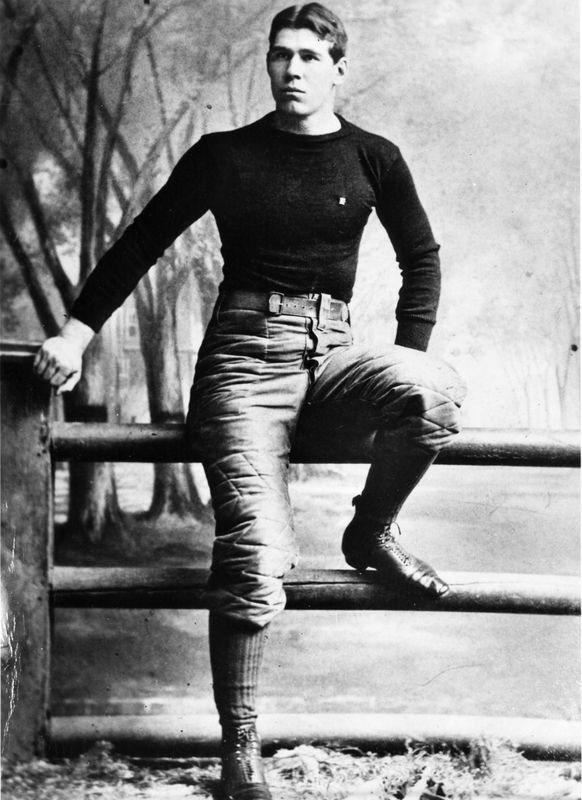
Either way, it was Thompson who made William Walter “Pudge” Heffelfinger football’s first documented pro, handing him $500 to play for Allegheny in an 1892 tussle against Pittsburgh. That was an alarming sum then, more than a coal miner’s annual wage.
The United States was 116 years old when a 6-foot-3, 210-pound bruiser named Pudge pocketed those 500 clams.
One-hundred-thirty-four years later, this is where things stand in professional football:
Who pays for this?
Directly or indirectly, it’s you, USA; at least, enough of you that one imagines Uncle Sam eyeing an NFL inflatable and declaring, “I can’t believe how big you got.”
The U.S. population in Heffelfinger’s heyday was 65 million. For Super Bowl 60, the U.S. viewing audience was 125 million.
American football finds early supporter in President Teddy Roosevelt
The NFL hung on through hard early decades, tagged along with television in the 1950s, soared with the dawn of the Super Bowl in the 1960s, meshed with the tech boom, and branched into every cranny of the culture.
It was a slow train to America’s living room.
A 21-year-old whiz named Philo Pharnsworth demonstrated the world’s first fully electronic television system in 1927. It was another 12 years until an audience of 1,000 watched the NFL’s first live telecast.
Post-Pudge, pro football punched along, knocking from the East to a haphazard hub in the Midwest, sprouting a raucous Ohio rivalry that grew in the years after a Canton lawyer named William McKinley was president of the USA.
Teddy Roosevelt, president after the McKinley assassination, lauded football in a 1903 speech:
“I believe in rough, manly sports. I do not feel any particular sympathy for the person who gets battered about a good deal so long as it is not fatal.”
After football killed 19 college players in 1905, Roosevelt resisted cries to outlaw the game and supported rule changes. It had become a dangerous flesh pile around the ball carrier. A 1906 revision legalizing the forward pass gradually spread things out.
How the nation’s first pro football league was born
Canton and Massillon were steel towns eight miles apart. When their pro teams collided, an all-male army 5,000 strong, dressed in the suits and fedoras worn to church, stuffed the wood-planked stands.
Sinners put the rivalry on the ropes amid a 1906 game-fixing scandal, but pro football returned to good graces well before the Bulldogs signed “the world’s greatest athlete,” Jim Thorpe, in 1915.
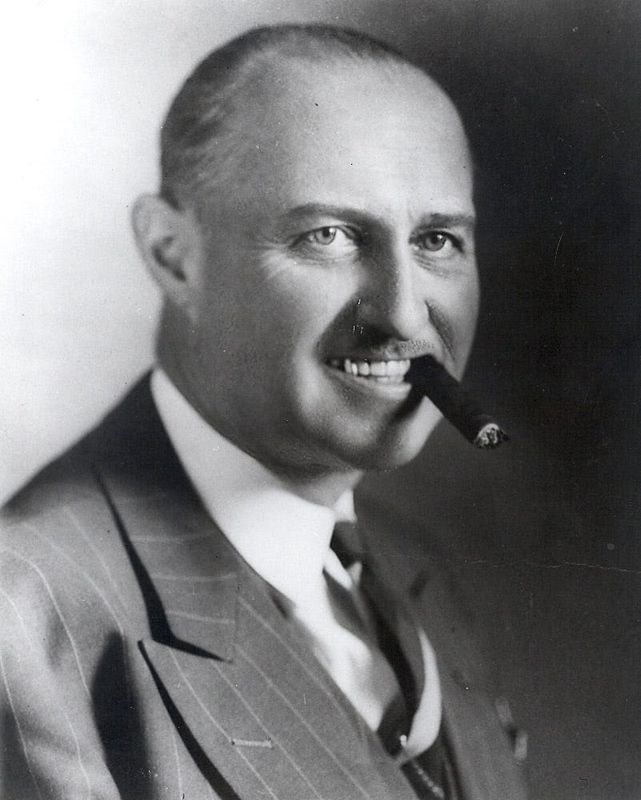
World War I and the 1918 flu pandemic ran their courses. After Canton tore up the Ohio League in 1919, Bulldogs owner Ralph Hay summoned team owners to his Canton car dealership to propose a system that wouldn’t grind its gears.
Benjamin Franklin’s picture first appeared on the $100 bill in 1914. The fee to join the American Professional Football Association in 1920 was one “Benjamin,” but no one actually paid the $100.
Meetings were conducted in Canton on Aug. 20 and Sept. 17. The first league game, Dayton Triangles vs. Columbus Panhandles, soon followed. The name changed to National Football League in 1922, when Canton won the championship, beating out 25-year-old owner-player George Halas’s Chicago Bears.
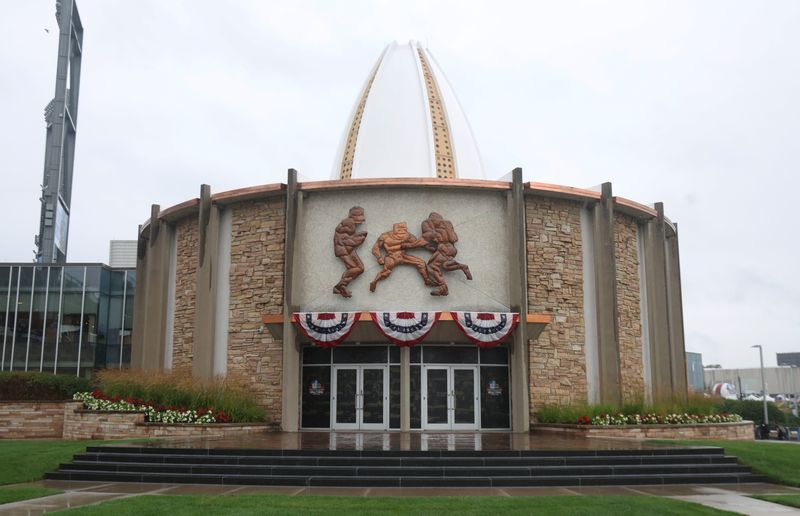
The Bulldogs lasted long enough to give Canton grounds for landing the Pro Football Hall of Fame. The NFL migrated to some of the nation’s largest markets and eventually to all of them.
Chicago got ahead of inflation. It might require 100 million “Benjamins” to pry the Bears from Halas’s descendants in 2026.
According to Forbes, the Bears were worth $8.2 billion in 2025. Their value should reach $10 billion soon, considering Forbes pegged them at $2.7 billion just 10 years ago.
NFL historian shares insights
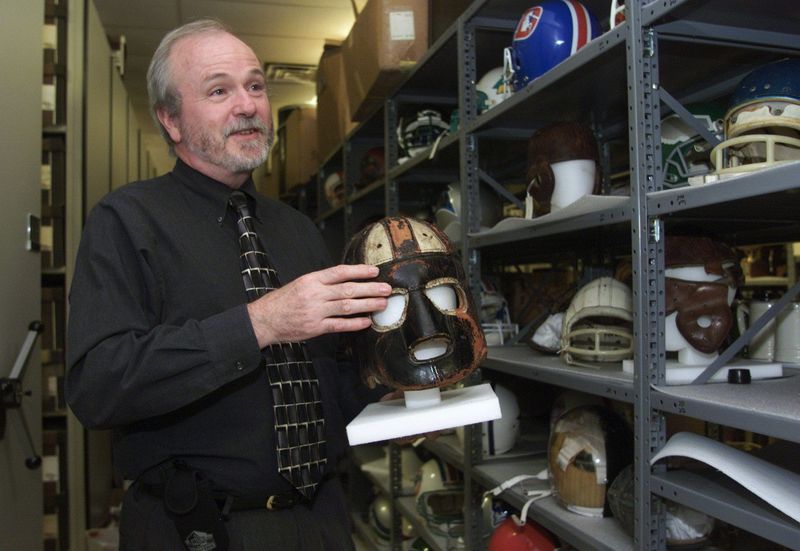
Historian Joe Horrigan keeps an office in the Hall of Fame nearly 50 years after the museum hired him. He was a young man when he met Halas and other aging protagonists of the early NFL. He was consulted for “Leatherheads,” starring George Clooney as Dodge Connelly, depicting the game in 1925.
The early NFL has been perceived as ragtag.
“It was better organized than people realize,” Horrigan said. “The meetings in Canton kept an eye on marketing. Thorpe was named league president in 1920, even as he continued to play for the Canton Bulldogs.”
It took the NFL a half century to catch “The National Pastime.” A 1960 Gallup poll concluded baseball was the favorite sport of 34% of U.S. residents, followed by football at 21%. The order flipped in 1970, polling 38% for football and 19% for baseball.
In 2000, Gallup put the top four at 33% for football, 16% for basketball, 13% for baseball and 5% for hockey.
The changing of the guard coincided with the Super Bowl, born of a 1960s merger with the upstart American Football League.
Before the AFL and NFL blended into one league, they faced each other once a year in an AFL vs. NFL title game. The NFL’s Packers destroyed the Chiefs and Raiders in the first two.
Prior to the third, the first officially named Super Bowl, New York Jets quarterback “Broadway Joe” Namath brazenly guaranteed the AFL challenger would win. Horrigan lived in New York when his dad was the AFL’s publicity director.
“When the Jets beat the Colts in Super Bowl III,” he said, “it was like New Year’s Eve, banging pots and pans.”
NFL teams valued in the billions
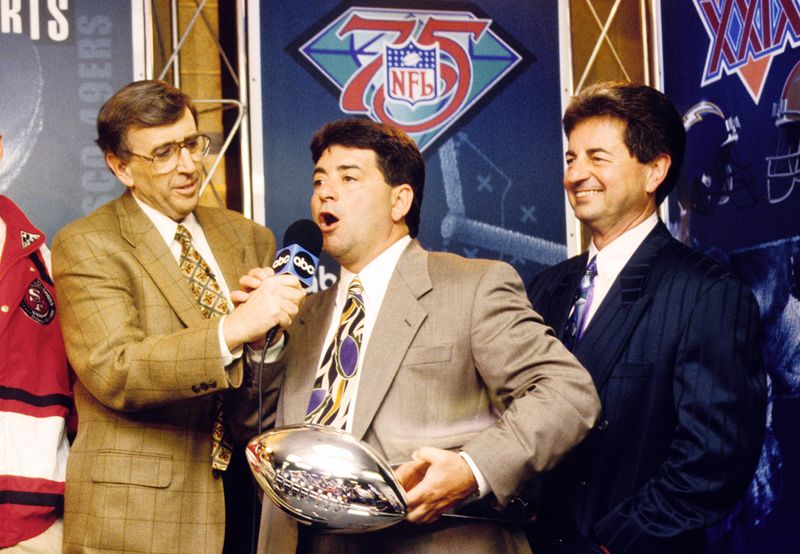
Former Youngstown, Ohio, lawyer Carmen Policy kept a front-row seat to the NFL’s second half century. He became CEO of the San Francisco 49ers during their 1981-94 run to five Super Bowl wins. He was a face of the Cleveland Browns when they came back as an expansion team in 1999. His son, Ed Policy, is CEO of the Packers.
From his home in California wine country, Policy raised a glass to how the 1920 meetings in Canton must have looked as the founders lit cigars and exhaled ideas around Ralph Hay’s Hupmobiles.
“I think they were just looking to have a sport they were involved in and could make a little money on,” he said. “Well into our heyday with the 49ers, we had no idea the growth of the league would reach into outer space.
“They’ve surpassed the sky. They’re into outer space now. It’s crazy to think this way, but you almost have a whole new style of measurement. What are the limits in outer space? Are there any limits? There’s no gravity to pull you down up there.”
In San Francisco, Policy joined a Youngstown family, the DeBartolos, that purchased the 49ers for $13 million in 1977. In 2025, one NFL team was valued at $13 billion.
According to Forbes, the average 2025 value of a Major League Baseball team was $2.62 billion; the least valuable NFL franchise was worth $5.25 billion.
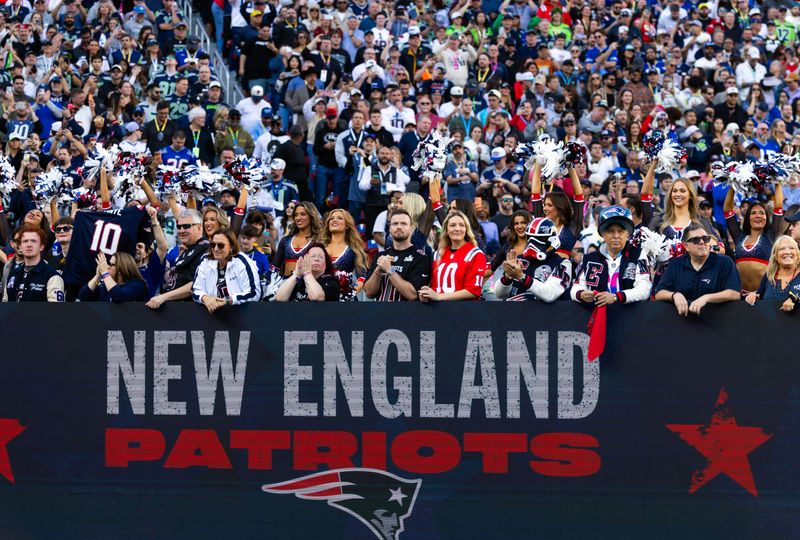
Forbes’ NFL top five: Dallas Cowboys, $13 billion; Los Angeles Rams, $10.5 billion; New York Giants, $10.5 billion; New England Patriots, $9 billion, 49ers, $8.6 billion. Baseball’s No. 1, the Yankees, came in at $8.2 billion.
Jerry Jones, a 1964 Arkansas Razorbacks captain, bought the Cowboys for a then-record $140 million in 1989.
“I made my decisions to buy based on how entertaining football can be,” Jones said. “You can make it bigger than life, but it’s not produced, like a Hollywood movie. It’s real.”
Football’s popularity remains strong in U.S. as league considers international expansion
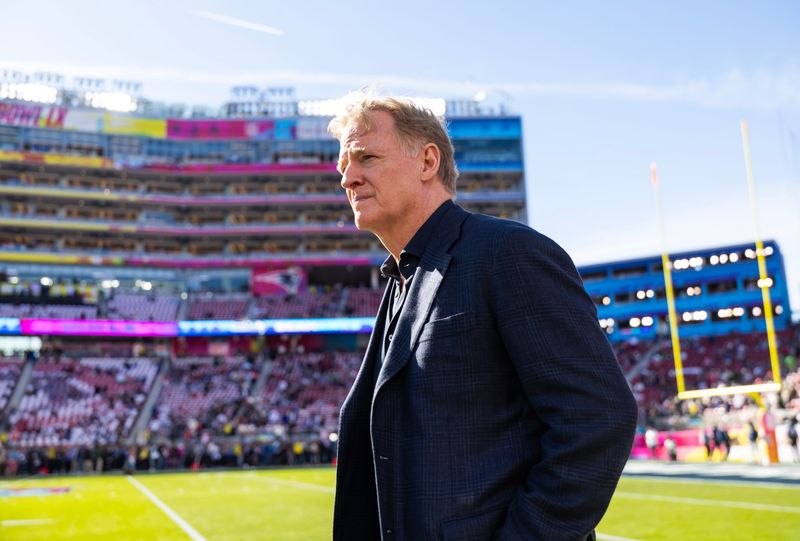
The NFL encompassed 10 teams on its 25th anniversary, 26 on its 50th anniversary, 30 on its 75th anniversary, and 32 on its 100th anniversary. There has been no franchise outside the United States, but Commissioner Roger Goodell said recently it is “very possible” there will be.
Since 2007, 42 regular-season games have been played in London. In 2026, Melbourne and Paris will host the first NFL battles in Australia and France.
Meanwhile, football’s popularity remains strong in America.
One perspective: Last November’s season finale of “Dancing With the Stars” averaged 9.24 million viewers; eight 2025 Sunday Night Football broadcasts exceeded 25 million.
According to Nielsen, 19 of the 20 most-watched television programs of all-time are Super Bowls, topped by 127.7 million for Super Bowl 59. The exception is the final episode of “M*A*S*H*” in 1983. Nielsen didn’t rate Neal Armstrong’s 1969 “giant step for mankind,” the first moon walk, viewed by an estimated 125-150 million.
The NFL’s slight backstep to 125 million for Super Bowl 60 still blew away the average 2025 audiences for the NBA finals (10.3 million) and the World Series (16.1 million).
‘The greatest team sport’
MLB’s Shohei Otani and Aaron Judge, the NBA’s Nikola Jokic and LeBron James, the PGA’s Scottie Scheffler and Tiger Woods, the NHL’s Sidney Crosby, Major League Soccer’s Lionel Messi, and tennis legend Serena Williams represent a melting pot of current or recent U.S. favorites from other sports.
The NFL has its faces, but long before Tom Brady aged out of the game, its appeal was playing “the greatest team sport” in a system that breeds loyalties and rivalries.
Baseball did come first. Rudiments appeared by the 1830s. An 1860 Currier & Ives cartoon shows Abe Lincoln and three other Presidential challengers wielding baseball bats.
The Cincinnati Red Stockings, baseball’s first pro team, launched in 1869, the same year Princeton took on Rutgers in “the first college football game.”
By 1932, 12 million homes had access to the national radio broadcast of a Yankees vs. Cubs World Series. Attendance at Wrigley Field on Oct. 1, the day Babe Ruth “called his shot,” was 49,988. Eight days later at Wrigley, the eventual 1932 NFL champion Chicago Bears played to 7,234 against the Chicago Cardinals.
Seeds of the NBA took root in 1935, when men from Kautsky’s Grocery and Firestone Rubber Company organized what became the National Basketball League. The 1946 champion Rochester Royals featured 24-year-old World War II veteran Otto Graham as the highest-paid player, with a salary of $5,000.
Later in ‘46, Graham joined the Cleveland Browns in the All-America Football Conference, a new rival to the NFL. Together quarterback Graham and coach Paul Brown won four straight AAFC championships before joining the NFL and reaching six straight title games.
Graham and Brown were the Brady and Belichick of their day, but their eras unfolded with profound differences.
Canton’s Marion Motley helps break the color barrier
A handful of Black players appeared in NFL games from 1920-33, but none did for the next 12 years under a whispered agreement. A similar arrangement began in baseball in the 1880s.
World War II ended and an NFL season began in September of 1945. That Blacks were absent from every NFL roster serves to remind the Civil War, fought over slavery, ended a mere 80 years earlier.
In 2016, filmmaker Ken Burns called baseball’s Jackie Robinson “the most important figure in our nation’s most important game.”
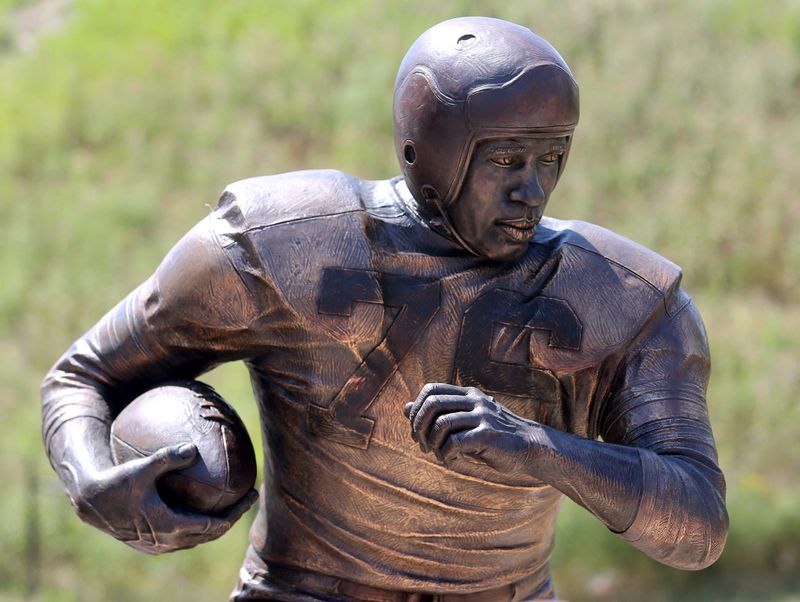
Actually, four Black football players broke the so-called color barrier before Robinson.
Marion Motley and Bill Willis debuted with the AAFC’s Browns on Sept. 6, 1946. Kenny Washington and Woody Strode first played for the NFL’s Los Angeles Rams on Sept. 29, 1946. Robinson debuted with the Brooklyn Dodgers on April 15, 1947.
Historian Horrigan, who attended Motley’s 1999 funeral, said:
“Marion used to carry a newspaper article from an African-American newspaper in Pittsburgh. It quoted Branch Rickey saying, in effect, had not Marion and Bill Willis played as gentlemen in pro football, in a violent contact sport, he wouldn’t have had the courage to bring Jackie Robinson into Major League Baseball.”
Rickey owned two teams named Brooklyn Dodgers, one established in baseball, one in football’s new AAFC. His football Dodgers faced Motley for three years before merging with the football New York Yankees in 1949. The Yankees were not one of the AAFC teams absorbed by the NFL in 1950.
NFL owners demand fancier digs as football’s popularity grows
Former Columbus, Ohio, newspaperman Joe Carr led the transition to major markets as NFL president from 1921-39.
“He knew the importance of stadiums,” Horrigan said. “He thought, ‘If our league is ever going to work, we’ve got to get into major league towns, and the best way to do that is to have a relationship with baseball.”
Football’s New York Giants played at the Polo Grounds, home of baseball’s New York Giants, from 1925-55. After the baseball Giants left for San Francisco, the football Giants crossed the Harlem River and played at Yankee Stadium from 1956-73.
“Cookie cutter stadiums,” cranked out to be shared by MLB and NFL teams, began sprouting in the 1960s.
Owners began to demand fancier digs, sometimes threatening to move. An era of exorbitantly expensive venues is in full swing.
Many taxpayers view threats of anteing up or losing a team as legal extortion. Proponents viewing NFL teams as indispensable regional assets are winning that debate.
New stadiums substantially funded by public money, each costing more than $2 billion, are slated to open in Buffalo in 2026, in Nashville in 2027, and in Brook Park (near Cleveland) in 2029. The Browns’ $2.4 billion facility will replace one that opened in 1999, costing $290 million.
The Cowboys opened their “Jerry World” showplace in 2009. The NFL plays its version of keeping up with the Joneses.
“I built a stadium that cost twice as much as one I could have had for our fans,” Jerry Jones said. “We seat 100,000-plus, but it’s not for them. It’s for the 30 million people who watch on television. With the look of the stadium and with the voices of Al Michaels and, God rest his soul, John Madden, people have been able to be there vicariously.”
Green Bay, population 107,000, is the NFL’s world wonder. It is 115 miles north of the closest big city, Milwaukee. The Packers’ publicly owned 5.2 million shares are spread among 539,000 investors. Some will celebrate this year’s 70th birthday of Lambeau Field live, but not the 155,000 on the season-ticket waiting list.
Father-son football memories
The investment all around the USA is caught up in emotional equity.
Steve King, a 70-year-old authority on Cleveland’s NFL history, is still the little boy at his first NFL game.
“To go anywhere with my dad was special,” he said, “but to go to a Browns game with him was heavenly. We sat in the last row of the upper deck.
“Those white-as-snow Browns uniforms, the perfect fall colors in the brown numbers, those plain orange helmets, Jim Brown running, beating Washington … it took my breath away.”
Surveys suggest baby boomers, such as King, mostly chose their favorite NFL teams based on geography. The number drops to one-half for Generation Xers and to one-third for the under-30s constituting Gen Z.
Whatever the choice, the NFL’s salary cap and revenue sharing are designed to give everyone’s team a fair shot at the Super Bowl.
In the big picture, a vibrancy blazing like 250 birthday candles begs an assumptive question:
What will the NFL be like 250 years from now?
How the list was chosen
The Iconic Brands 50 identifies American companies that most profoundly shaped the nation’s identity, economy and culture. Selection emphasized historical significance, industry-building innovation, measurable economic influence and lasting cultural impact. Brands were chosen for transforming daily life or becoming enduring symbols of American values. Long-term relevance and sustained national influence carried greater weight than short-term financial performance or recent popularity.
The Canton Repository sports department can be contacted via email at sports@cantonrep.com.
This article originally appeared on The Repository: Dreamers with $100 set NFL on path to being an iconic American brand
Reporting by Steve Doerschuk, Canton Repository / The Repository
USA TODAY Network via Reuters Connect