Dozens of sex offenders live illegally near Summit County schools.
But county authorities say Ohio’s sex offender laws limit their ability to force the offenders to move.

The Akron Beacon Journal has identified 36 sex offenders who are living within 1,000 feet of at least one Summit County school, which violates state law. Another 13 sex offenders also are living too close to a school, but they were convicted of crimes before the 2003 residency law was enacted and aren’t restricted to where they can live.
The Beacon Journal identified the offenders by comparing the addresses of Summit County’s 125 traditional public school buildings with the addresses of the sex offenders listed in Ohio’s OffenderWatch registry, which is a publicly searchable online database maintained by the Ohio Attorney General’s Office.
The analysis found:
Not included in the analysis are any potential juvenile offenders, sex offenders who moved and didn’t notify the sheriff’s office and sex offenders whose addresses could not be mapped, which could include homeless offenders. The Beacon Journal focused on traditional public school districts because they often educate the largest group of students and have been designated as protected sites longer than preschools, childcare centers, children’s crisis-care facilities and residential infant-care centers.
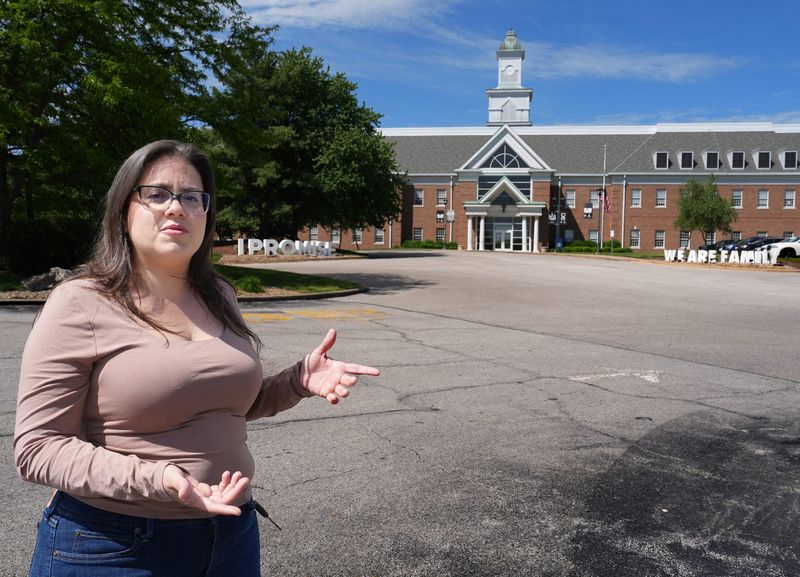
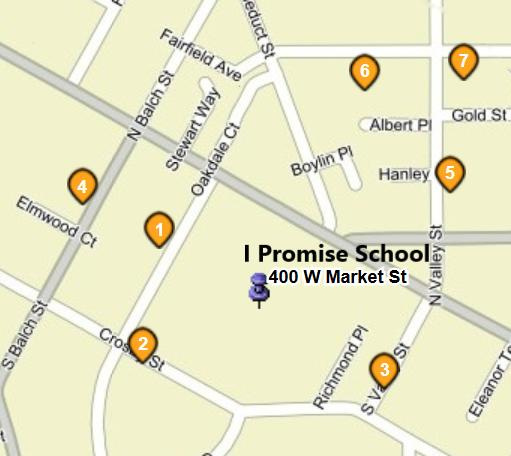
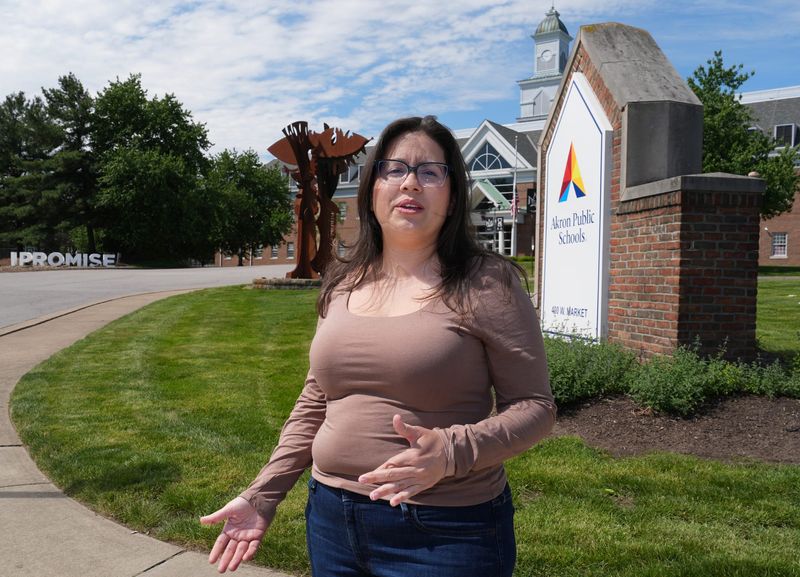
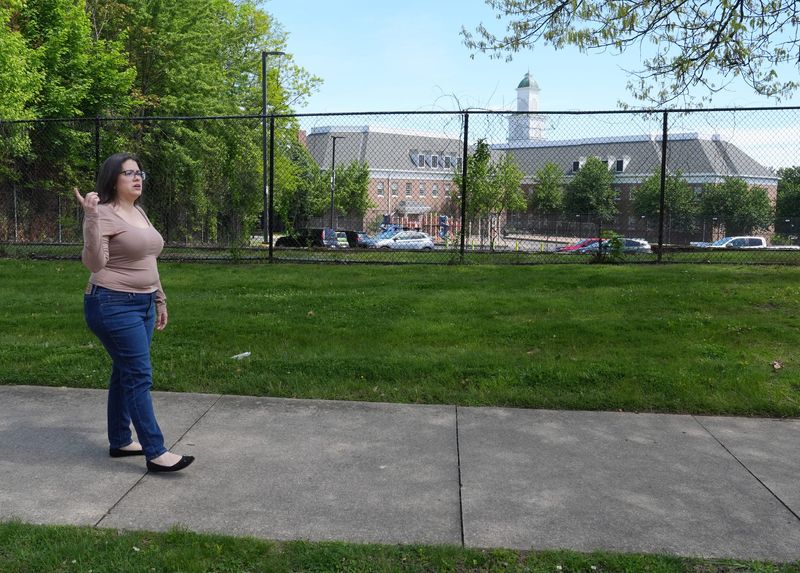
The Beacon Journal analysis was prompted by Akron residents who raised concerns that too many sex offenders were living illegally near their West Hill neighborhood schools, including the I Promise School, which had not been properly identified in the state sex offender registry until recently.
What do Ohio’s sex offender laws require?
Ohio’s sex offender laws – Ohio Revised Code Chapter 2950 – require sex offenders to register their residential address, place of employment and school or college enrollment with the county sheriff. They also must update the sheriff’s office with any changes and periodically verify their information with the sheriff’s office, as determined by their sex offender classification.
Most, but not all, sex offenders cannot live near a school. Others face additional restrictions based on when their offense occurred as follows:
Offenders also may face additional residency restrictions through community-control provisions, parole conditions or a plea agreement in court.
State law doesn’t specify how the 1,000-foot distance is measured. Ohio courts have determined the distance by measuring a straight line from the nearest edge of the offender’s property to the nearest edge of the protected school or childcare property. The restriction is not based on walking paths or driving routes.
Some cities have enacted even stricter residency laws for sex offenders. Barberton City Council in 2021 passed a law that prohibits Tier III sex offenders and those convicted of a child-victim oriented offense from also living near city parks and the Ohio & Erie Canal Towpath Trail. Violators of Barberton’s law could be charged with a first-degree misdemeanor.
Some state lawmakers are seeking to add additional residency and other restrictions for sex offenders.
House Bill 102 seeks to ban sex offenders from living within 2,000 feet of their victim or from loitering within 1,000 feet.
Senate Bill 422 seeks to ban most Tier II and Tier III sex offenders from entering schools and daycares. Some exceptions being considered are that parents could drop off or pick up their children from school and events and offenders still could vote at a school building when classes aren’t in session.
Both proposed laws include language for criminal charges to be filed against violators.
No court action taken to move sex offenders in past two years
Local authorities say their ability to force offenders to move is limited because Ohio’s existing sex offender residency law does not include criminal penalties for violating the 1,000-foot residency restriction. Instead, the law states that violators can face a civil injunction.
Offenders can only be criminally charged if they don’t register or update their address with the sheriff’s office.
When a sex offender registers a new address with the county’s sheriff’s office, the deputy updates the address in the statewide online sex offender registry. The registry will give the sheriff’s office a proximity warning if the registered address is too close to a school or other protected site.
Chief Bill Holland, public information officer for the Summit County Sheriff’s Office, said when deputies receive the proximity warning, they will tell the offender that the address is too close but Ohio law doesn’t allow deputies to deny the offender’s registration or prevent the offender from living there.
Holland noted that the sheriff’s office is not immediately notified when an offender registers an address too close to a protected site.
The sheriff’s office also sends a letter to the offender that tells them their registered address is within 1,000 feet of a protected property and includes a copy of the state statute. The letter tells the offender they must relocate to an address that complies with the statute within 30 days.
“If you fail to do so within a reasonable time, the Sheriff’s Office may refer the matter to the Summit County Prosecutor’s Office to pursue all legal remedies available to enforce compliance,” according to a template version of the letter obtained by the Beacon Journal through a public records request.
Ohio law doesn’t define what a “reasonable” amount of time is.
Elaine Vilem, communications director for the Summit County Prosecutor’s Office, said the prosecutor’s office reviews multiple legal strategies once it receives a notification from the sheriff’s office that an offender is violating the residency law.
Prosecutors first check whether the offender is on probation, also known as community control. If so, the offender’s probation officer is contacted about possibly forcing action because a condition of parole is that the offender remains compliant with all local, state and federal laws.
Prosecutors also send the offender a letter notifying them they need to move within 30 days of receiving the letter. If the offender is living at a commercially owned property, the landlord is copied on the letter.
County prosecutors will file a civil lawsuit if the offender has not registered a new, compliant address within 30 days, Vilem said.
She said the sheriff’s office referred 48 sex offender residency cases to the prosecutor’s office in 2024.
The number of referrals dropped to a single case in 2025. Villem said the sheriff’s office last year began sending the initial violation letter to offenders, which often resolved the violation before it reached the prosecutor’s office.
So far this year, the county prosecutor has received one referral, she said.
Vilem said the prosecutor’s office has not needed to pursue a civil lawsuit to force an offender to move since at least 2024. The 50 offenders referred to the prosecutor’s office in the past two years either registered a new, compliant address or they notified the county that the school had closed, which prosecutors independently verified and then notified the sheriff’s office to update the online registry.
When the Beacon Journal asked about the 36 sex offenders found to be living too close to a school, Vilem said none of them had been referred to the prosecutor’s office as of May 7.
She said it’s possible that the offenders had not been living there long.
Offenders near the I Promise School will have to move
Holland said letters were sent to the sex offenders who live near the I Promise School, which, until recently, hadn’t been properly marked as a school in the statewide sex offender registry.
Vilem said the county prosecutor’s office has not yet received any referrals from the sheriff’s office regarding the I Promise School.
Vilem said the offenders will need to move, unless their crimes were committed before the July 2003 residency law took effect.
Of the nine offenders the Beacon Journal identified as living too close to the I Promise School, eight of them were convicted after 2003 and will be required to move.
Akron City Prosecutor Elayna Saad said the city prosecutor’s office historically does not take a role in enforcing the sex offender residency rule but has offered to collaborate with the county prosecutor’s office to take action regarding the sex offenders near the I Promise School due to the concerns raised.
What is the school district’s responsibility when sex offenders live too close?
School districts don’t have any specific obligations under state law to act when a sex offender lives too close to one of their schools.
Representatives for Cuyahoga Falls and Akron City school districts said their districts routinely review the sex offender notifications sent by the county sheriff’s office and state attorney general’s office so they are aware of the presence, status and location of registered sex offenders within their district boundaries.
A Cuyahoga Falls City School District policy also states that when the district receives information about a sex offender who is subject to community notification, the superintendent will instruct employees overseeing students to notify the superintendent if the sex offender is observed within the vicinity of the school. The policy states the superintendent may also inform parents, guardians and adult students about the sex offender and that additional information about the offender is publicly available with the sheriff’s office.
Christine Stewart, community relations coordinator for the Cuyahoga Falls school district, said every school building is equipped with advanced physical security measures and visitor management technology that immediately screens every visitor against local and national sex offender registries before they can enter a school building during the day.
The district also encourages students, families, staff and community members to report concerns through the Safer Ohio Schools Tip Line at 844-723-7364, which allows anonymous and confidential reporting.
Stacey Hodoh, director of strategic communications and media for Akron Public Schools, told the Beacon Journal on April 29 that the district maintains multiple layers of security, including advanced visitor management systems, security cameras, district safety training programs and ongoing coordination among the district’s security team, local law enforcement and school resource officers.
Since learning that the I Promise School had not been correctly identified in the state’s sex offender registry, Hodoh said the district is verifying its other locations and will ensure that the local and state registries are continually updated.
Akron resident, Ohio group say registry without enforcement gives false sense of security
Raina Gonzalez-Homs, president of the West Hill Neighborhood Organization who raised concerns about the sex offenders living too close to the I Promise School and other West Hill schools, said learning that county sheriff and prosecutor officials give sex offenders near schools at least a month to move is concerning.
She understands that it may take offenders some time to find a new home, especially if they pay monthly rent. But she also believes they shouldn’t have been allowed to move there at all.
“These are restrictions they have because of an offense they committed and they were found guilty of, and these are sadly the rules they have to follow after doing their time in whatever institution they were in,” Gonzalez-Homs said.
Gonzalez-Homs said she thinks the sex offender registry can give residents a false sense of security.
She had believed that the sex offender notifications she received were for offenders living outside restricted areas because authorities wouldn’t knowingly allow a sex offender to live near a protected site.
It wasn’t until a neighbor pointed out that a Tier III sex offender had moved into a home within 300 feet of the I Promise School that she read the state law and learned that offenders face no criminal penalties for living near a school.
“That opened my eyes that it (the registry) is a step that the state takes to inform citizens but it’s not a way they use to stop individuals from moving close to schools, playgrounds or daycare facilities,” she said.
She said she believes the community notifications about nearby sex offenders could be better worded to encourage residents to notify authorities if they believe a sex offender is living too close to a school or other protected property.
Ohioans Advocating for Rational Sex Offense Laws is a group that also believes the residency restrictions and statewide registry create the appearance of safety without actually addressing how sexual harm occurs.
In a statement to the Beacon Journal, the group cited research by RAINN, which operates the National Sexual Assault hotline, that shows 93% of sex offenses against children are committed by someone known to the victim.
“Policies focusing solely on the registry lull Ohioans to put their faith in the registry to protect their children while remaining ignorant of the real warning signs of sexual harm that involve family members, friends, teachers and religious leaders,” according to the statement.
The group cited research that shows residency laws can create a greater risk to the community because the offenders are forced to leave stable housing, which can affect their employment and support system.
The group says efforts should focus on reducing sexual harm through education and awareness, early intervention, treatment for offenders and more precise targeting of people who pose a risk.
Beacon Journal staff writers Bryce Buyakie, Amanda Garrett and Stephanie Warsmith contributed to this report.
Reach Akron Beacon Journal education writer Kelli Weir at 330-580-8339 or kweir@usatodayco.com.
This article originally appeared on Akron Beacon Journal: Dozens of sex offenders live illegally by Akron-area schools | Exclusive
Reporting by Kelli Weir, Akron Beacon Journal / Akron Beacon Journal
USA TODAY Network via Reuters Connect