How many Cincinnati police officers does it take to make a bad arrest?
Apparently three.

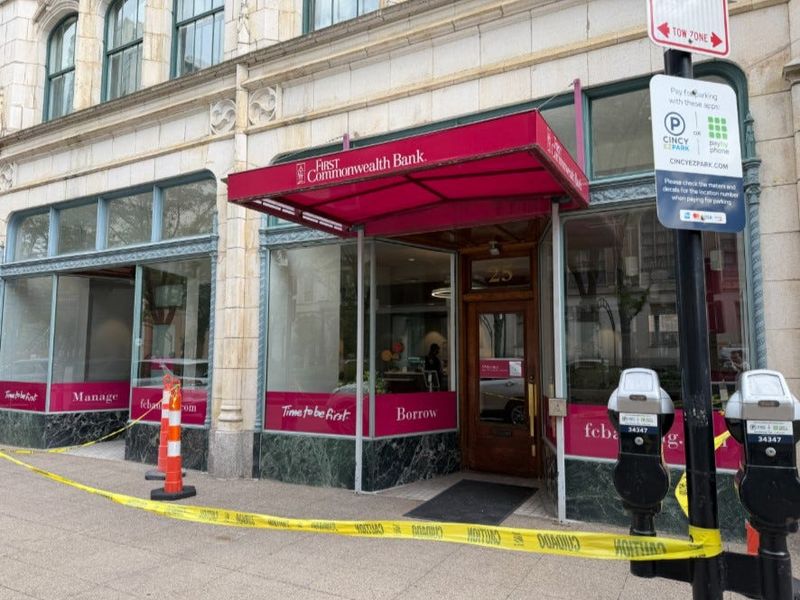
The arrest of self-described First Amendment auditor Angel “Bartholomew” Moses near Piatt Park looks less like smart policing and more like officers losing patience with someone they found irritating. And irritation is not probable cause.
Let’s be clear about something upfront: Moses was intentionally provocative. That’s the entire business model of First Amendment auditors. They wander around public spaces with cameras, hoping police officers overreact so they can post viral videos online. The internet is flooded with these encounters.
But being obnoxious isn’t illegal. And neither is recording a bank from a public sidewalk.
That distinction matters because Cincinnati police policy explicitly says recording people, buildings and events in public is a lawful activity and “not by itself suspicious conduct.” The same policy tells officers not to demand identification, not to demand an explanation for recording and not to detain someone solely for doing it.
Yet that appears to be exactly where this encounter went.
Officers repeatedly questioned Moses about why he was filming outside the bank. When he gave answers they didn’t like − or didn’t answer the way they wanted − the situation escalated quickly into handcuffs and jail.
That’s the problem.
Feeling uncomfortable is not evidence of a crime
I understand why a bank employee called the police. Frankly, most people probably would.
A man standing outside a downtown bank with a camera, asking probing questions about security, is going to make people uneasy. The employee did exactly what they should have done: report suspicious behavior and let the police investigate.
And police absolutely had a duty to respond. But responding to a call and making an arrest are two very different things.
One officer reportedly told Moses he “could be planning a robbery,” “could be armed” and “could be dangerous.” The keyword there is “could.”
Police work cannot be based entirely on hypotheticals.
At no point has anyone identified evidence that Moses was actually committing a crime, threatening anyone, or refusing a lawful order connected to a legitimate detention. Officers may have suspected something felt off. That still does not erase constitutional protections.
Moses also had the right to remain silent. He was under no obligation to explain himself to the police. In fact, despite not having to engage at all, he still answered questions. Officers simply didn’t care for the answers.
That’s not the same thing as obstruction.
Most Americans instinctively believe that cooperating with police is the smart thing to do. That’s how many of us were raised. Be respectful. Answer questions. Don’t escalate.
I’ve written those very words before, advising young people − Black males in particular − on how to survive police encounters. It’s a fair question to ask: “Why not just answer the officers and move on?”
But citizenship in a constitutional republic also means understanding the limits of government authority. Knowing your rights is not anti-police, and exercising them is not evidence of guilt. The uncomfortable tension in cases like this is that what society expects from its citizens and what the Constitution requires are not always the same thing.
As irritating and provocative as Moses might have been to the officers, constitutional protections are not dependent on personality tests. Rights that only apply to agreeable people are not really rights at all. That’s why I’m bothered by how easily the officers were provoked.
This isn’t about some activist from Kansas City. It’s about how police might handle similar situations with Cincinnatians who are unfamiliar with their rights and don’t have a video camera recording.
And let’s apply a little common sense here. Would someone truly planning to rob a bank stand outside in broad daylight, recording themselves while openly peppering employees with questions? Criminals can certainly be dumb. Police officers have seen everything imaginable. But this is exactly the kind of encounter where slowing things down is likely to resolve everything peacefully.
Instead, officers escalated an interaction that, according to Moses’ recording, lasted less than five minutes.
CPD looked unprepared for a tactic the internet knows well
What also troubles me is how caught off guard the officers seemed.
First Amendment auditors aren’t new. They’ve been baiting police departments across America for years. Entire YouTube channels and Facebook pages (like Moses’) are built around these encounters. Departments across the country have trained officers specifically to avoid taking the bait.
Which raises the question: Had Cincinnati police trained for this at all?
The video suggests officers either didn’t recognize what was happening or lacked the patience and discipline to handle it correctly.
That matters because now Cincinnati is left with another viral video that makes the city look heavy-handed at a time when downtown perception is already under a microscope.
The timing couldn’t be worse.
After months of concern about downtown violence and safety, police are under enormous pressure to stay proactive. Add in the recent leasing of Piatt Park to 3CDC and the broader push to stabilize downtown spaces, and it’s not hard to understand why officers may have been hyper-alert.
But pressure cannot become permission to shortcut constitutional rights.
Again, this is not about being anti-police. Cincinnati officers routinely deal with difficult, dangerous and unpredictable situations. Split-second decisions are part of the job.
This wasn’t one of those situations.
There was no active threat. No weapon displayed. No aggressive behavior. No indication that anyone was in imminent danger. Officers had time. They simply didn’t use it.
FOP President Ken Kober defended the officers by saying Moses “bit off more than he could chew.”
Maybe.
But it’s Cincinnati taxpayers who may ultimately choke down the consequences of an unnecessary arrest captured on video for the entire country to dissect.
I expect the charges against Moses will eventually disappear. I also suspect the officers involved will face little more than a quiet internal review and perhaps a notation in a personnel file. However, it seems evident that some additional training might be in order. It will be interesting to see what conclusion the Citizen Complaint Authority reaches.
But the bigger damage is already done.
Cincinnati once again finds itself explaining why its own policies apparently weren’t followed by the very officers expected to enforce them.
Opinion and Engagement Editor Kevin S. Aldridge can be reached at kaldridge@enquirer.com. On X: @kevaldrid.
This article originally appeared on Cincinnati Enquirer: Downtown bank arrest another viral video Cincinnati didn’t need | Opinion
Reporting by Kevin S. Aldridge, Cincinnati Enquirer / Cincinnati Enquirer
USA TODAY Network via Reuters Connect