An adventure source for Greater Cincinnati. A conservation educator. A hands-on environmental partner. The Cincinnati Zoo & Botanical Garden, which is celebrating 150 years this year, has taken on numerous roles over the decades.

Much has changed over those years, but the zoo’s unwavering commitment to the Greater Cincinnati community has not. More than just an altruistic line in its mission statement, the Cincinnati Zoo walks the partnership walk.
“Our approach is, it’s better if the partners and the folks that we’re working with are the ones that are telling the stories,” said Mollie O’Neil, director of community partnerships in conservation with the Zoo. “Our style of community engagement is, we don’t do things to or for communities. We do things with the community.”
From its earliest days, the zoo has served as a social gathering spot for Cincinnatians. In 1920, the Cincinnati Opera began performing its summer season at the Cincinnati Zoo Pavilion, where it would perform for most of its first 50 years. (Some zookeepers even made cameo appearances in performances.) During the turn of the last century, Victorian-era strolling gardens were part of the botanical tapestry of the zoo. Lush flower beds that were popular in everyday gardens of the time were incorporated into the botanical garden.
“From the very beginning, the botanical garden part of it was important to the founders and they viewed it as an experimental garden and it still is,” said Michelle Curley, the zoo’s communications director. “We work with CREW, which is our research facility. We do annual planting trials. People don’t know really how important our plant trialing program is for other organizations.”
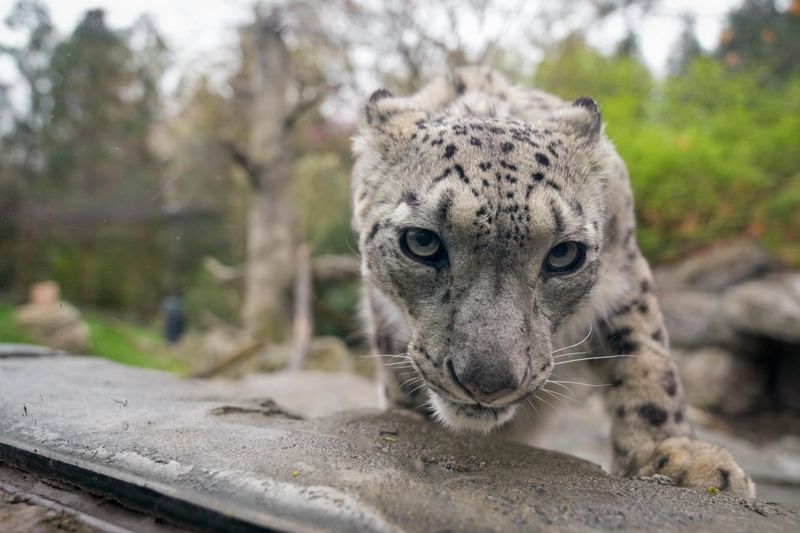
CREW is the Lindner Center for Conservation and Research of Endangered Wildlife. Its mission is saving species through science, and it has four signature projects dedicated to this effort. These projects focus on preserving polar bears, rhinos, imperiled cats and exceptional (endangered) plants.
“We have a plant division and animal division that’s very focused on long-term plant propagation methods for endangered plants, and we have several scientists who are working on signature projects around, like polar bears,” said O’Neil.
CREW’s research and activities benefit organizations around the world. They established the CryoBioBank in 1982, which houses irreplaceable biological samples from some of the world’s most endangered flora and fauna. Finding skilled scientists to take positions continuing this highly specialized work can be a challenge. CREW offers internships and fellowships for students across the world to learn from experts and take those skills back into their local communities.
“We generally want to see that their staff is not transplanted from America or another country, but really hiring local talent and expertise, since those who are closest to the problems are closest to the solutions,” said O’Neil.
The Cincinnati Zoo’s Coexistence Impact Fellowship Program, founded in 2023, just welcomed its third cohort in July. The program supports conservationists around the world, providing salaries and resources to help them take on conservation projects and research in their respective communities. The fellows spend a week in Cincinnati for training and to present updates on their respective research projects.
“Most of our partnerships are because the organizations have an equal value on coexistence,” said O’Neil. “So they’re not generally just wildlife focused. They are also embedded in communities.”
That’s something the zoo is deeply familiar with. Located on the westernmost side of Avondale, the zoo’s footprint in the neighborhood originally spanned 65 acres. It has acquired more neighboring blocks in Avondale, as well as reserves in Cincinnati’s suburbs.
“Our original partnerships and our original focus on serving community, which is one of the pillars of our mission, started really in our backyard with Avondale,” said O’Neil. “There are neighbors in Avondale [who] were not benefiting from some of the big institutions that also are in Avondale. Both from an economic perspective, and then also from an ecological perspective.”
The Cincinnati Zoo, which is located on the hillside of Vine Street, has historically featured a lot of concrete – sidewalks, roads, etc. These factors, combined with Cincinnati’s temperamental plumbing, meant that during major storm events, the zoo’s runoff rainwater would flood the basements of area residents.
Now, under every new habitat the zoo builds, a retention system catches rainwater, which is circulated back through the Zoo. It is focused on doing away with concrete and replacing it with permeable pavers so water seeps in, rather than running out.
Through Let’s Grow Local, a tree-planting initiative from MadTree, the zoo is helping to expand the urban tree canopy across Cincinnati. Through SafeGrowth, a program aimed at addressing the root of crime in neighborhoods, the zoo helped transform Irving Playground with a community-designed pollinator garden, new plants and new trees. Through the Reds Community Fund’s annual Community Makeover, where the Zoo brings each neighborhood a new urban learning garden project.
“Our entire brand of conservation and sustainability is around coexistence and making sure that people in wildlife that share space thrive,” said O’Neil. “Without addressing people’s needs, we will never address nature’s needs.”
This article originally appeared on Cincinnati Enquirer: Cincinnati Zoo & Botanical Garden, a partner to the community
Reporting by Leyla Shokoohe / Cincinnati Enquirer
USA TODAY Network via Reuters Connect