This story has been updated with new information.
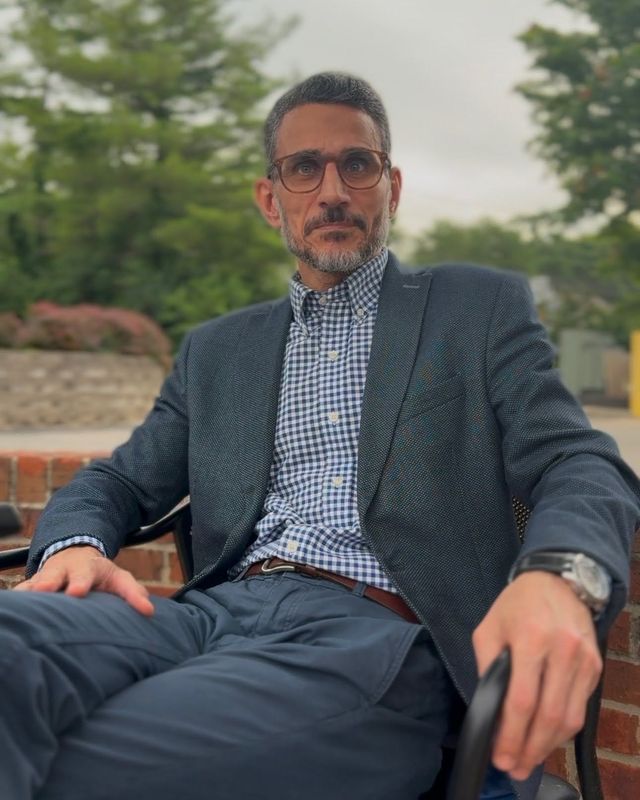
Federal immigration officials detained a former Cincinnati Children’s hospital chaplain on July 9, about seven months after revoking his asylum status.

Friends and supporters of Imam Ayman Soliman said officials with U.S. Immigration and Customs Enforcement took him into custody after a scheduled meeting with ICE in Blue Ash.
Soliman came to the United States from Egypt about a decade ago, according to federal court records, and received asylum status in June 2018. His supporters, including local clergy, politicians and representatives from Ignite Peace, said he was fleeing persecution in Egypt and feared his life would be in danger if ICE sent him home.
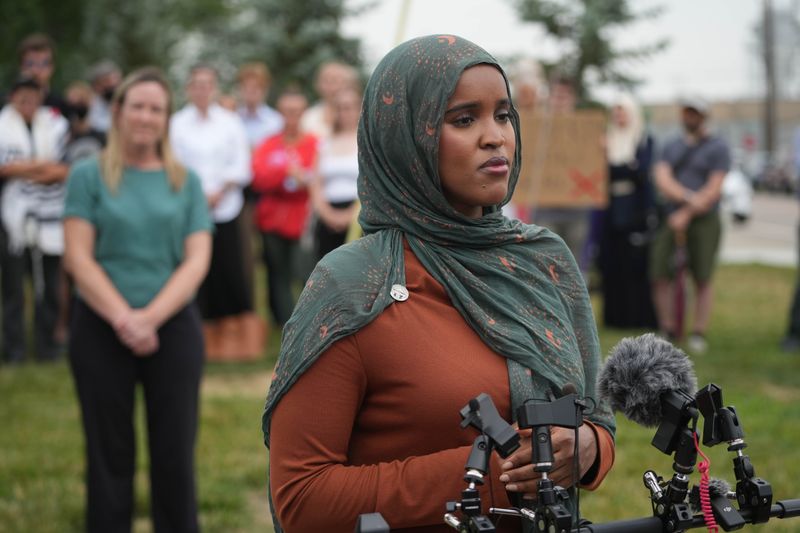
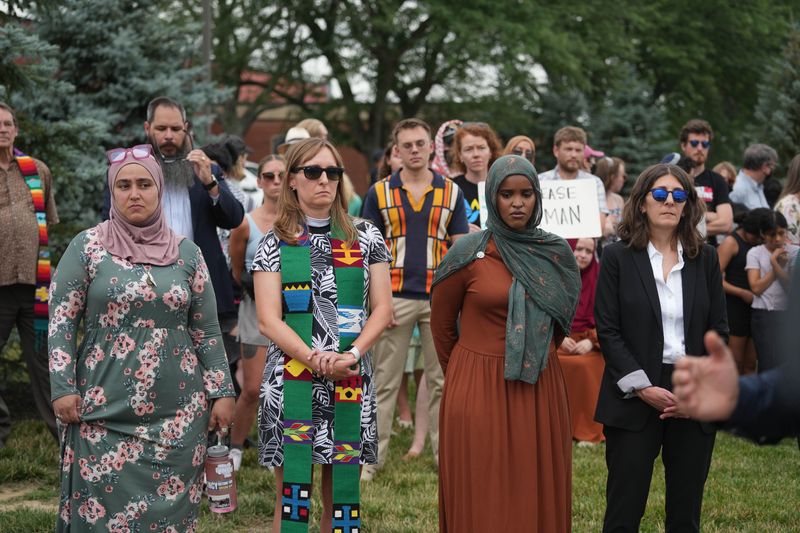
At a press conference in the afternoon on July 9, those supporters said ICE officials rescinded Soliman’s asylum in December 2024 and detained him after meeting with him and his lawyers earlier in the day. They said the meeting included FBI agents and lasted three hours.
“We are shocked as a community, who is already vulnerable, who already feels targeted,” said Tala Ali, chair of the Clifton Mosque and the Islamic Association of Cincinnati. “To have one of our leaders and our elders in our community be detained in such fashion is very alarming.”
Neither ICE nor Cincinnati Children’s officials could immediately be reached to comment.
Soliman sued U.S. over ‘FBI flag’
While awaiting resolution of his asylum request, Soliman was permitted to work in the United States and spent at least some of that time as a chaplain at Cincinnati Children’s. He also has presided over services at the Clifton Mosque, according to the mosque’s website.
Federal court documents indicate Soliman’s family in Egypt had a pending request to join him in the United States.
Soliman sued federal officials several times in recent years, claiming in 2022 they had violated his constitutional rights and his privacy by disclosing “stigmatizing statements about him.”
In one lawsuit, Soliman indicated that after applying for a job as a prison chaplain, he learned an “FBI flag” appeared on his background check. He said in the lawsuit that his fingerprints did not match prints that the check turned up on the government’s terrorism screening database.
Soliman said he believes he was improperly targeted because of his Muslim faith.
The government, which presented no evidence that Soliman had engaged in illegal activity, disputed his accusations and denied wrongdoing. A judge dismissed some of Soliman’s claims earlier this year, but two lawsuits remain unresolved.
‘His absence is deeply felt’
In the weeks since his asylum status ended, more than a dozen colleagues, clergy and parents of former Cincinnati Children’s patients wrote letters on Soliman’s behalf, describing him as a caring advocate for grieving parents and a valued coworker who is fluent in several languages, including Arabic and Spanish.
“His contributions to our hospital community have been immeasurable, and his absence is deeply felt,” wrote the Rev. Adam Allen, a fellow chaplain at Children’s.
“I have seen the manner in which Ayman so skillfully and gently supports families during the unimaginable,” wrote Alexandra Hausfeld, a Cincinnati Children’s nurse. “Ayman is a man of faith and compassion – I can truthfully attest that he is one of the most humble and hardworking individuals I have met, personally and professionally.”
Audrey Kandil, whose son spent six months at Cincinnati Children’s hospital before recovering and returning home, said she and her family met with Soliman almost every day her son was in the hospital’s intensive care unit. She said his presence also was invaluable when her Arabic-speaking in-laws arrived and needed someone to explain to them in their native language what was happening to their grandson.
“Ayman Soliman kept my husband and I sane,” Kandil wrote. “He offered us support, a friendly face, and a resource that no other medical professional could offer us.”
Other letter-writers expressed concern for Soliman’s safety if ICE sent him back to Egypt, which he fled more than a decade ago. Friends said he still has family in Egypt, including a child, but is unable to return because his life would be in danger.
Why Soliman left Egypt
The letters don’t describe the nature of the threat or the reason he fled Egypt, but many said Soliman spoke on occasion about his fear of returning home.
A lawyer with the Constitutional Law Center for Muslims in America, which represented Soliman in his lawsuits against the government, said he ran afoul of government officials in Egypt while working as a journalist. The lawyer, Christina Jump, said he was jailed and tortured.
“As a result, he sought asylum in the U.S., hoping for free speech and laws that prevent that from happening,” Jump said.
Judith Ragsdale, an associate professor at the University of Cincinnati who knows Soliman, said he sometimes spoke about being the victim of “persecution and torture.”
“The value he brings to the United States is immense,” Ragsdale said. “The danger to him if he leaves is likewise enormous.”
Until at least February of this year, Soliman appeared as chaplain on Cincinnati Children’s website, though references to him have since been removed.
Asylum seekers like Soliman often are permitted to remain in the United States while their application is under review and after being granted asylum. But if asylum is revoked, they become eligible for deportation.
Soliman received notice that the government intended to revoke his asylum in December, in the final weeks of President Joe Biden’s administration. The revocation officially happened last month, under President Donald Trump.
On the same day Soliman was arrested, the Council on American-Islamic Relations, or CAIR, accused the Trump administration of targeting Muslims for deportation during his nationwide immigration crackdown.
About 75 people turned out for the press conference with Soliman’s supporters Wednesday, and several tied Soliman’s detention to Trump’s recent immigration crackdown nationwide. Ohio Rep. Karen Brownlee, a Symmes Township Democrat, said Soliman’s situation is the product of a broken immigration system.
“The system has failed you, and that is why we are at this point today,” Brownlee said. “People are afraid to even leave their homes if they do not have full citizenship.”
Khalid Turaani, executive director of CAIR in Columbus, said Soliman’s detention is “a travesty for Americans.” He said he spoke to Soliman recently about his fear that ICE would send him back to Egypt.
“It was one thing on his mind,” Turaani said. “He was saying, ‘I just can’t imagine what they would do to me if I’m deported to my homeland.'”
This story was updated to add a gallery.
This article originally appeared on Cincinnati Enquirer: Former Cincinnati Children’s chaplain detained by ICE
Reporting by Patricia Gallagher Newberry, Dan Horn and Victoria Moorwood, Cincinnati Enquirer / Cincinnati Enquirer
USA TODAY Network via Reuters Connect