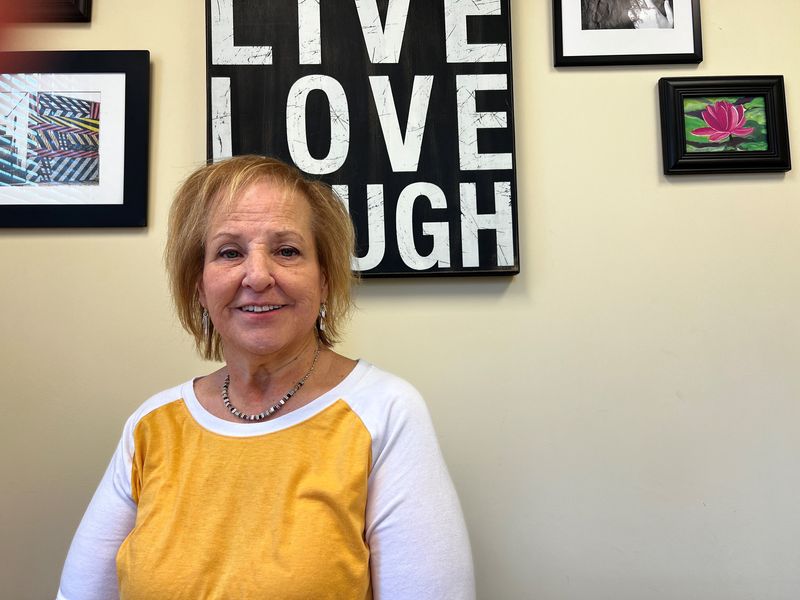
Nancy Sullivan was having a day.
On a chilly mid-February afternoon, she showed up outside a Downtown office building to demonstrate against a company listed at the address that had agreed to work for Immigration and Customs Enforcement. The company didn’t have an office there, a building manager told her.

She drove to a second address the ICE contractor listed on its website, located in Kings Mill. It turned out to be a U.S. Postal Service branch.
So she called Gravitas Professional Services, the private investigation company with a $427,500 ICE contract to find immigrants, only to be told: “They work remotely.”
Such is the life of one of Cincinnati’s ICE resisters.
Crowds of chanting protesters – like the ones likely to attend one of a dozen “No Kings” marches in Greater Cincinnati this weekend − are often seen as frontline opponents of ICE.
Beyond the crowds and at the fringes, however, advocates like Sullivan are doing much of the work to protect local immigrants from what they see as unwarranted ICE attention. That might mean providing food. It might mean providing bikes. It might mean helping them alert each other to ICE’s presence.
What does ICE think of their efforts?
“Obstructing federal law enforcement is not only dangerous but also a crime and a felony. The First Amendment protects speech and peaceful assembly – not rioting,” the Department of Homeland Security said in an emailed statement to The Enquirer. .
“We remind peaceful protestors and members of the media to exercise caution,” the statement continued. “Being near unlawful activities in the field does come with risks – though our officers take every reasonable precaution to mitigate dangers to those exercising their protected First Amendment rights. However, when faced with violence or attempts to impede law enforcement operations, our officers will take legal and necessary steps to ensure their own safety and that of bystanders, up to and including use of force.”
The advocates are aware of what is at stake.
Cabbage, chicken and a secret location
Sullivan wears many hats as a community organizer for an immigrant assistance group called Transformations. Housing advocate. Policy expert. Keyboard warrior. Red whistle producer.
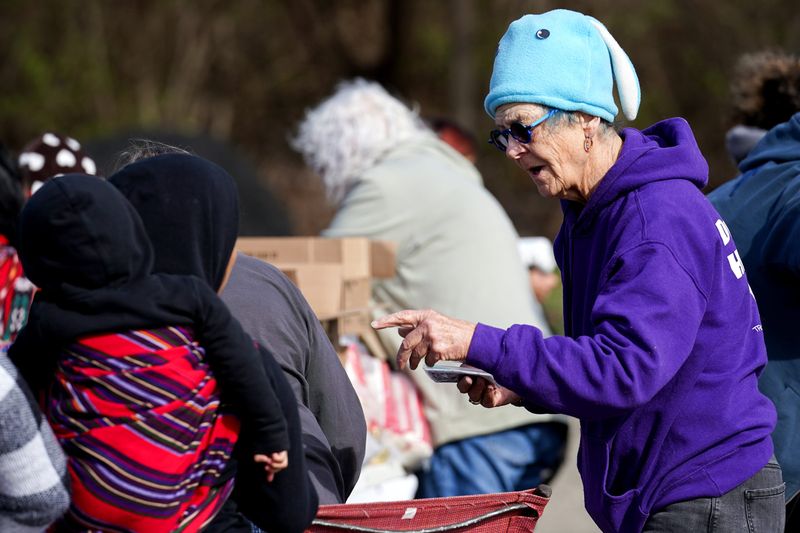
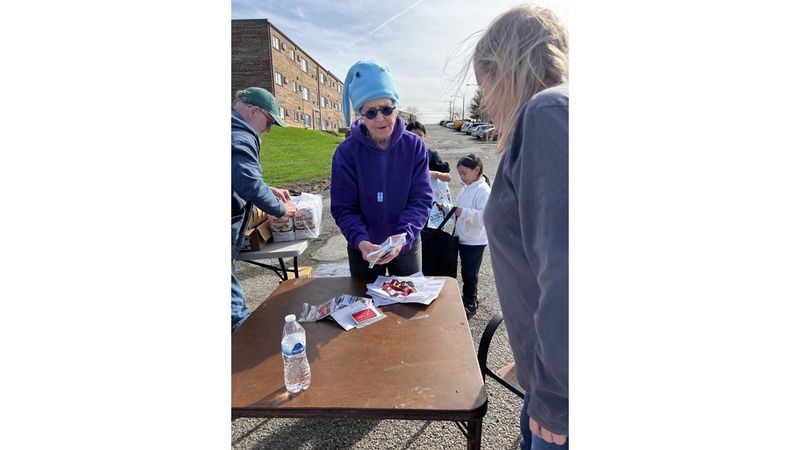
Her hat of choice on a recent Friday afternoon was a blue cap with bunny ears – the kind made popular by Liam Conejo Ramos. The 5-year-old was wearing a bunny hat when he and his father were arrested by ICE in January and held for 10 days.
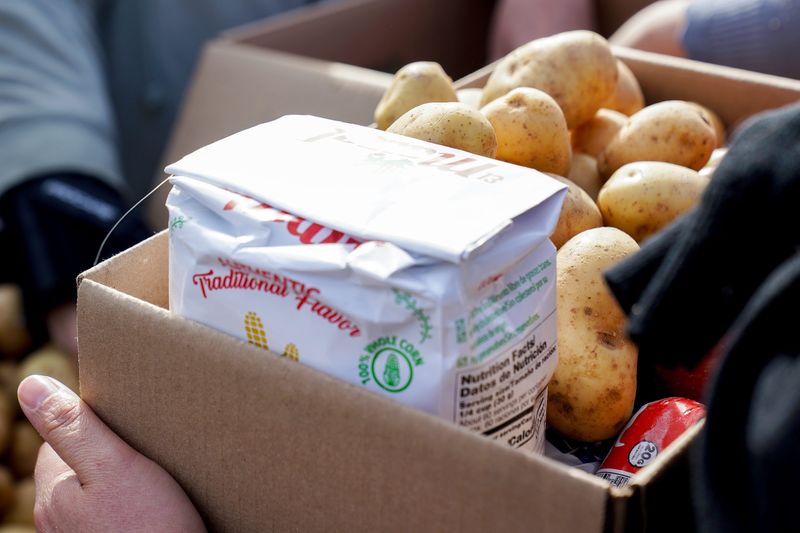
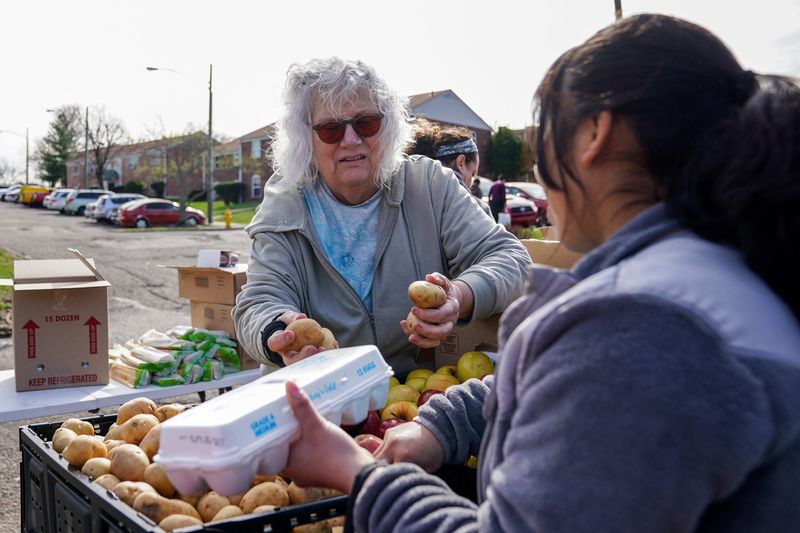
That afternoon, Sullivan and a handful of volunteers converged in a West Price Hill parking lot, threw up four folding tables and covered them with cabbage, potatoes, frozen chicken and frozen hamburger.
Forty-five minutes later, they tore down the pop-up food pantry, having served 74 families.
Sullivan and her helpers – affiliated with Mount Auburn’s Church of Our Saviour – know the exact number because each gets one bag of El Maizal, a favored flour for tortillas.
“Those are $4.29 a piece at Kroger,” according to Sullivan. (Online, a 4-pound bag currently sells for $5.80.)
Transformations has been hosting food pantries for about five years. Need has grown in the past year, Sullivan said, as ICE has detained more family breadwinners.
Neighborhood immigrant families know where to find Sullivan. Anyone else needs to contact her via Facebook.
She keeps the address quiet to avoid attention.
‘Very difficult time with ICE right now,’ head of bike program says
Vincent Wilson got the bike bug while living in Chicago.
The software engineer continued riding when he returned to Cincinnati and signed up to teach ESL (English as a Second Language) classes through his Lockland church.
He soon noticed that the dozens of Mauritanians and other immigrants who showed up for English classes came on foot. “There’s probably a huge need here,” he decided.
That birthed Mobility Together, a project he created for Queen City Bike.
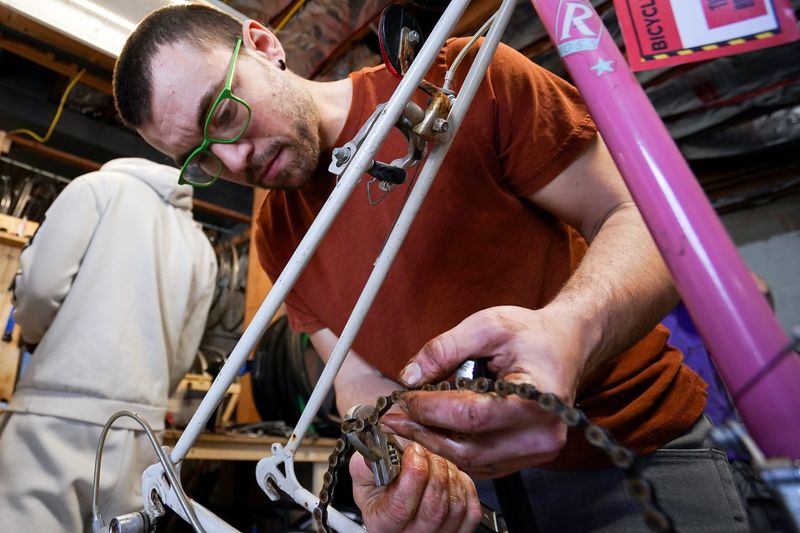
Most Friday afternoons for the past two-plus years, he’s opened the doors to his bike shop, fixed up donated bikes and given away more than 700 of them to his students.
Omar Sarr, who came to Cincinnati two years ago from Mauritania, uses his bike to pick up groceries and get to ESL class. He knows where to go for bike repairs. “When you have something wrong, you bring it back to Vincent,” he said.
Wilson dispenses advice on job searches, legal aid and tax returns along with bike fix-ups. Some of his students have left for Canada, he said. Others are anxious. “We’re in a very difficult time with ICE right now,” he said.
Like Sullivan, Wilson doesn’t publicize the address of his shop. People find him by word of mouth and his website.
Broken brake lights can attract ICE
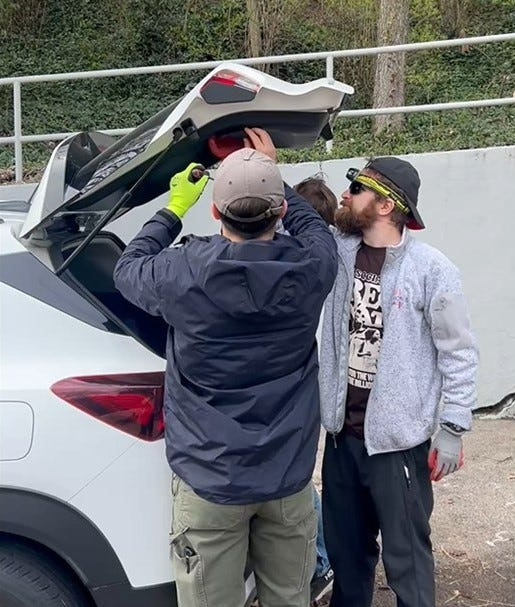
ICE knows Lower Price Hill is home to many of Cincinnati’s immigrants. That’s why the Cincinnati Party for Socialism and Liberation hosted a free brake clinic in the neighborhood in mid-March.
About 20 people showed up to have a brake light on a car replaced – thus removing a reason for a traffic violation and possible immigration action.
“Almost everyone (who participated) had that thought,” said Pepper Magisa, an event organizer. “It’s something you can get stopped for.”
Magisa’s group raised about $1,000 to pay for the lights by selling baked goods and artwork.
“Most people were kind of shocked we were out there,” she said. Some were even fearful. “What’s the catch?” a few asked. “Do we have to sign up for something?”
Tattoos ‘in solidarity with immigrants’ wanted for contest
Citlali Elena has already settled on her entry for the Ohio Immigrant Alliance tattoo contest.
She’ll submit a design that incorporates a brown-skinned woman wearing a rebozo (a traditional Mexican shawl used to carry children or supplies) with a milpa (a garden that includes corn, beans and squash).
The image will aim to show “we are stronger together,” said Elena, a tattoo artist for Bird’s Nest in Cincinnati’s Pendleton neighborhood.
That’s among the themes project manager Dexter Komakaru seeks in a competition inviting designs “to express what it looks like to be in solidarity with immigrants at this moment.”
With the Trump administration criminalizing some immigrants with tattoos, Komakaru said his own tattoo celebrates his Native American and Mexican heritage. It also acknowledges the loss of a father to deportation and mother to incarceration.
“I can neither live with you or without you,” Latin characters across his back say.
“It feels very aligned, deeply tied to my story,” Komakaru said.
Ohio Immigrant Alliance will sell booklets and other merchandise with the winning tattoo designs to support its immigration protection work.
English in high demand among immigrants
The case load at Heartfelt Tidbits is up about a third since Donald Trump started his second term as president, according to Executive Director Sheryl Rajbhandari.
Clients of the Springfield Township nonprofit – one with a range of services for immigrants and refugees – need transportation to school, medical appointments and ICE meetings. They need help navigating the banking world, especially when ICE detains the sole supporter of a family.
“People are asking for more and more and more,” Rajbhandari said.
Clients especially need English classes to navigate these perilous times, she said. “They don’t feel safe not speaking English.”
Like other ICE resisters, Rajbhandari wants little attention to Heartfelt Tidbits’ address. Clients find it.
ICE knows where she is, too. Neighbors of her building recently reported officers nearby, she said.
‘Neighbors come out’ to help neighbors, one advocate says
Cincinnati’s resistance to ICE is growing organically, said Erich Stoltzfus, another organizer with the Cincinnati Party for Socialism and Liberation.
While some cities have reacted to increased ICE activity with centralized “rapid response” teams, Cincinnati is responding neighborhood by neighborhood, Stoltzfus said.
“People are forming these networks on their own,” he said. “If a neighborhood is attacked, their neighbors come out.”
That makes most sense, he said, in a city where ICE is arresting immigrants one-by-one – at homes, at ICE appointments, during traffic stops – rather than in large-scale raids.
Stoltzfus’s group is ready to pivot if ICE does. If Cincinnati becomes a Chicago or Minneapolis – cities with a larger ICE presence – “I’m confident we’ll see very aggressive organization” in response, he said.
‘Things need attention,’ Sullivan says
Stepping up to the counter of Downtown’s Mazunte restaurant, Sullivan orders lunch in Spanish. She chats with a manager about how businesses should react to ICE visitors.
In addition to running the Transformations food pantries and handing out red whistles, she’s working on efforts to:
Still on her to-do list: Figuring out how to launch a local hotline that immigrants and their advocates can call, real time, to activate ICE pushback. The Ohio Immigrant Alliance has one, which handled 548 cases across the state in its first year, the group said in a report released this week.
“The things that are happening every single day need attention,” Sullivan said.
This article originally appeared on Cincinnati Enquirer: Beyond the protests, ICE resisters work to protect local immigrants
Reporting by Patricia Gallagher Newberry, Cincinnati Enquirer / Cincinnati Enquirer
USA TODAY Network via Reuters Connect