Editor’s note: This story has been updated to reflect the size of Olentangy Local Schools in the early 2000s
Katie Sprinkle, a 2002 Olentangy Graduate, remembers when district still had a unified K-12 building for its students.

“We were kind of farm kids when we grew up,” said Sprinkle, whose kids now attend school in the district.
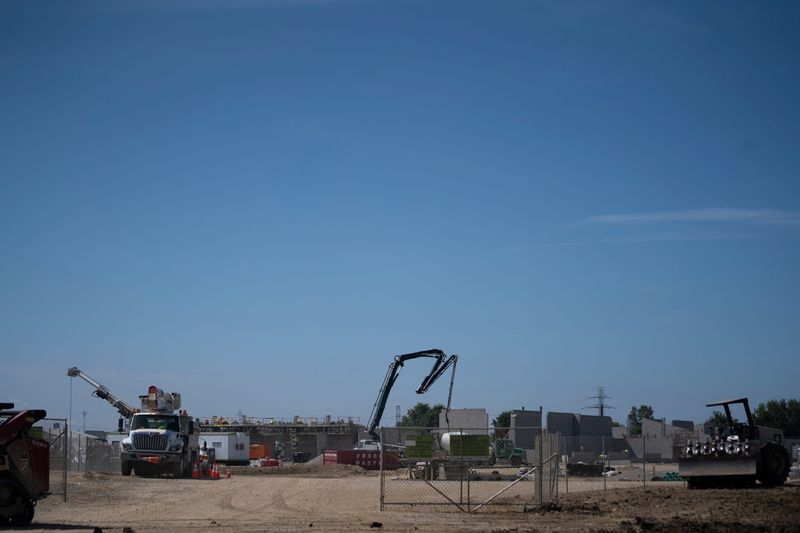
Now, it’s the state’s fourth-largest district at around 24,000 students and continues to grow at one of the fastest rates in Ohio, adding hundreds of new students each year. The district recently broke ground on its 18th elementary school and fifth high school, a response to the meteoric growth it is facing as a destination for families in central Ohio.
By 2040, the district projects it could have 32,000 students, which would make it the third-largest district in the state. Within the next decade, Superintendent Todd Meyer said the district may need three new elementaries and a seventh middle school.
Even as it deals with the challenges of rapid growth, the district is one of the best in the state – and was the only school with more than 10,000 students to earn a five-star grade on the Ohio report card.
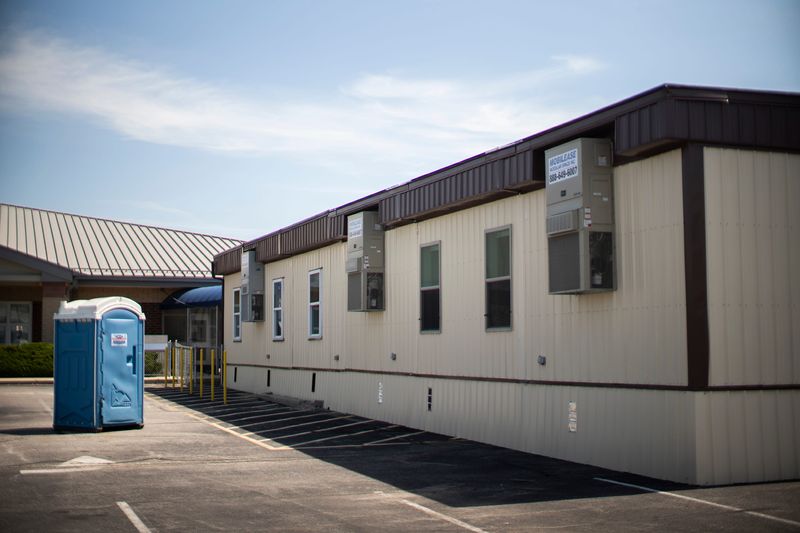
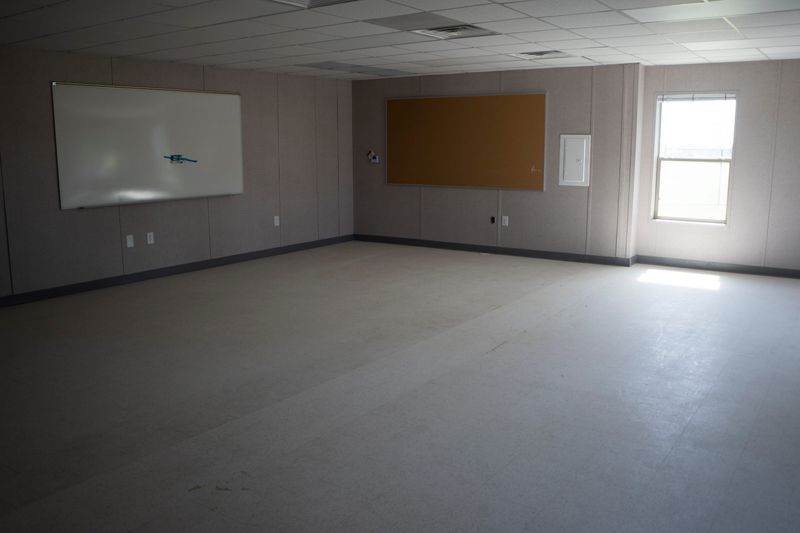
But the district faces growing pains. In some schools across Olentangy, the district has been forced to bring in modular classrooms and other space-maximizing efforts. The district also faces an over $50 million projected negative cash balance in 2029 and may need to consider an operating levy within two years.
For Meyer, the impressive results despite those pains isn’t an accident, it’s the product of meticulous long-term planning and a “laser focus” on aligning the district toward growth.
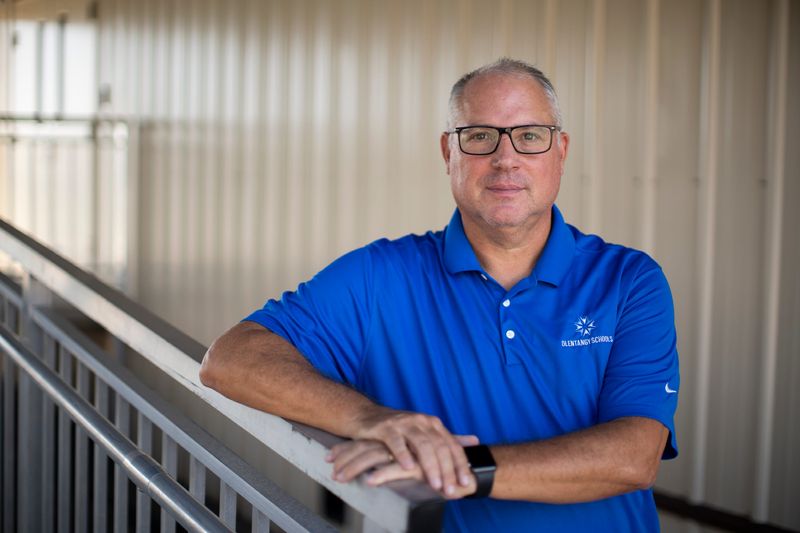
“As superintendent, I’m grateful for how intentional and purposeful we are as a district,” Meyer said. “It’s challenging, but also presents opportunities for us here in Olentangy. The good news is we’ve done this before, so we’re used to growth.”
Managing growth with success
Meyer began his career at Olentangy in 2007 when he helped open Orange High School, the district’s third high school, as its principal when the district had 13,000 students. It is now double the size. His philosophy as principal – and now as superintendent – is not to “make a big splash” but to carry on a “continuous improvement” mindset.
“I’m a proponent of respecting tradition, but I’m not held hostage by it,” Meyer said.
The signs of the growth are evident. At Indian Springs Elementary, off Home Road and Sawmill Parkway in one of the fastest-growing parts of the district, the district has had to bring in six trailer-like modular classrooms and Hyatts Middle School and Liberty Tree Middle School have a connecting hallway that has been converted to classrooms.
The planning is thorough – projecting where new families will move by studying zoning trends and census data and developing strategies for where new buildings might go. The district’s facilities and redistricting committees also help inform the district for the future of growth.
For example, thoughtful redistricting allows Olentangy to craft feeder patterns so that a group of students “reaches a critical mass” so kids graduate from high school with largely the same group of kids they started with despite potential boundary changes. Meyer’s own children have gone through the district, and he has seen it firsthand.
“They were able to form really strong relationships throughout their school, but also through the Olentangy community,” Meyer said.
Sprinkle is among the thousands of families over the past decade who have chosen to move to – or return to – the district because of its reputation as an excellent school system. Sprinkle and her family “almost defaulted” to Olentangy as the school of choice six years ago and moved to the Berlin High School area.
“Wanting the kids to have a really authentically, happy childhood, we all prioritize that,” Sprinkle said. “Families that want to be here in Olentangy, we are very passionate about the district.”
In 2024, however, voters overwhelmingly rejected a combined levy and bond package that would have paid for the construction of five new school buildings and funded operations in the district in a reappraisal year that saw every school issue fail. Voters widely approved a pared-down version of the bond package to build two new school buildings in 2025.
Part of the success in planning, Meyer said, is positive collaboration with seven townships, four cities, two counties and first responder agencies like the Delaware County Sheriff’s Office included in the boundaries of the district.
“We continually work on developing relationships with the elected officials and having conversations about how we can be partners with the different municipalities,” Meyer said.
Meyer said the reason the positive relationships with the communities the district serves are important is because the continued growth is coming, even though he hears from some people in the community are opposed to additional development. For example, the city of Delaware alone is expecting over 4,000 housing units in the pipeline. Meyer said commercial development is important to the district because it adds to the tax base without directly expanding enrollment.
“We’re cognizant [of opposition to growth],” Meyer said. “There’s plans that these [municipalities] have on what type of development they want to bring in.”
Delaware County Commissioner Jeff Benton said the county works with Olentangy Schools to manage infrastructure, including traffic, sewage and economic development in the county. When Benton first entered office in 2016, the county didn’t have very clear plans for how to manage the growth, but has worked in the past decade to help develop county-wide finance and zoning plans.
He said the district’s long-term planning helps the county prepare for additional growth.
“Hat’s off to them, it’s been great for the county to see this growth,” Benton said. “People want to live here, and that’s a great thing.”
The high-performing school systems in the county, including Olentangy, have been the biggest driver of the growth, he said.
“We know that when people move to a new area, the number one consideration is ‘Are there good schools,'” Benton said. “It’s extremely important.”
State Sen. Andrew Brenner, a Delaware Republican who represents the district, noted that Olentangy has had a history of strong facilities planning, but said that “growth will continue” all throughout Delaware County and that local leaders and incoming elected state legislators need to prepare for that.
“You see a lot of people moving in there and will continue to do so as long as you have proper planning, infrastructure and everything, it’ll work,” said Brenner, chair of the Senate Education Committee.
Financial problems complicate picture as district prioritizes stewardship
That growth can be challenging for a district the state rates as wealthy, and thus provides fewer financial resources for operations. The Dispatch previously reported that Olentangy has the state’s largest projected negative cash balance by 2029, nearly $100 million according to financial reporting from February.
Ryan Jenkins, Olentangy treasurer, said that since the February filing, the district has managed to slash that projected deficit in half, to around $51 million, through a series of internal maneuvers that shouldn’t affect operations.
However, there is still an expense problem. Jenkins previously told The Dispatch that as the district adds hundreds of students a year, expenses grow at 5% to 6% a year while its revenue grows at about 2% a year. Despite this, he said the district has taken actions to trim expenses and increase revenue, cutting projected expenses by $27.2 million over the next three years and raising revenue by $20.9 million over the same time.
Jenkins told the Dispatch that the district may need to consider placing an operational levy on the ballot in coming years, no later than 2028. The district last passed an operating levy in 2020 by a wide margin with a promise not to seek another additional levy for at least three years.
“Ending the 2028-29 school year with no cash – or about $51.7 million in the hole – is not feasible,” Jenkins said. “There is no way to operate without cash in the bank, and a cash deficit means checks bounce.”
Meyer said the district prioritizes financial stewardship, but the state only provides about 15% of its revenue, placing the rest of the burden on its local tax base. The average funding from the state for Ohio districts is around 39%, according to report card data.
Meyer said while he was grateful the state legislature included a growth supplement that kept it around $1,500 rather than $800 per-pupil, more state aid would help protect the local tax base.
“The more money we get from the state, the longer we can make our dollars stretch before we have to get back to voters to ask for additional operating dollars,” Meyer said. “For us, that’s property tax relief because we can extend levy cycles.”
Brenner said that he helped keep districts like Olentangy from having the the bare minimum of funding during the last two-year budget cycle in 2025. He said even rapidly growing districts like Olentangy need to find a way to control costs.
“You don’t necessarily need to build the biggest school building with every luxury in it, I think there needs to be some discussion locally on that matter,” Brenner said.
Families say students thrive in tight-knit Olentangy communities
Antonio Benton, who’s lived in the district for 21 years and has put all three of his children through the district, said that he and his wife decided to move to Powell because they heard positive things about the schools. He has previously served on a district redistricting committee and he’s seen “growth like crazy” in the time he’s lived there, including his own child getting redistricted.
However, he wasn’t worried about a drop-off in educational quality.
“I think that’s one of the things that really speaks volumes about Olentangy Schools, is the fact that your kid can go to any of these schools and you’re going to get a great education,” Benton said.
He said he and others in the community have an immense pride for the district.
“There’s just so much opportunity for kids to grow and be the best version of themselves, and that’s one of the things I really love about the district,” Benton said.
Sprinkle said she’s felt her whole life like Delaware County and Olentangy Schools was a great place to be. Many of the people she grew up with in the area have remained or returned to send their kids to the district.
“It really does feel like home,” Sprinkle said. “It’s hard to put into words exactly, but I think people are very passionate about this.”
For Meyer, the district’s top priority is providing constant improvement in the quality of education it offers families, no matter how large the district gets.
“We have a continuous improvement mindset, where we’re always asking ourselves how we can get better at the end of the day, to provide the best experience for our kids, academically, athletically, in the arts, extracurriculars, co-curriculars – you name it, that’s why we’re here,” Meyer said.
Cole Behrens covers K-12 education and school districts in central Ohio. Have a tip? Contact Cole at cbehrens@dispatch.com or connect with him on X at @Colebehr_report
This article originally appeared on The Columbus Dispatch: As Delaware County booms, Olentangy Local Schools faces growing pains
Reporting by Cole Behrens, Columbus Dispatch / The Columbus Dispatch
USA TODAY Network via Reuters Connect
By Cole Behrens, Columbus Dispatch | USA TODAY Network