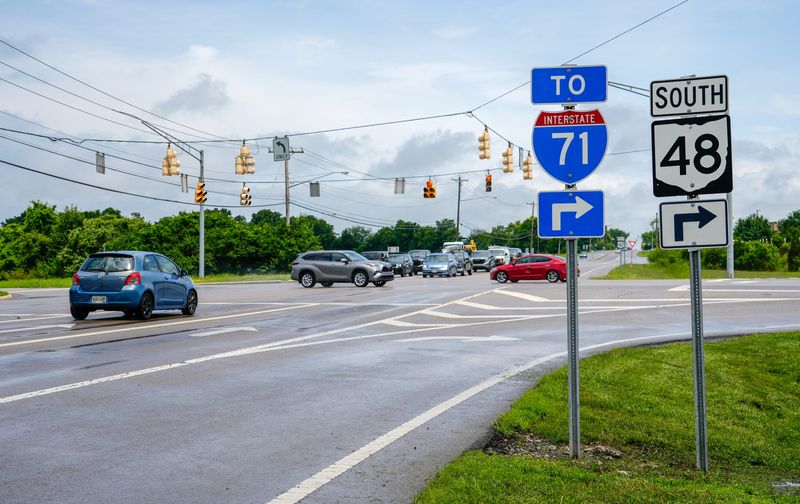
LEBANON, OH ‒ The intersection of State Route 48 and U.S. 42 looks like an ordinary suburban Ohio intersection: some trees, a Kroger, a Goodwill and a car wash.
But on a busy summer afternoon in 2024, it became the scene of Lebanon’s only fatal shooting that year, when Andrew Rainey was shot during a confrontation with another driver.

A Warren County grand jury declined to indict the shooter, Drew Hinners, after hearing sharply conflicting witness accounts about what happened in the seconds before the gunfire.
Some said Rainey, a 63-year-old lifelong Lebanon resident, was in a fit of “road rage” when he approached Hinners’ open convertible on June 17, 2024. Others questioned whether Hinners, 35, had provoked the encounter.
A few witnesses recalled Rainey punching Hinners. Others said he merely knocked off his hat. A private investigator later hired by Rainey’s daughter disputed some of those accounts, saying witnesses who reported a punch had obstructed views. Those competing accounts became central to the grand jury’s decision not to bring charges.
State driving records show Hinners had more than a dozen traffic violations since 2011, and a former coworker later told police he liked to provoke road-rage incidents.
The case highlighted changes to Ohio’s self-defense law, which presumes people inside their vehicles are acting in self-defense and requires prosecutors to prove they were not. Warren County Prosecutor David Fornshell later said the law and conflicting witness testimony made the case especially difficult.
“I will never forget this case,” Fornshell told The Enquirer.
The shooting shocked Lebanon, a city of around 22,000 people with a quaint downtown, about 35 miles northeast of Cincinnati. Two years later, the shooting still reverberates among witnesses, investigators and the families of the two strangers whose paths crossed that day.
Who was Andrew Rainey?
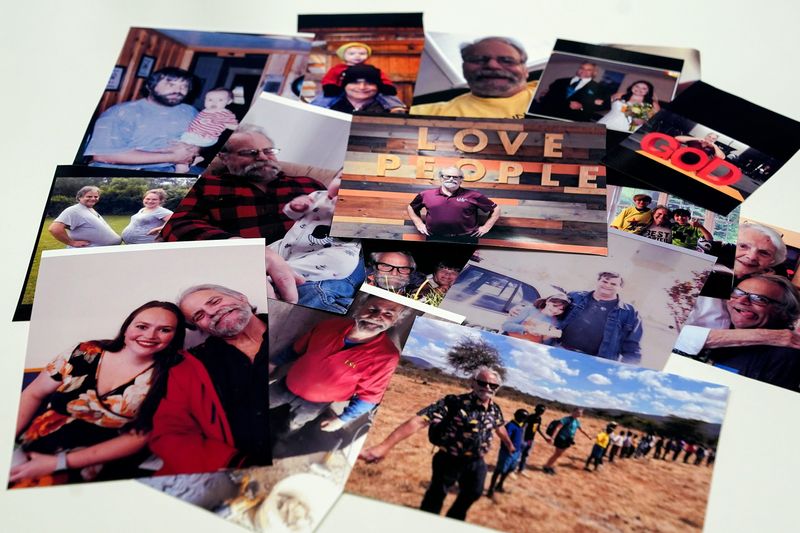
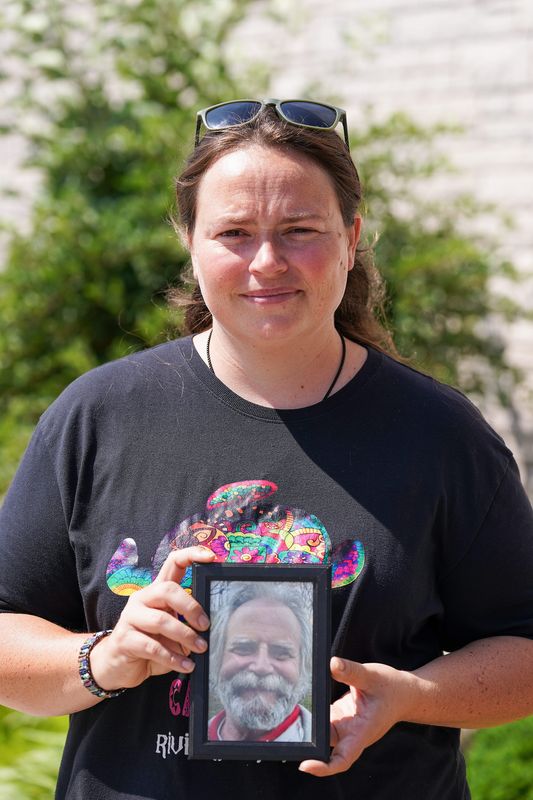
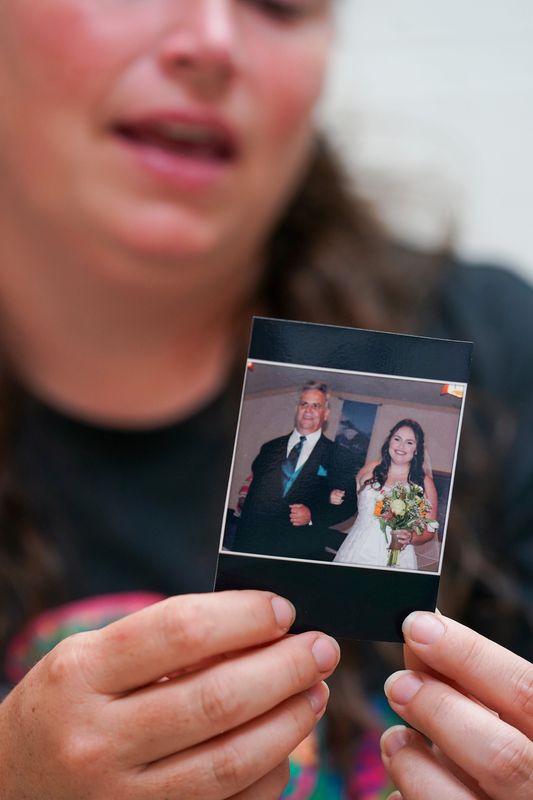
Rainey’s daughter, Sally Frazier, described him as a jokester who loved to help people. He was a member of the Lebanon Presbyterian Church and an association for Lebanon school graduates. His daughter said he walked with a limp and was born deaf but could partially hear with hearing aids.
Rainey worked in home remodeling and built churches and schools in other countries with his church. Four days after the shooting, he was scheduled to rebuild homes in Tennessee that were destroyed by floods.
In 1994, Clermont County officials gave him an award for saving a woman’s life. Frazier once watched her dad give his shirt to a stranger so the man could enter a store.
“Nobody does that stuff,” she said. “But my dad did.”
Who is Drew Hinners?
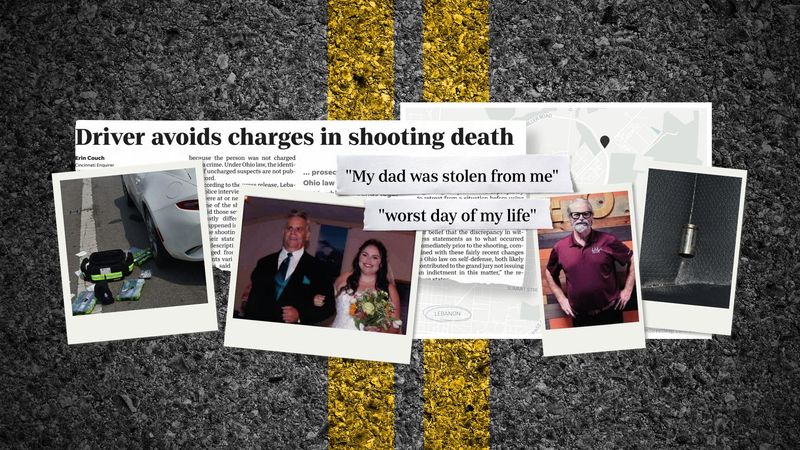
Hinners lives around 25 miles south of Lebanon in Milford, according to driving records. Hinners declined an interview but described the shooting as “the worst day of my life.”
In an emailed statement, Tanner Duncan, Hinners’ lawyer, said Hinners was fully cooperative with law enforcement throughout the investigation.
“After a careful and detailed examination of all the facts and circumstances, the Warren County Prosecutor’s Office declined to pursue any charges, and Drew was exonerated,” Duncan wrote.
On social media, Frazier said people who didn’t know her father blamed him.
“My dad was stolen from me and my family,” she said. “He was killed senselessly for nothing, and I have to let people know that. I have to stand up for my dad because he can’t do it anymore.”
What led up to the shooting
Just before noon on that day in 2024, Rainey and a coworker, Zachary Stickles, were driving north on State Route 48 toward a home remodeling job site after picking up supplies from Lowe’s in South Lebanon.
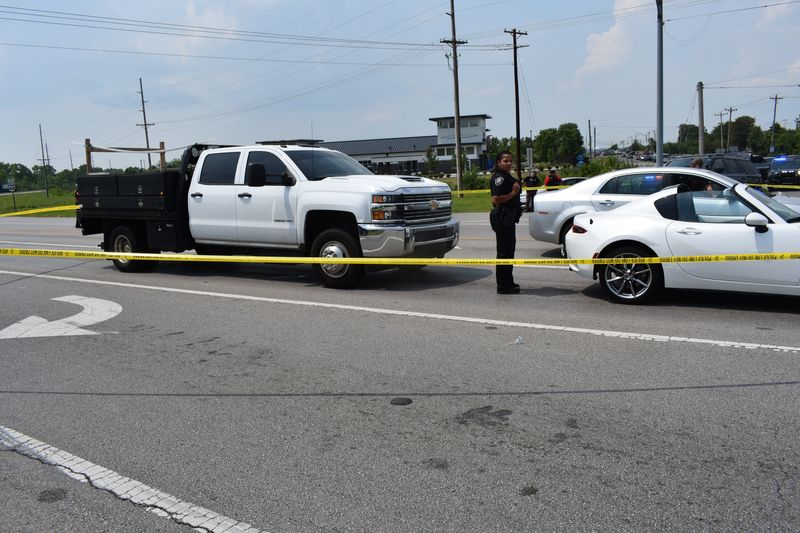
Rainey was driving a white Chevrolet truck ahead of Hinners in the left lane, dashcam footage from Hinners’ car shows. Rainey began to merge into the right lane. Hinners, driving a 2023 Mazda Miata with the vanity license plate “BIG CAR,” also moved into the right lane, driving onto the road’s shoulder to get around Rainey.
In a statement Hinners’ lawyer provided to Lebanon Police after the shooting, Hinners said Rainey’s truck veered into the right lane while he was passing, forcing him to swerve around Rainey to avoid a collision.
Stickles, 57, said Rainey was upset about being cut off. He remembered telling Rainey it was “best to let that go, because that young man’s gonna kill someone someday.”
Those words still haunt him.
After moving back into the left lane in front of Rainey, Hinners began to drive slowly, with cars passing him on his right, dashcam footage from his car shows. In his statement to police, Hinners said he slowed down to allow Rainey to pass him on the right, and that Rainey drove behind him at an “extremely close and unsafe distance” while flashing his truck lights. Hinners wrote that he feared for his personal safety due to Rainey’s “erratic driving” and “persistent road rage.”
Cindy Fanning, who was driving in front of Hinners, guessed Hinners was driving around 25 miles per hour, on a road where the speed limit is 50. She also saw Rainey’s truck flashing its lights.
“In an instant,” Fanning told The Enquirer, Hinners sped up and was right behind her. She said she pulled off the road into a grocery store to get away and later spoke to police about the incident.
“He was so close to the back of me that I couldn’t even see his front grill,” Fanning, 71, said. “I’ve never been that scared in my life driving my car.”
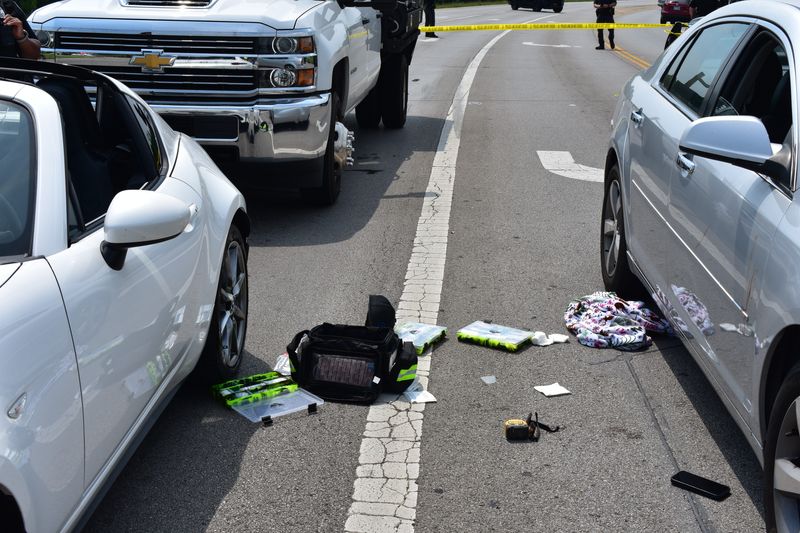
Hinners stopped at a red light at the intersection of State Route 48 and U.S. 42, leaving about a car’s length of space in front of him. The intersection was busy, with multiple cars flowing through. Rainey’s truck was behind him, according to crime scene photos and witnesses.
What happened next depends on who you ask.
Witness accounts vary
Stopped at the red light, Rainey got out of his truck and walked toward Hinners’ car.
Stickles said Rainey wagged his finger at Hinners, “like any father or grandfather,” and knocked Hinners’ hat off his head but “never laid a finger” on him.
“Should he have knocked the kid’s hat off? Maybe not. But he did deserve to be shot and killed over it? Certainly not,” Stickles said.
Hinners, in his statement to police, said Rainey yelled at him and flailed his arms. As Rainey walked toward the car, Hinners removed his gun from its holster and pointed it at the driver’s side door.
Kevin Snowden, who was driving through the intersection, said he saw Rainey “pummeling” Hinners and called it “egregious.” He said Hinners “had nowhere to hide,” seated in the convertible.
“If it was me, the only thing I would’ve done different is shot more than once,” Snowden said.
Jack Chrisman, who was in the car behind Rainey, said he did not have a good view of Hinners’ car but that he saw Rainey take a swing. Hinners told a 911 dispatcher Rainey “tried” to hit him.
“I think the guy’s dying,” he said on the call. Hinners later told police Rainey had struck him. A private investigator later hired by Rainey’s daughter said witnesses who said Rainey punched Hinners had obstructed views.
The confrontation ended before the light turned green.
Chrisman, a 79-year-old veteran, had seen people killed during the Vietnam War. But when he called 911, he was so disturbed by the shooting that he wasn’t able to describe to the dispatcher where they were located, he told The Enquirer.
Pennie Stouder, who was stopped across the intersection at a red light, told police Rainey didn’t appear angry when he approached Hinners. She pulled over and asked Hinners why he fired, according to police records. Hinners told her Rainey had punched him. Stouder said Rainey had not, she recalled to police.
Rainey died hours later at Atrium Medical Center in Middletown.
Hinners was detained in a Lebanon police cruiser and declined to speak to police without his lawyer. He was released from police custody later that day. Police took his gun, a 9mm Sig Sauer pistol, and removed 66 rounds of ammunition from his car, records show.
County prosecutor: ‘I will never forget this case’
Fornshell said witness statements ranged from “Rainey did nothing wrong, to Rainey was pummeling him, to somewhere in between.”
The level of discrepancy between witness accounts was highly unusual and would have made things harder for the grand jurors. The “bad fact,” as Fornshell put it, was that Rainey got out of his car and approached Hinners.
State driving records show Hinners was convicted of 13 traffic violations since 2011, mostly for speeding, including two convictions for driving more than 100 mph in a 65-mph zone.
In October 2024, four months after the shooting, Hinners was fined $150 by Ohio State Highway Patrol and made to complete an eight-hour course for a driving violation ‒ operating a vehicle with a disregard for the safety of people and property, records show.
Hinners’ ex-coworker, who called police after seeing news coverage of the shooting and recognizing Hinners’ car, filed a complaint about Hinners’ speeding to the Ohio State Highway Patrol in 2023, police reports show. After the shooting, he told police Hinners tried to instigate “road rage on a daily basis,” a Lebanon officer wrote in their report.
Fornshell, who lives in Lebanon and has held the elected prosecutor role since 2011, called Rainey’s death a “senseless tragedy” that shouldn’t have resulted in death.
“The question is whether it was a crime, and if you can prove it’s a crime,” he said.
Opposing statements and the grand jury
Snowden, Chrisman, Stickles and other witnesses were called to testify in front of a Warren County grand jury in July 2024.
Fanning, who had called Lebanon police after seeing news coverage of the shooting to tell them about her own earlier interaction with the Miata driver, was not.
“I always felt like if they had called me as a witness, I could have made an impact,” she said. “I was scared to death.”
Because Hinners was in his car, Chrisman thought he was justified in shooting Rainey.
Chrisman was familiar with Rainey and suggested to The Enquirer he might have had a mental disability. Throughout his life, Frazier said her dad dealt with people wrongly assuming he had a mental disability because he was deaf. She also said loud, jumbled sounds ‒ like cars whizzing by and yelling voices ‒ would have made it harder for him to hear that day at the intersection.
“My dad had no clue what was going on before he got blown away,” she said. “And that’s not fair.”
Snowden thought Hinners was justified in the shooting but said “that doesn’t make him [Hinners] a good person.”
Stickles, a longtime friend of Rainey’s family, said he felt the investigation was “tainted.” When giving his statement to Lebanon detectives, he said they suggested and encouraged him to say that Rainey was in the throes of “road rage” when he approached Hinners’ car.
A Lebanon detective who investigated the case declined to comment and the police chief did not return The Enquirer’s voicemail. Fornshell said allegations about a “tainted” investigation were “100% false,” and there was no evidence of any Lebanon officers “trying to steer the investigation” in any way.
Before testifying, Stickles said he overheard witnesses expressing frustration at being called. He recalled thinking: “This is a man’s life. What the hell is wrong with you people?”
Evidence was presented to grand jurors after an investigation by Lebanon police and a review by the prosecutor’s office. Warren County Prosecutor’s Office staff aren’t in the room during grand jury deliberations, but Fornshell later said in a press release he believed the discrepancy in witness statements and a recent change to Ohio self-defense law led jurors not to indict.
“When [Fornshell] called me on the phone to tell me the outcome, he was crying,” Frazier said. The grand jury, she said, “let a killer go.”
2 years later: ‘I think about it all the time’
Everyone The Enquirer interviewed agreed on one thing: Two years later, they still think about the Lebanon shooting.
Snowden remembers the shooting every time he drives through the intersection.
“It’s something I wish I hadn’t seen,” he said. “It’s not like what you see in the movies.”
“Every time I pass that intersection, which is every day of my life, I think about him being shot,” said Fanning, who lives in Waynesville. “I can’t believe it’s been two years, because I think about it all the time.”
Stickles described Rainey as a kind, family man with a good sense of humor, who was always willing to teach him things on the job. Days after the shooting, Stickles drove through the intersection.
An Army Special Forces veteran with post-traumatic stress disorder, he pulled over his car and threw up.
“There are a million things that could’ve gone differently that day, but I know Andy was not a threat to that kid,” he said. “This has been weighing on my mind for a couple years. It should’ve never happened.”
For Frazier, her husband and their four sons, Rainey was “the life of it all,” she said. He’s missed at music recitals, holidays, birthdays and backyard paintball fights.
“He loved people,” she said. “And that’s why it doesn’t make sense to me that day. It just doesn’t add up.”
A change in self-defense law and a rise in road rage shootings
A change to Ohio law in 2021 shifted the burden of proof for self-defense cases to the state. Rather than defendants having to prove they acted in self-defense, prosecutors must prove that they didn’t.
A person is also presumed to be acting in self-defense while in their vehicle, and they don’t need to retreat before using deadly force.
The new law was a “game changer” that has made prosecuting self-defense cases “substantially more difficult,” Fornshell said.
At the same time, road rage incidents in Ohio are on the rise.
In the past five years, Warren County ‒ where Lebanon is ‒ had more road rage incidents per year than any other county in the region, according to data from the Ohio State Highway Patrol. There were more than four times as many road rage incidents in Warren County in 2025 than in Hamilton County, despite Hamilton County being home to around three times more people.
Incidents of road rage are up this year in Hamilton, Warren, Butler and Clermont counties.
The Ohio State Highway Patrol tracks all incidents of road rage but does not keep records of which incidents include a gun.
After the shooting, it seemed like everyone Fanning spoke to knew Rainey. She heard stories about him from people in Lebanon and at the local YMCA.
“I just feel, in my heart of hearts, there are always choices. And the man did not have to pull the trigger,” she said. “A man loses his life on a road rage case, and it’s very upsetting that the law says that’s OK.”
This article originally appeared on Cincinnati Enquirer: 2 strangers met at a suburban intersection. Only 1 left alive
Reporting by Victoria Moorwood, Cincinnati Enquirer / Cincinnati Enquirer
USA TODAY Network via Reuters Connect
By Victoria Moorwood, Cincinnati Enquirer | USA TODAY Network