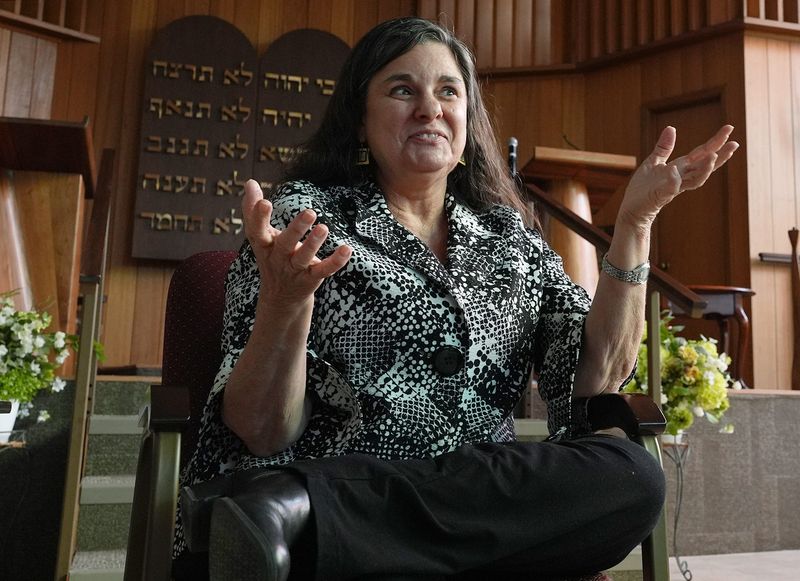
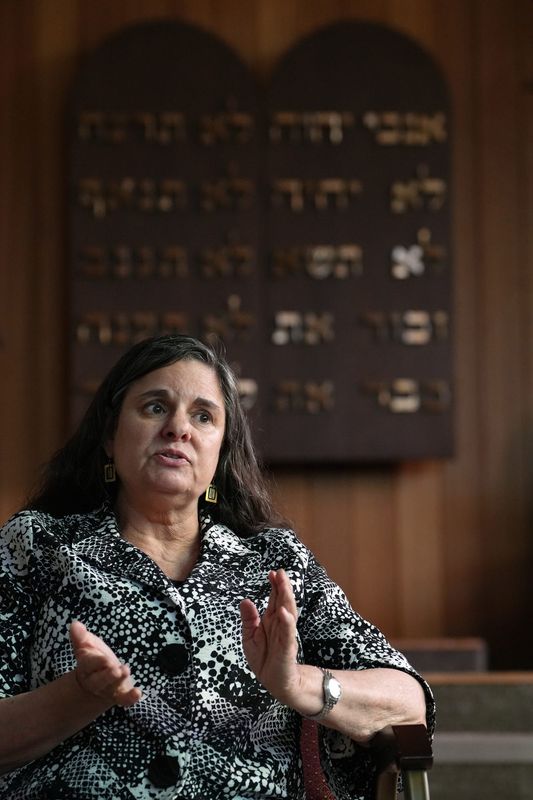
“AI doesn’t really have a name. You can’t see it. It’s faceless. It’s God,” Rabbi Rachel Brown joked to her husband, Rabbi Michael Ross.
Rachel Brown leads Beth Israel – The West Temple in Cleveland and is the president of the Greater Cleveland Board of Rabbis.

While it was said in jest, many religious leaders are embracing artificial intelligence in ways beyond their congregates’ imaginations. So much so that clergy in the world’s largest Abrahamic religions — Judaism, Christianity and Islam — are now creating guidelines and principles for using the revolutionary technology through the lens of their beliefs and values.
Nearly four years since OpenAI launched ChatGPT to the public, generative AI has become the most rapidly adopted general-purpose technology in history, according to The Computer & Communications Industry Association Research Center. Forms of AI have been integrated into nearly every sector of life, including health care, education, finance and, now, religion.
Should religious leaders disclose when they use AI?
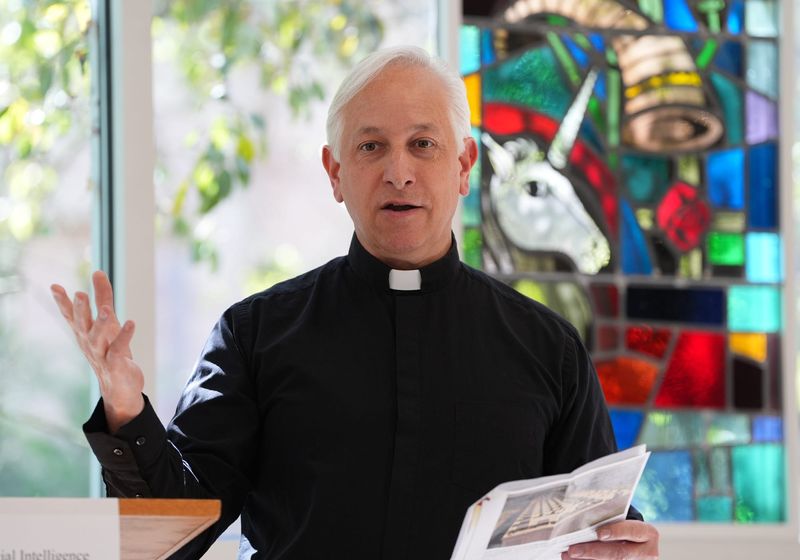
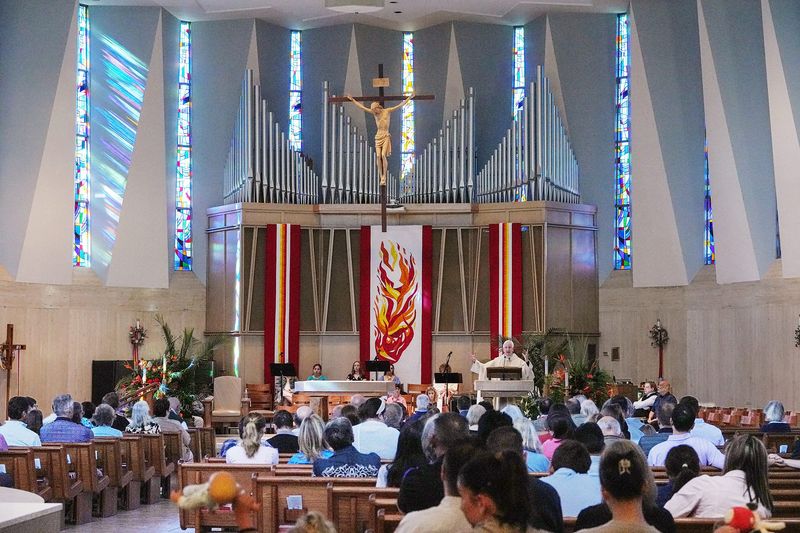
At the beginning of the year, the Rev. Steve Brunovsky at Saint Hilary in Fairlawn used a staff retreat day as an opportunity to show just how useful AI can be.
The priest typed “a Roman Catholic parish staff day prayer service based on the beatitudes” into an AI tool.
It gave him an introductory paragraph, the beatitudes and multiple prayers of petition based on the beatitudes, the “Our Father” prayer and a closing prayer.
He added a few things regarding the specific scripture passage but said he was “stunned” at its ability to come up with prayers related to specific scriptures.
“Instead of starting from scratch and spending a lot of time, you can actually get some good ideas and make it your own,” Brunovsky said.
After the short service, Brunovsky revealed he used AI to craft it and explained the steps he took to put it together.
Many religious leaders the Beacon Journal and Canton Repository spoke to made it clear they don’t task AI with writing their sermons, newsletters or other communications.
Some said checking the accuracy of anything that has been created or touched by AI is critical to its use, as it will sometimes misuse vocabulary or even “hallucinate,” a phenomenon where it generates a plausible but false or misleading response, according to Merriam-Webster.com.
Still, many do not feel their use of AI always warrants disclosure to congregates.
For Brunovsky, disclosure is only necessary for published documents that were created with assistance from AI.
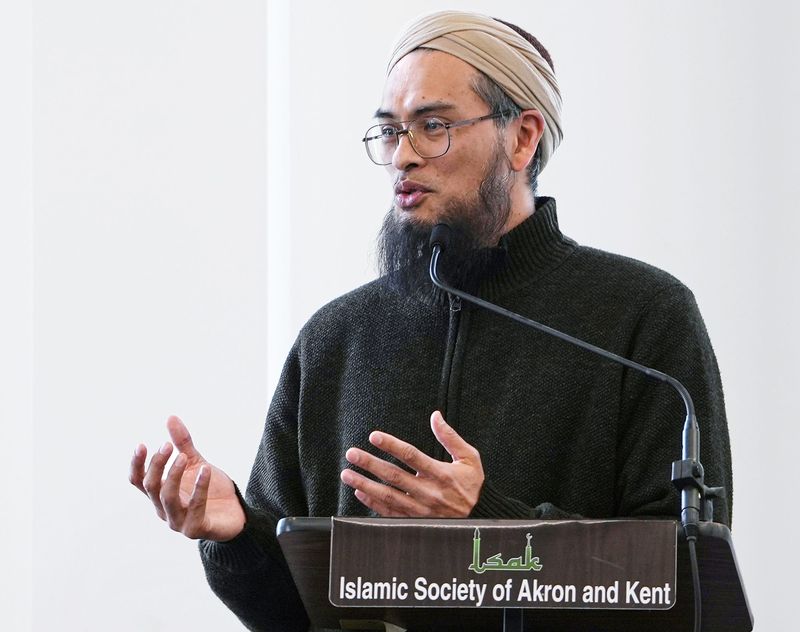
Shaykh Musa Sugapong, an imam for the Islamic Society of Akron and Kent in Cuyahoga Falls, does not feel his AI use needs to be disclosed. He compares it to using Google because he must still sift through AI’s results to confirm whether they’re accurate.
Rabbi Josh Brown from Temple Israel, a reform synagogue in Bath, also likened it to the internet and stated that if AI wrote something for him or took notes in a meeting, he would disclose its use.
“Just in the same way that I wouldn’t say ‘I found on Google the history of the Akron Beacon Journal,’ I would just state the history of the Akron Beacon Journal and wouldn’t necessarily go through the process of how I got to find that information just because it’s not pertinent,” he said.
What do different religions say about AI use?
While Rachel Brown uses AI for research and editing, she is uncomfortable having it write for her.
The rabbi once experimented with having AI write a sermon for her. In the end, she said, “it did really well, but it wasn’t my words.”
At times, she also feels guilty for using the technology to edit sermons during high holidays.
“There’s a part of me that feels a little guilty because this is a job I once hired someone to do, and I once paid someone to do for me,” she said. “We talk about how technology is taking people’s jobs, and I feel bad about that.”
While there aren’t specific rules that directly relate to AI in the Jewish faith, there are some pertaining to life that could be interpreted to extend to it. One example is “lashon hara” or evil speech, which refers to various types of language prohibited by Jewish law and is often translated to “malicious gossip” today.
“Could you use AI to talk about or damage the reputation of somebody else? Probably,” she said
There’s a similar understanding in Islam, said Sugapong.
He said the rules that apply to the internet also apply to AI. It’s imperative that the user is guiding AI, not the other way around.
For example, he said, someone shouldn’t deliver a sermon written entire by AI without fact checking the results.
If a religious leader were to repeat wrong information generated by AI, it could have “serious ramifications in the hereafter,” Sugapong said.
“You could misquote a novel, and worst-case scenario, you just spread misinformation,” Sugapong said. “But for us as Muslims, if it’s used incorrectly, then you’re spreading misguidance, so that’s not just misinformation in our eyes, that’s something very serious in eyes of God.”
Another stipulation is that AI cannot replace the human element of faith when it comes to learning and receiving counsel.
“While you can ask it certain questions, it shouldn’t be the end all be all,” Sugapong said. “There should still be some consultation with human beings who are trained that you trust.”
When contemplating the use of AI through a Catholic lense, preserving the dignity of humans is always paramount, according to Brunovsky. This requires the user to consider the many impacts of AI on others, including its portrayal of others and its impact on one’s ability to work.
Reverand rejects AI
But there are those who reject using the new technology in their theological work altogether.
The Rev. Walter J. Arrington, senior pastor at People’s Baptist in Canton, is decidedly old-school − and proud of it.
Arrington has served at his first and only pulpit for 40 years. By the reverend’s calculation, that’s 2,080 sermons.
When asked if he has used AI in the past or would in the future, he said “no.”
“I’m a perpetual student; I’m a workaholic” he said. “I don’t buy or preach canned sermons. I don’t go on sermons.com. Each one is handcrafted.”
Congregates weigh in on AI in religion
How do people of faith feel about their religious leaders using AI?
Just after a Sunday morning mass, Brunovsky explained his use of AI to the audience of eight Saint Hilary parishioners. None seemed to mind.
“You’ll walk into the confessional next Saturday, and a robot will be there,” he joked when the discussion pivoted to how quickly technology is progressing. “Father Steve will be on the patio with an adult beverage.”
Parishioner Daniel McMahon described AI as “another powerful revolution, just as the agricultural and industrial revolutions, that will reshape society.”
McMahon, along with members Catey Scanlon and Stephen McCarthy, expressed support of Pope Leo XIV’s first encyclical about “safeguarding the human person in the time of artificial intelligence.” Both Scanlon and McCarthy appreciated that the church’s leadership said a person’s value should not be measured by their productivity.
“It’s not saying, ‘We can’t have it. Don’t use it,’” McCarthy said. “It’s saying, ‘Let’s think about this first and make sure we’re using it in an ethical and moral way that doesn’t move forward to the detriment of the least among us.’”
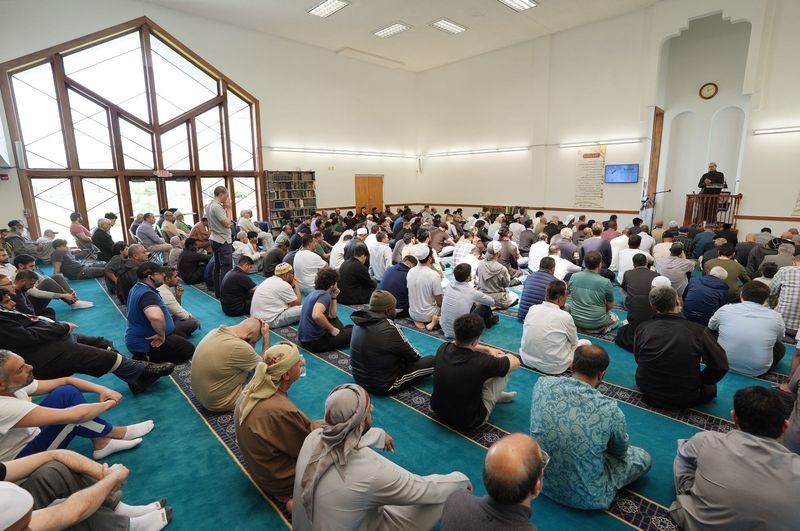
At the Islamic Society of Akron and Kent, Saad Sanyurah said he can sometimes tell that the imam giving a service is using AI because, after having been a member since 1985, he can recognize what is and isn’t their normal vocabulary. But as long as the ultimate message is the same, and it’s been checked for accuracy, he sees no harm with it.
There are some situations in which he believes the use of AI doesn’t need to be disclosed. But if most of the sermon is from AI or it’s a controversial subject, he said, then it should be.
Sabrina Landrum, also a long-time member of the Islamic Society of Akron and Kent, does not view AI as a primary source and believes whatever it produces must be corroborated.
“It’s sort of like asking: Would an imam use a Wikipedia page as a reference for religious materials?” Landrum said. “I mean, those of us who have gone through any academic institution knows that there are reliable sources that can be cited and then there are those that are not, Wikipedia being one, and I liken AI to that.”
How will AI settle in religion?
How AI will impact clergy, congregations and their missions is a mystery only time will solve.
Temple Israel’s Josh Brown compared AI’s emergence to the COVID-19 pandemic, which resulted in new virtual options for attendance in his synagogue.
“For some people, that keeps them at a distance, which is a loss, but for other people, it brought them closer,” he said. “So, I would predict that the same thing will happen with AI. Hopefully, it’ll bring more people together than it will keep them isolated.”
Beth Israel’s Rachel Brown can see AI fitting into religion as a tool, as it can direct someone to the nearest reform synagogue or point them to religious commentaries by a certain writer or certain passages in the bible.
But there are concerns about AI’s accuracy, along with if − and how − it might replace humans. Since AI can sound confident and correct when answering theological questions, the untrained eye may not be able to detect where the holes are in its responses.
“Can your faith grow through interaction with an AI? I believe it can in the same way that Bible study or reflection can grow us,” said the Rev. Benjamin George, co-pastor of Christ Presbyterian Church in Canton. “But can that interaction replace true human interaction? No. Because human beings are made in the image of God, when we interact with another human, we get a glimpse of the face of God; sometimes this is comforting, sometimes this is challenging.
“When we interact with an AI, I think we’re just looking in the mirror. If humans are made in the Imago Dei, and AI is made in the Imago Hominis (the image of man), then AI is a closed loop; whereas faith seeks an encounter with the one who is Wholly Other.”
Relying on AI to stand in for clergy was another concern shared by some, including Sugapong, who said this isn’t a new or unique issue. He recalled warning others against relying on “Shaykh Google.”
But beyond replacing humans, Rachel Brown noted how people tend to chase after idols.
“AI has the potential to be an idol or a false god,” Rachel Brown said.
Got a story recommendation? Contact Beacon Journal reporter Tawney Beans at tbeans@usatoday.com and on Twitter @TawneyBeans. And follow her adventures on TikTok @akronbeaconjournal. Canton Repository reporter Charita Goshay contributed to this report.
This article originally appeared on Akron Beacon Journal: AI is creeping into religion — and congregates may not even know it
Reporting by Tawney Beans, Akron Beacon Journal / Akron Beacon Journal
USA TODAY Network via Reuters Connect
By Tawney Beans, Akron Beacon Journal | USA TODAY Network