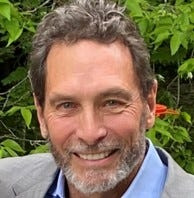
Dr. Rob Crane is the president of the Preventing Tobacco Addiction Foundation.
For months, a group of Franklin County business, civic, arts, tourism and community leaders donated hundreds of hours to a difficult task: finding sustainable ways to support the institutions that help make central Ohio an attractive place to live, work and raise a family.

The Funding Review Advisory Committee was assembled to carefully study a growing fiscal challenge, evaluate alternatives, hear from stakeholders and make recommendations.
One of those recommendations was straightforward: allow Franklin County voters to decide whether a cigarette tax should help fund a Regional Arts and Cultural District. This recommendation isn’t theoretical. In November of 2024, Cuyahoga County voters approved a cigarette tax by a 71% margin. Early collections reportedly exceed $20 million annually for arts and cultural funding
The arts are not a luxury.
The arts are a vital part of our economy, our identity and our quality of life. Organizations such as the Greater Columbus Arts Council, CAPA, BalletMet, Opera Columbus, the Columbus Symphony, ProMusica, the Columbus Museum of Art and hundreds of smaller organizations and artists enrich our community every day. Yet arts funding faces serious challenges. At the federal level, cultural funding is under sustained attack.
Locally, Franklin County recently paused $4 million in arts funding, while other traditional revenue sources face increasing competition. FRAC recognized these realities and offered a possible solution.
As a physician who has spent the last three decades working to prevent tobacco addiction, I support placing this issue on the ballot for another reason: its profound effect on public health.
This is about the health of our community in more than one ways
Tobacco remains Ohio’s leading cause of preventable death.
More than 20,000 Ohioans die each year from smoking-related disease. In Franklin County, well over 150,000 residents still smoke. Tens of thousands of them will ultimately die from cancers, heart disease, stroke, emphysema and other tobacco-caused illnesses. Roughly half of long-term smokers perish prematurely from their addiction and for every person who dies, twenty more live for years with chronic illness, disability, lost income and diminished quality of life.
The economic consequences are equally devastating.
A pack of cigarettes costs roughly $11 in Columbus today.
Yet smokers do not bear the full cost of smoking. Through increased health-care expenditures, lost productivity, fires, litter and other consequences, every pack sold imposes more than $50 in costs on the rest of society.
Employers pay heavily as well.
Research conducted at Ohio State University estimated that smoking employees cost employers approximately $5,800 more annually than nonsmokers. These burdens fall especially hard on lower-income families. Critics often describe cigarette taxes as regressive. The reality is that addiction itself is among the most regressive forces in our society, extracting money, health and opportunity from those least able to afford the loss.
But the most compelling argument for allowing voters to decide may be one that is often overlooked. A ballot initiative is not merely a tax proposal. It is a powerful public-health intervention.
When cigarette taxes are debated publicly, smokers pay attention.
For months, the public conversation focuses on addiction, disease, health costs and the benefits of quitting. Families talk about smoking. Employers talk about smoking. Physicians talk about smoking. Smokers face their addiction. When Washington State voters approved a cigarette tax increase, an estimated 100,000 smokers quit. The campaign itself changed behavior.
That is what makes the FRAC recommendation so unique.
It offers the possibility of supporting arts and culture while simultaneously reducing addiction, disease, disability and premature death. Opportunities like this are exceedingly rare.
The question before the Franklin County commissioners is not whether a cigarette tax is perfect.
It is whether a recommendation produced through one of the most extensive public funding reviews in recent county history deserves to be placed before voters. No one is asking the commissioners to endorse a cigarette tax. No one is asking them to campaign for one.
They are simply being asked to trust the citizens of Franklin County enough to let them vote.
If they refuse, the debate ends before it begins.
The arts lose a critical opportunity. Public health loses a life-saving opportunity. And tens of thousands of Franklin County residents who might otherwise have been motivated to quit smoking will continue down a path that, for far too many, ends in preventable disease and premature death.
Dr. Rob Crane is a retired OSU clinical professor of family medicine and the president of the Preventing Tobacco Addiction Foundation, which has led multiple public health and tobacco control campaigns in central Ohio and nationally.
This article originally appeared on The Columbus Dispatch: A cigarette tax would be a win for our arts, health. Let voters decide | Opinion
Reporting by Rob Crane, Guest Columnist / The Columbus Dispatch
USA TODAY Network via Reuters Connect
By Rob Crane, Guest Columnist | USA TODAY Network