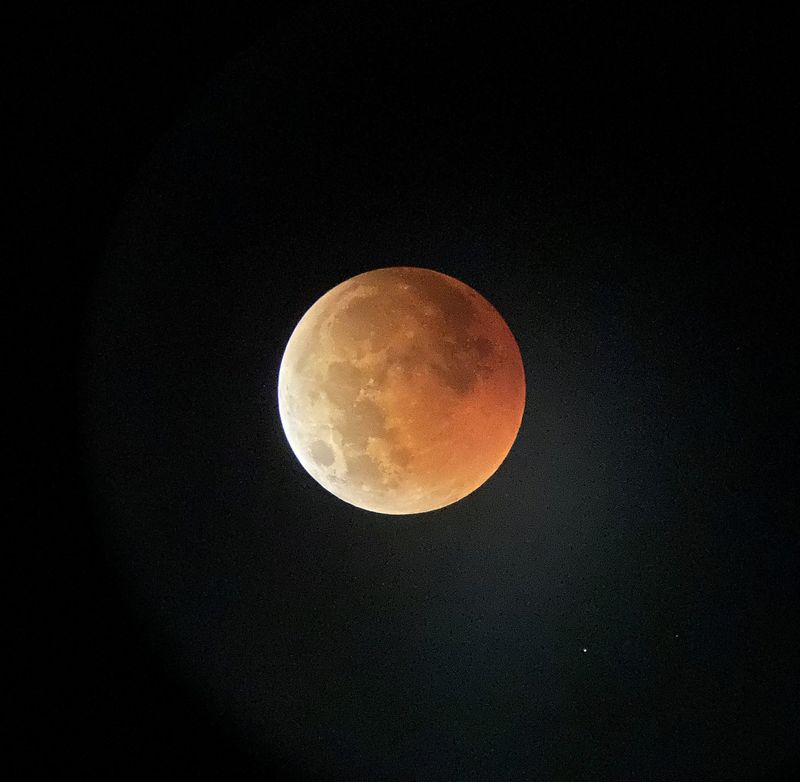
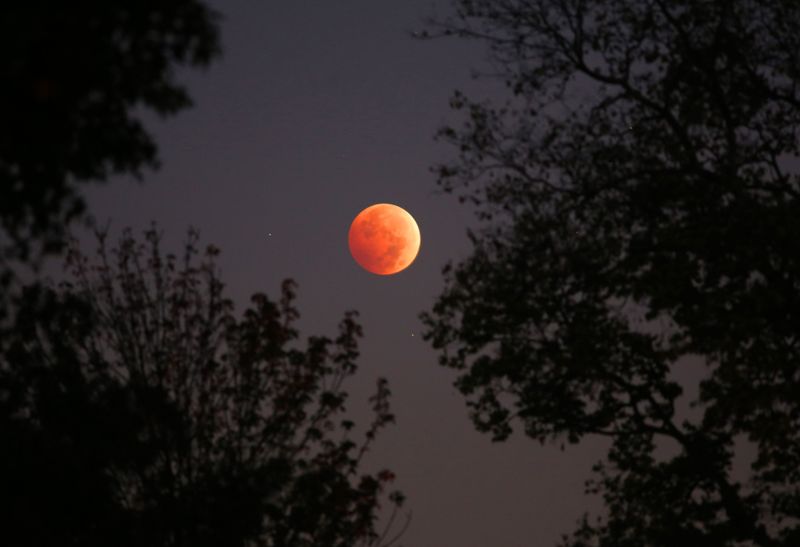
The full moon will slide in the Earth’s shadow on the morning of March 3 turning it all shades of eerie orange. This is the glory of the next total lunar eclipse, and that colorful display is one reason why this occurrence one of the best astronomical events to see with the naked eye.
Here’s what you need to know before you look skyward (and when you need to set your alarms).

What’s a lunar eclipse?
A lunar eclipse happens when the Earth comes between the sun and moon and blocks the sunlight from reaching the rocky lunar surface.
Just before a lunar eclipse starts, the moon will look like a normal full moon. As the eclipse begins, you will notice the darkest part of the Earth’s shadow, the umbra, spreading on one side of the moon (from the United States, most often the shadow first shows up on the left side of the moon).
The moon will slowly move into the Earth’s shadow, covering more and more of the lunar surface. When the moon is completely in the Earth’s shadow, this is called a total lunar eclipse, or blood moon. The moon will still be visible but appear several shades darker sporting dramatic orange or pink tints.
Lunar eclipse timetable – morning of March 3
Unlike solar eclipses, where the timing varies by location, everyone will see the lunar eclipse at the same time (Eastern Time below).
This occurs on the morning of March 3 before sunrise. Portions of the lunar eclipse will be visible from across the United States. However, the moon will set during totality for the Eastern Seaboard. The Midwest will be able to see the majority of the eclipse and the Western states will be able to observe the entire eclipse.
Observing and photographing
Your phone may do a solid job at photographing the lunar eclipse that morning. Experiment with night mode and other settings to take slightly longer exposures (3 seconds, for instance). If you can mount your camera on a tripod or, even better, on a telescope, increasing the magnification will help you get significantly clearer images. Zooming in even eight times would give you social media-worthy results. And your camera attached to a small telescope with magnifications between 20-30 would give you stunning photos.
The best parts of a lunar eclipse to observe are right when it begins and during totality. Witnessing the first curve of the Earth’s shadow show on the moon is thrilling. And initially the shadow seems to sweep quickly covering more of the lunar surface. Once the eclipse begins, try taking pictures of the moon at regular intervals such as every 10 minutes.
Then at totality, watch how the shades of color morph on the lunar surface – from rosy-gray to pink to orange. Every five minutes, it looks slightly different.
One unpredictable part of this eclipse will happen around moonset. When the eclipsed moon sinks lower in the western sky, the sun will begin to brighten the eastern sky. The moon will slowly fade and become difficult to spot through the approaching dawn. But, depending on the air quality or cloud cover, it also could turn a deeper blood-red like the setting sun.
If you miss the eclipse
The next lunar eclipse will be on Aug. 27, 2026, and it will be almost-total. At maximum eclipse 96% of the moon will be in shadow. The next total lunar eclipse won’t occur until Dec. 31, 2028.
Dean Regas is an astronomer, host of the “Looking Up” podcast, and author of seven books including “100 Things to See in the Night Sky” and “How to Teach Grown-Ups About Pluto.” He can be reached at: www.astrodean.com.
Comets and Meteors Online Class
This article originally appeared on Cincinnati Enquirer: A ‘blood moon’ lunar eclipse is coming. Viewing tips for prime colors
Reporting by Dean Regas, Special to The Enquirer / Cincinnati Enquirer
USA TODAY Network via Reuters Connect