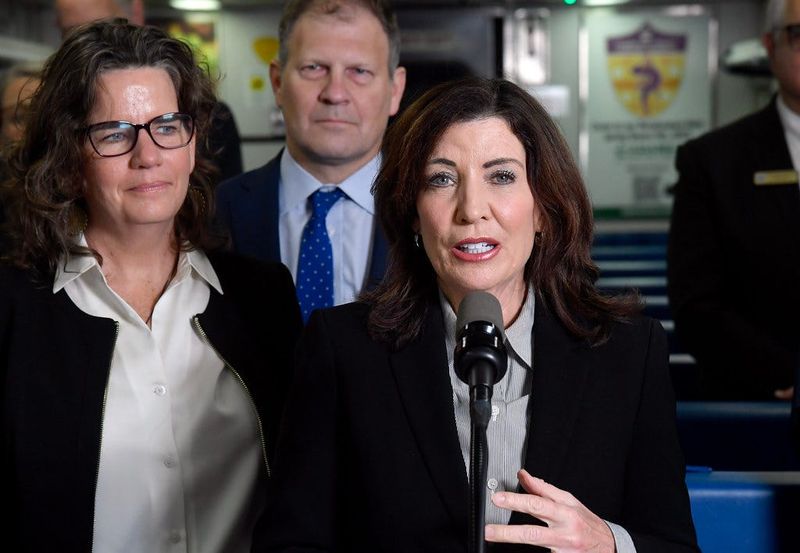
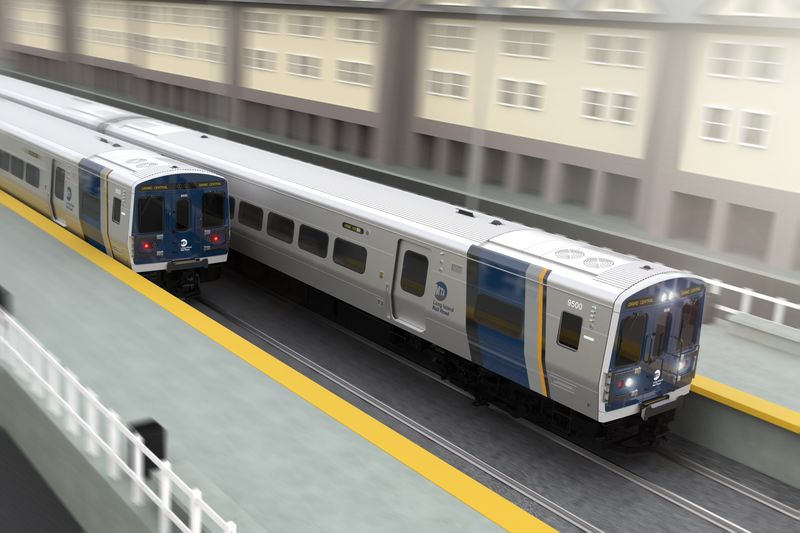
The Long Island Rail Road resolved a three-day strike by five of its unions with an agreement Gov. Kathy Hochul said will not impact fares on Metro-North Railroad or city subways and buses.
But questions remain whether some of the Metropolitan Transportation Authority’s other unions could seek similar deals that would put strains on a $21 billion budget stressed by ridership declines that have persisted since the pandemic.

Monday, May 18’s agreement, following years of negotiations and federal intervention, sounded “fiscal alarm bells” across the MTA, according to one longtime MTA board member.
“The reality is what we’ve just gone through in the last several days is primarily the pernicious effects of inflation,” Neal Zuckerman, the board’s finance chair said at the board meeting Wednesday, May 20.
And the same pressures that workers are feeling — having to balance their budgets amid rising costs — are pulsing through the MTA. But, Zuckerman noted, the public authority doesn’t function like a private company.
“We can’t just take a request for a 5% wage and turn around and say to the consumer ‘sorry the price is going up 5%’ like the airlines do,” said Zuckerman, Putnam County’s representative on the board.
MTA board member warns of fare hike in wake of LIRR deal
The only lever the MTA has are fares, which currently make up 40% of MTA revenue, Zuckerman said.
“It is forcing the MTA to confront this policy we’ve had about modest and predictable fare increases,” Zuckerman said during an interview with USA TODAY Network on Tuesday, May 19. “It is forcing the MTA to consider a term I don’t like, which is a fare hike, to figure out how it can drive our revenue.”
The MTA’s current strategy has been to increase fares at 2% per year, a rate Zuckerman notes is less than the rate of inflation. He’s suggested cost-cutting efficiencies in future contracts would lessen the impact of wage increases.
The agreement with the five LIRR unions includes three years of retroactive raises — two years at 3% and a third at 3.5%. Some 80% of the MTA’s unions have already agreed to similar raises, according to the MTA’s Chief Financial Officer Jai Patel.
The sticking point was over 2026 wages. The unions sought a 5% increase, while the MTA wanted 3%. The final deal called for 4.5% increases this year.
It covers five unions totaling 3,700 members, a fraction of the 70,000 workers employed at the MTA. Roughly 40,000 of those are city and subway workers represented by the Transport Workers Union (TWU), the MTA’s largest.
And in past years, the TWU contract set the pattern for other labor contracts, Patel said at an April meeting. “This is consequential because it is unprecedented for a bargaining unit of just 3,700 employees to set such a broad pattern,” Patel noted.
She noted that every percentage point increase in wages above the budget would cost the agency $100 million.
MTA fare hikes possible?
For now, MTA leadership says the LIRR contract would not lead to higher fares and hinted that work-rule concessions included in the agreement will make that possible.
“We wouldn’t have accepted the deal if it would put a burden on the taxpayers and the ridership,” LIRR President Rob Free said May 19.
At the same April meeting, Patel highlighted several work rules on the LIRR that the MTA was working to eliminate.
Among them is an extra day’s pay for engineers who operate electric and diesel trains in the same day or an extra day’s pay for engineers who operate passenger trains and are then asked to move it to a train yard. She also said the MTA wanted to restrict some employees from working over 18 hours in a day.
Both commuter rails have been dogged by criticism over work rules that have led to excessive overtime payouts. A 2018 investigation by The USA Today Network showed that in the five years after several major accidents, nine track workers made over $1 million in salary and overtime. Sixty-three made more in overtime than salary.
And a June 2025 analysis by The Empire Center, a government watchdog, showed 90 Metro-North workers making $100,000 or more in overtime. Six made more than $200,000.
Union concessions might help
Details of the work-rule concessions included in the LIRR contract have yet to fully emerge, while the unions wait for members to decide whether to ratify the contract.
Watchdog groups say the MTA could seek similar concessions in future contracts with the TWU and others.
“There are things that MTA could put on the table for TWU to balance out the costs,” said Rachael Fauss, senior policy director for Reinvent Albany. “For example, work rule changes or health care cost shifts.”
“Overall, it is a balancing game,” Fauss added. “The MTA has to attempt to make riders, taxpayers, and their union partners all happy — not an easy feat.”
Representatives for Metro-North’s largest union, the Association for Commuter Rail Employees, declined to comment on the LIRR outcome or its potential impact on upcoming negotiations. A representative for Teamsters Local 808, which represents Metro-North track workers, could not be reached for comment.
Several Metro-North contracts come up in 2027.
The last strike on Metro-North was in 1983, its first year of existence. It lasted 42 days and disrupted the commutes of around 90,000 passengers.
In 2017, the executive board of ACRE voted unanimously in favor of then-executive director James Fahey’s call for a strike. Contract-related issues, which included complaints about delays in paying disability pensions, were resolved.
Thomas C. Zambito covers energy, transportation and economic growth for the USA TODAY Network’s New York State team. He’s won dozens of state and national writing awards from the Associated Press, Investigative Reporters and Editors, the Deadline Club and others during a decades-long career that’s included stops at the New York Daily News, The Star-Ledger of Newark and The Record of Hackensack. He can be reached at tzambito@lohud.com
This article originally appeared on Rockland/Westchester Journal News: Why we know LIRR strike deal could fuel fare hike on Metro-North
Reporting by Thomas C. Zambito, New York State Team / Rockland/Westchester Journal News
USA TODAY Network via Reuters Connect