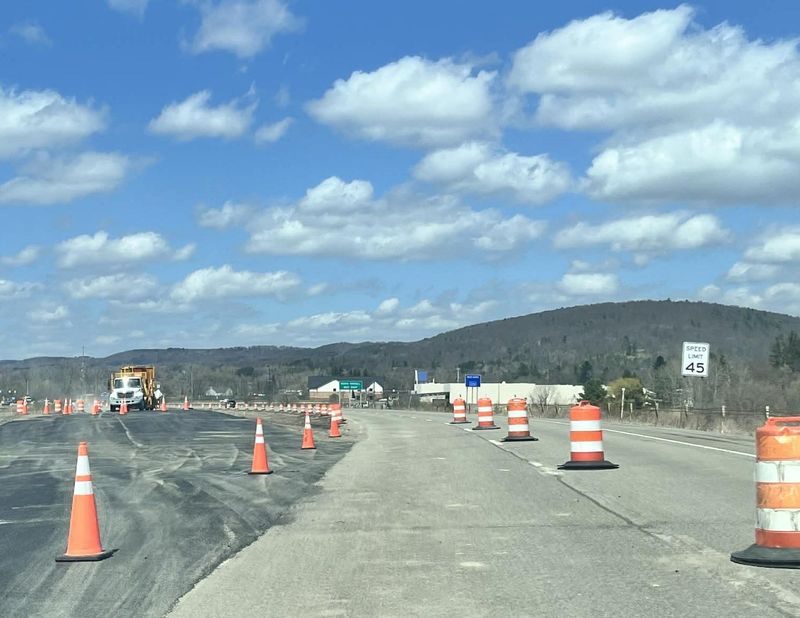
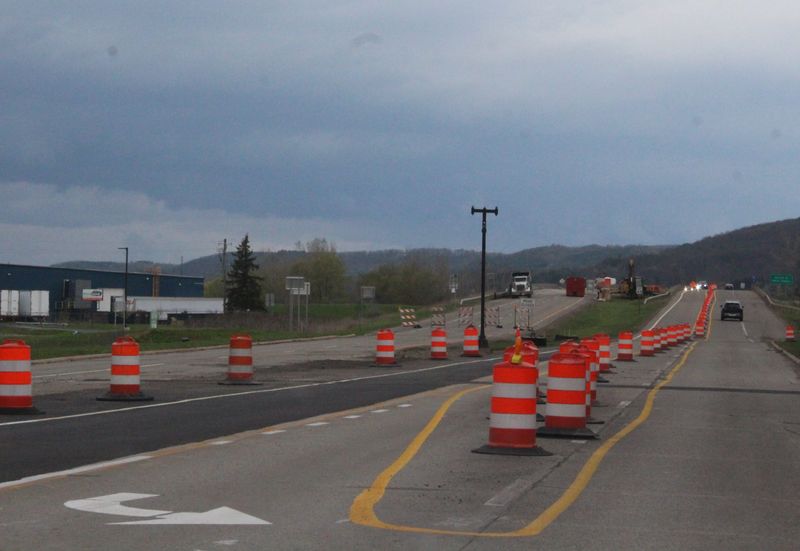
With the March launch of a $64.1 million, multi-phase state Route 36 construction project, Hornell area motorists are in store for many months of traffic cones, flashing lights, single-lane driving and detours.
The state Department of Transportation’s multi-year project is rebuilding and re-configuring a critical three-mile corridor going from Cass Street in the City of Hornell to Route 66 in Hornellsville.

Around 13,000 vehicles travel daily on a route that includes ten intersections and three different speed limits.
The first phase of the project covers the four-lane highway between Adsit Street in the city and Webbs Crossing Road, where a roundabout is being constructed.
Over the next 17 months or so, construction crews will also install new asphalt, new curbs and new lighting, add a new signalized left turn lane at the intersection with Bethesda Drive, strengthen bridges, shorten pedestrian crossings and reconfigure Hornell Plaza entrances.
DOT says when drivers see lights and cones, they need to slow down, stay alert and move over when possible.
“When possible” is the key consideration when Hornell motorists notice emergency lights in the rearview mirror. Here’s what the city’s police and fire chiefs say about best practices during the Route 36 construction project.
What do I do if a fire truck, ambulance or police car comes up behind me?
New York drivers are required by law to move over a lane if safely possible and slow down when passing any vehicle stopped along the road. This includes emergency response vehicles, tow trucks and highway construction and maintenance vehicles.
Again, the key phrase for moving over is “if safely possible.”
“We don’t want people to drive into an area where they are going to damage their vehicle,” Hornell Police chief Ted Murray said. “If they do see (flashing lights) behind them, keep going straight until you are out of the construction zone.”
Hornell Fire Chief Frank Brzozowski sympathizes with drivers navigating traffic patterns that change from day to day during the construction project.
“We are bulldozing this side, now we are bulldozing that side,” Brzozowski said of the recent work.
The key to safety is going “a lot slower” in the Route 36 construction area, Brzozowski said.
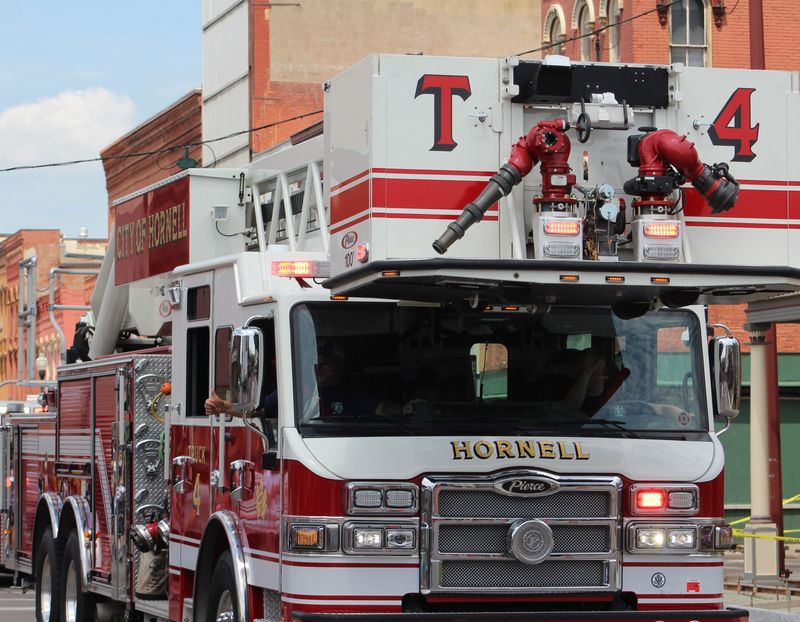
Brzozowski said fire trucks headed to a fire or another type of emergency call will avoid heavy construction areas as much as possible.
When Route 36 construction can’t be avoided, the department discourages motorists from trying tricky maneuvers or running over traffic cones to get out of the way of the fire truck.
“You keep moving forward. That’s all you do,” the fire chief said. “You can’t go off into a ditch. Keep going straight ahead until you can find a place where you can pull over, and we will get around you.
“We understand it is a construction zone. What we don’t want to see is panic. A lot of people will stop dead and say, ‘go around me.’”
It is the same story for Hornell ambulances. Like the fire trucks, ambulances on emergency calls are avoiding Route 36 construction whenever they can, Brzozowski said.
As practically “emergency rooms on wheels” ambulances usually don’t race to the hospital any more.
“That was the old rule of thumb for years. Load the patient and drive as fast as possible to the hospital. That’s what is going to save them,” Brzozowski said. “We try to do that minimally now. We will sometimes not even run lights and sirens, because it freaks people out.”
Now with advanced training and certifications, elite equipment and life-saving medicines, emergency medical technicians often do a full write up right where the patient is located, Brzozowski said.
Motorists shouldn’t feel pressured to pull over in a dangerous spot just because an ambulance is behind them.
“We will move right along with the traffic and we will give better care to that patient than if we are driving like a maniac trying to get to somewhere else,” Brzozowski said.
Murray said police understand construction challenges and they don’t want motorists to drive into dangerous situations to let a police cruiser go by.
“We don’t expect people in a major construction site with one lane to pull over at that particular point,” he said. “Just keep going until there is a safe location to pull over.”
DOT commissioner comments on safety, local work zone ‘intrusion’
State transportation officials stress construction zone safety at every opportunity. According to the DOT, the year 2025 saw nearly 600 crashes in work zones on New York state roads, leading to 87 injuries and three deaths of highway workers and vehicle occupants.
On the Thruway system alone, the number of work zone crashes increased by 46 percent from 2024 to 2025, the DOT said.
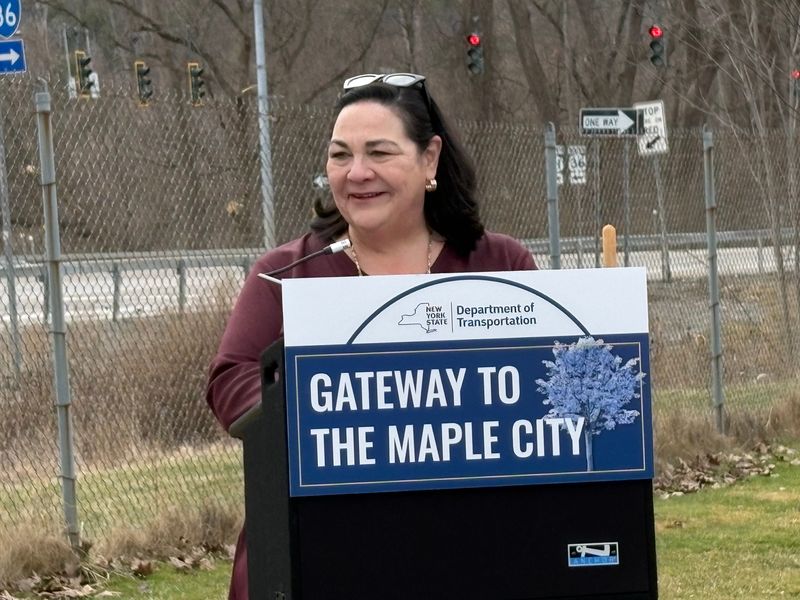
DOT Commissioner Marie Therese Dominguez offered a plea for safety at a March ceremony marking the official start of the Route 36 project.
“I want to ask the traveling public one thing. It’s a simple request and it is hard sometimes: be patient,” she said. “Construction is not easy. You have to be patient. People are out there on the roadways, and they are there to help make improvements and to keep you all safe.”
Dominguez noted she was making the remarks just several hundred feet from where three highway workers were seriously injured in a work zone intrusion June 11, 2025.
Email Neal Simon at nsimon@gannett.com. To get unlimited access to the latest news, please subscribe or activate your digital account today.
This article originally appeared on The Evening Tribune: What Route 36 drivers should know during Hornell construction project
Reporting by Neal Simon, Hornell Evening Tribune / The Evening Tribune
USA TODAY Network via Reuters Connect