The proposed Harriet Tubman Underground Railroad Byway is moving forward and with only a few more municipalities left to sign agreements, organizers are now looking to the people to learn just how to incorporate it into their communities.
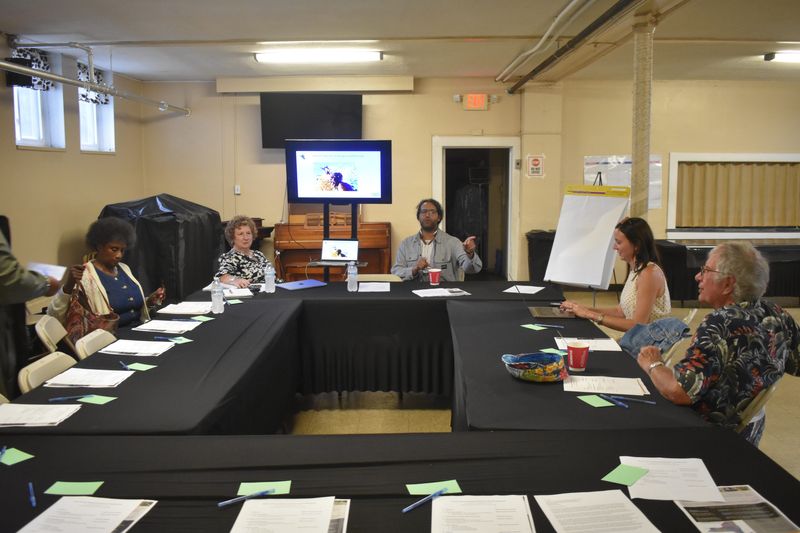
At an open house meeting on July 28, members of the Harriet Tubman Underground Railroad Byway organization met with members of the public at Hope Chapel A.M.E. Zion Church in Utica.

About the byway
The Harriet Tubman Underground Railroad Byway first started in Maryland in 2008, with Pennsylvania and Delaware following suit.
The Underground Railroad Consortium of New York State, which represents underground railroad sites and programs, has attempted to get the program off the ground for years and officially came to be after a grant worth $519K was obtained in 2022 to create a corridor management plan.
Since then, a path from New York City to Niagara Falls has been mapped out and the Harriet Tubman Underground Railroad Byway organization has been going to communities the 550 mile byway goes through to get resolutions from the cities it goes through for approval.
Ally Spongr DeGon, executive director of the Harriet Tubman Underground Railroad Byway organization, said the hope is to get the whole byway designated in 2027.
“We mapped the route out on established roadways that anyone can drive on,” DeGon said. “Signage will go up every 10 miles along the route, showing people that they are on the byway or that they need to turn to get on the byway.”
Currently, there are about five more resolutions that need to be passed by municipalities along the byway to finish off the 550 miles.
The underground railroad’s legacy
And while the byway itself is one component, the byway is a way to connect the community to the history of the underground railroad.
The three main points of the byway, according to Byway Consultant President Cheryl Hargrove, is to educate, preserve, and encourage economic growth.
“We want it to foster community pride, enhances resident’s quality of life, preserves the natural assets, and encourage visitors to be agents of change by elevating authentic stories of freedom seekers on their journey to freedom,” Hargrove said. Education especially, Hargrove continued, saying she was taken aback by the lack of knowledge at just what the underground railroad was.
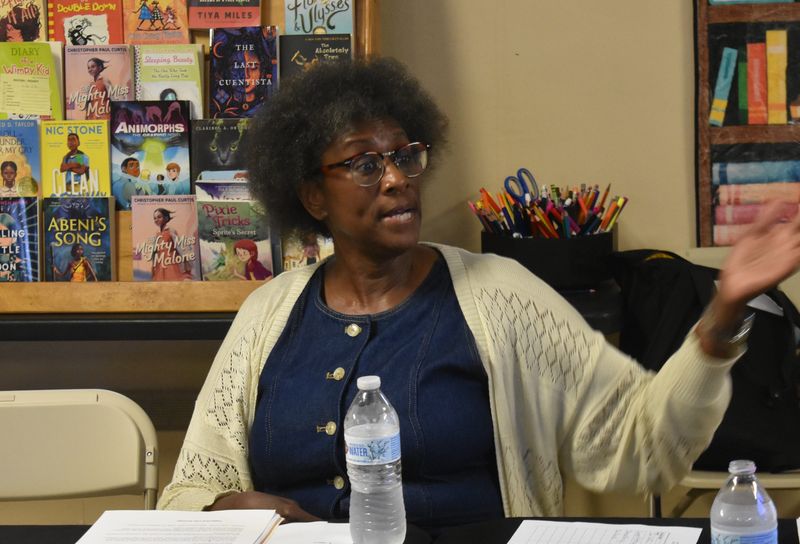
Hope Chapel A.M.E. Zion Church Pastor Sharon Baugh was one of the first ones to talk, saying she had seen first-hand that the history of the underground railroad wasn’t being taught.
“It’s being lost,” Baugh said. “The education component is so important.”
Additionally, Baugh said she felt the church component of the underground railroad had been left out and wanted to make sure the role of the church in the underground railroad is included.
Hargrove agreed and suggested the possibility of using churches along the underground railroad as hubs for meetings with itineraries for people traveling the byway.
Baugh was excited at that possibility and said she’d like to see Hope Chapel as one of the sites and would be happy to open the church up to visitors.
“We’d like to open a section of the church to be more museum-like that’s interactive because J.W. Loguen [the founder of Hope Chapel] was a captain on the underground railroad,” Baugh said. “He was educated here in Utica as part of his secondary education. A lot of this history of the underground railroad is right here and we want people who come to this area be able to see and hear it.”
For more information about the Harriet Tubman Underground Railroad Byway tubmanbywayny.org/about-us/.
This article originally appeared on Observer-Dispatch: Utica’s Hope Chapel Church hosts Underground Railroad Byway open house
Reporting by Casey Pritchard, Utica Observer Dispatch / Observer-Dispatch
USA TODAY Network via Reuters Connect
By Casey Pritchard, Utica Observer Dispatch | USA TODAY Network