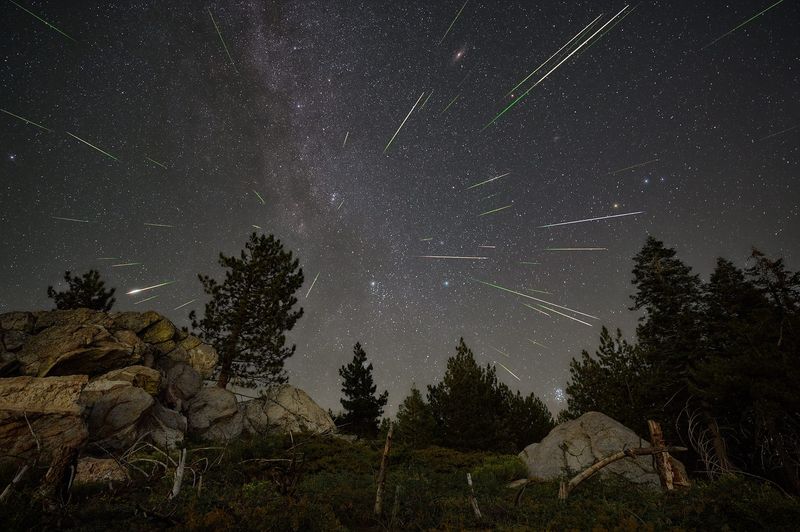
It’s a unique end of July for stargazers as not one, but two meteor showers are peaking this week on the same night.
The Southern Delta Aquariids and Alpha Capricornids will peak July 29-30, according to the American Meteor Society, and you’re in for even more skywatching fun as a third meteor shower — the Perseids — is active as well.

Here’s what to know this week’s exciting astronomical event.
Where do the meteor showers get their names from?
Meteor showers’ names tend to derive from where their meteors appear to come from.
For the Southern Delta Aquariids, the point in the sky where the shower’s meteors appear to come from is the constellation Aquarius, whose third brightest star is Delta, NASA says. Delta also helps distinguish this meteor shower from the Eta Aquariids shower, which peaks in May.
The Alpha Capricornids’ meteors appear to originate from the constellation Capricornus, according to Newsweek, and the Perseids, considered the best display of the year, appear to come from the constellation Perseus, NASA says.
When can you see the meteor showers?
Both the Southern Delta Aquariids and Alpha Capricornids meteor showers will peak July 29-30 and remain active until Aug. 12.
And while the Perseids are currently active through Aug. 23, the shower’s peak isn’t until Aug. 12-13.
What will the meteor showers look like?
Unfortunately, neither the Southern Delta Aquariids or Alpha Capricornids are very bright so it might be a bit tricky to spot them, especially if the moon is visible.
However, the Alpha Capricornids is known for its numerous bright fireballs, the American Meteor Society says, and you’ll know you’ve seen the Southern Delta Aquariids when the meteor is coming from the direction of the constellation Aquarius, according to NASA.
You should have more luck with the Perseids, though, as its meteors are plentiful, swift and bright, NASA says. The popular meteor shower consists of 50-100 meteors per hour and is known for its fireballs and the long “wakes” of light and color left behind its meteors.
What will the Rochester area’s weather be like on Tuesday and Wednesday?
Tuesday night should provide perfect viewing conditions as skies are expected to be mostly clear and temperatures will get down to around 70, according to the National Weather Service.
Wednesday night’s conditions might be a little less ideal as the National Weather Service is expecting the area to see some possible showers and thunderstorms before 8 p.m. and showers again after 2 a.m. with increasing clouds throughout the night.
What will the Westchester area’s weather be like on Tuesday and Wednesday?
Like the Rochester area, the best of the two nights should be Tuesday as the National Weather Service expects mostly clear skies and temperatures around 75. Wednesday night will be mostly cloudy and showers and thunderstorms could be expected mostly after 8 p.m.
Emily Barnes reports on consumer-related issues for the USA TODAY Network’s New York Connect Team, focusing on scam and recall-related topics. Follow her on X and Instagram @byemilybarnes. Get in touch at ebarnes@gannett.com.
This article originally appeared on Rochester Democrat and Chronicle: Two meteor showers to hit peak activity this week. What to expect
Reporting by Emily Barnes, New York Connect Team / Rochester Democrat and Chronicle
USA TODAY Network via Reuters Connect