It’s spotted lanternfly season again in Westchester, and experts say the situation is already in full buzz.
Spotted lanternflies are an invasive species that made its appearance in New York in 2020, but was present in other East Coast states as early as 2014. Since then, the population has quickly expanded. They’re sucking the life from trees and plants in New York and beyond, threatening farming and tourism, the New York state Department of Conservation said. The agency’s approach is to identify and contain local infestations early, because managing a more widespread problem is expensive and time-consuming.

The good news for typical residents with regular yards is that the spotted lanternfly is more of a nuisance than anything else, said Hillary Jufer, Cornell Cooperative Extension of Westchester’s Horticulture Program Manager.
She said Westchester an “established” population, while a Cornell map showing the lanternfly’s spread in the Northeast marked Westchester, Rockland and Putnam Counties as having spotted lanternfly “infestations.”
The message to people living in Westchester and Rockland Counties and surrounding areas? Go on a bug-stomping spree.
How to identify spotted lanternflies
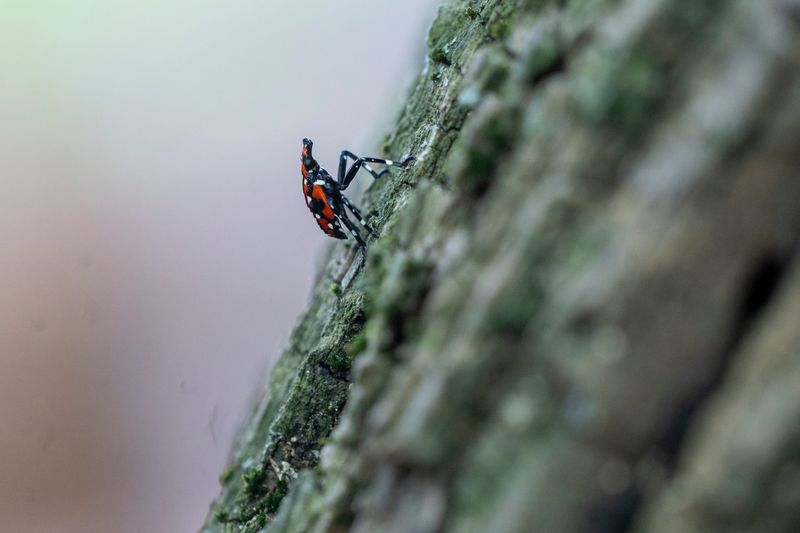
Adults can be identified by large black spots and red sections on their underwings. Black nymphs will be visible from April to July, while red nymphs, the older insects, will be around from July to September, the DEC said.
They’re about 1 inch long, and half an inch wide as adults.
Their egg masses, which can contain up to 50 eggs, are laid on trees or other surfaces, and may be difficult to spot. The eggs appear in segmented, brownish-grey rows covered in a wax-like substance when first laid. Older egg masses may appear darker, and look like spots of mud.
What do spotted lanternflies eat?
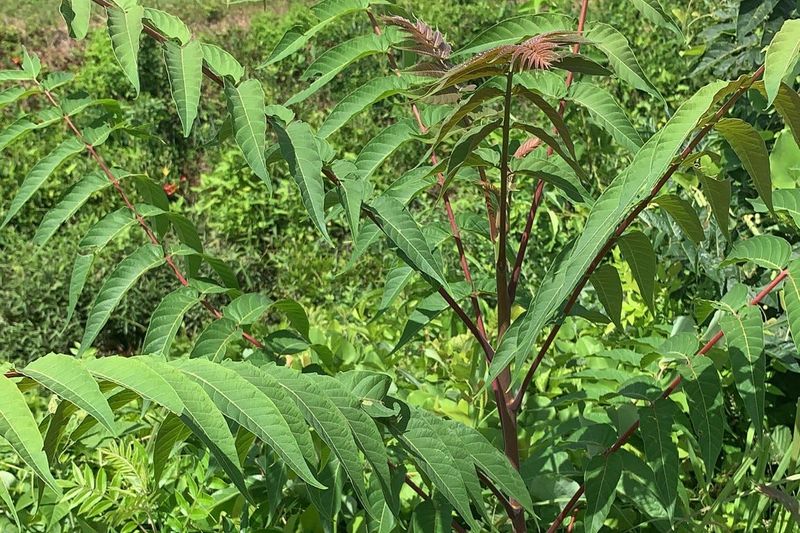
They particularly like a plant called trees of heaven, or Ailanthus altissima, another invasive species that originated in Asia but has rapidly spread through North America. They also feed on hops, fruit trees, maple, walnut and other plants.
How to spot a spotted lanternfly infestation
Trees or plants visited by the lanternfly may be oozing sap from small wounds along the stems or trunks. Egg masses may be present on those surfaces. Lanternflies also leave behind waste called “honeydew,” which can build up underneath plants and contribute to mold growth.
Should I be documenting the spotted lanternflies I see?
In some parts of New York, like Central and Western New York, the DEC is asking that residents document and collect samples of lanternflies when they see them. You can email your photos of spotted lanternflies to spottedlanternfly@agriculture.ny.gov or fill out a New York state Agriculture and Markets reporting form.
But residents of Westchester, Rockland, Putnam and surrounding parts of downstate New York are off the hook because the spotted lanternfly population in those areas is already well documented. The region is part of what the DEC calls a “protective zone,” encompassing 20 counties located near the Pennsylvania and New Jersey infestations, where the agency specifically surveys, monitors, and manages a spotted lanternfly prevention effort.
What to do when you find a spotted lanternfly in Westchester, Rockland, Putnam
At this time of year, you should kick your awareness of lanternflies into high gear. The idea is to kill the insects at all life stages — eggs, nymphs and adults.
Check your firewood, outdoor furniture and vehicles for lanternfly egg masses, and if you find them, scrape them with a credit card or similar flat, hard edge into hot, soapy water or a baggie of rubbing alcohol or hand sanitizer.
If you go to another state with a known lanternfly presence, check your belongings when you return home and kill any eggs or adults you find. Be particularly vigilant for hitchhikers on your vehicles, Cornell Cooperative Extension’s Jufer said.
If you find nymphs or adults, kill them by squishing them or vacuuming them up. Each female killed can help decrease next year’s population by 60 or even 100 insects, the DEC noted.
Shop-Vacs, dust busters or any vacuum you have at home can work well, and you could use a nylon stocking or similar to catch the lanternflies inside the vacuum for easy catching and disposal afterwards., Jufer noted.
This article originally appeared on Rockland/Westchester Journal News: Spotted lanternfly season is here: What to do if you spot one in Westchester, Rockland
Reporting by Sarah Taddeo, New York State Team / Rockland/Westchester Journal News
USA TODAY Network via Reuters Connect