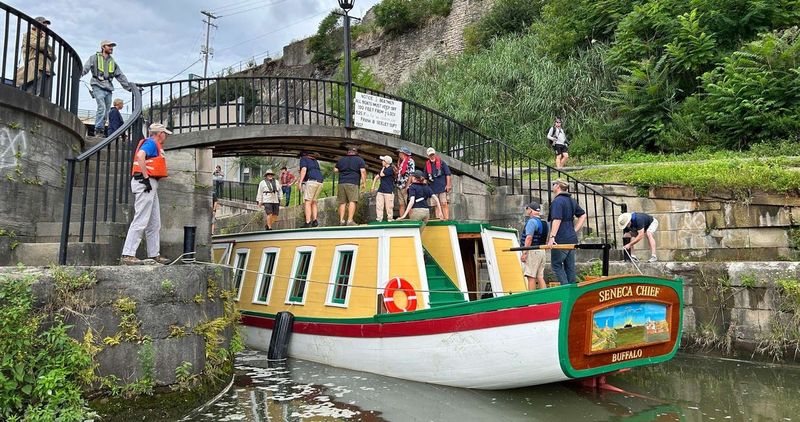
The replica “Seneca Chief,” a floating museum and tribute to the original vessel carrying New York Governor DeWitt Clinton, stops at ports in the Mohawk Valley as it floats in the footsteps of the maiden voyage from the shores of Lake Erie in Buffalo to where the Hudson River meets the Atlantic Ocean at Pier 26, Hudson River Park, in Manhattan in 1825.
The voyage is to celebrate the 200th anniversary of opening of the historic waterway.

The vessel and the voyage mark a labor of love of their part in New York History by the Buffalo Maritime Center (BMC), who raised the funds to commission the construction of the replica and planned its journey to New York Harbor and events along its way.
The “Seneca Chief” will dock in the Mohawk Valley cities and towns along its watershed, including Sylvan Beach, Rome, Utica, Herkimer, and Little Falls to celebrate their roles in the digging of the manmade canals and their stewardship of the historic waterway.
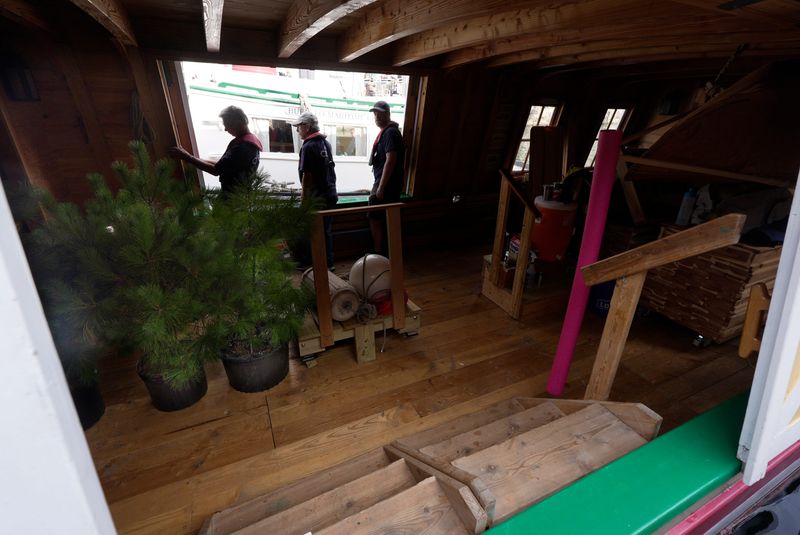
In addition to the opening ceremonies to honor the Erie Canal’s part in each community’s subsequent prosperity, “public open hours” will feature family-friendly activities, including inviting folks to board the vessel and “explore recreated cabins, view historical artifacts, and engage with interactive exhibits that illuminate the canal’s cultural, economic, and environmental significance – including the contributions of Indigenous communities.”
Stopping along the Mohawk Valley
“Seneca Chief” Mohawk Valley Schedule:
SYLVAN BEACH: Tue. Oct. 7 – 13 Canal Street – Public Open Hours 3:00 – 6:30 pm
ROME: Wed. Oct 8 – Bellamy Harbor Park – Welcoming Ceremony, 1:00 pm / Public Open Hours 2:00 – 6:30 pm / Fireworks Show 7:00 pm
UTICA: Thu. Oct 9 – Portofino Restaurant, Harbor Lock Road – Welcoming Ceremony 3:30 pm – Public Open Hours 4:00 – 6:00 pm
HERKIMER: Fri. Oct 10 – 800 Mohawk Street – Welcome Ceremony 1:30 pm – Open Public Hours 2 – 6:30 pm / Fireworks Show 7:30 pm
LITTLE FALLS: Sat. Oct 11 – Benton’s Landing – Welcome Ceremony 12 noon – Open Public Hours 12:30 – 5:00 pm
‘Seneca Chief’ travels 500 miles, drops anchor in 28 cities
“Seneca Chief” plans 28 stops on its 33-day journey tracing 500 miles from Lake Erie to New York Harbor.
Residents of the 12 Erie Canal-shed communities where the “Seneca Chief” has docked since shoving off from the Commercial Slip – the western terminus of the Erie Canal in Buffalo on September 24 have turned out to root on the replica on as it wafts in the 200-year old wake of original “Seneca Chief,” cheering not just for the tribute it pays, but the proud history the region embraces around its beloved canals.
In addition to the six Mohawk Valley stops this week, “Seneca Chief” will visit nine more port towns and cities along the canal, then merging into the Hudson River, before dropping anchor at its destination – New York Harbor in Manhattan – on October 25, poised for a celebration of the official birthday of the historic Erie Canal on October 26, where the “Gathering of the Waters,” a tribute to the “Wedding of the Waters” – where water from Lake Erie was poured into the Atlantic harbor – will be staged.
First shovel of dirt to build the Erie Canal was dug in Rome
The Erie Canal when first imagined by Governor DeWitt Clinton – an original member of the Erie Canal Commission formed in 1810 – then Mayor of New York, was deemed laughable, an impossible feat and dubbed “Clinton’s Folly” and “DeWitt’s Ditch.”
According to The Erie Canal Village, a living museum curating the small city’s contribution to the historic waterway, the first shovel of dirt dug to mark beginning construction of waterway was from the grounds of Rome, NY at the groundbreaking for the Erie Canal project on July 4, 1817, less than 50 years after America’s Independence Day.
By 1825, when then New York Governor Clinton boarded the original “Seneca Chief” to traverse 500 miles of manmade canal, joined by Upstate’s rivers and creeks, and ultimately the Hudson River, pouring into the Atlantic Ocean waters of New York Harbor, there was no more laughing. The Erie Canal predated the railroad, interstate roads or highways, transporting not only goods, but people, the critical immigrant labor landing at Ellis Island in New York, who would choose to board a barge and be transported by the Erie Canal to the communities on its watershed where they would have land to live on and factories and fields to work in.
According to the BMC, “the Erie Canal transformed the young United States, reshaping commerce, transportation, and daily life in the 19th century. Its unprecedented speed of travel enabled the rapid movement of goods, people, and ideas, fueling economic growth and innovation.”
‘Gathering of the Waters’
In each port town and city where the “Seneca Chief” docks, the BMC will plant a White Pine tree in honor of the “commitment to a sustainable future” by the Haudenosaunee indigenous people of the region.
In return, each port town and city will contribute water from their part of the canal waters or Hudson River into a barrel borne on the boat bearing water from the Great Lake Erie.
On the 200th Anniversary of Governor Clinton’s first voyage, this “Gathering of the Waters” will be used to “nourish the final White Pine planted near Pier 26 at New York Harbor; BMC dubs it the “uniting the waters of New York in a powerful gesture of connection and renewal.” and calls the “Gathering of the Waters” an embodiment of New York States values, “honors our shared history and offers hope for the future.”
Take a deeper dive into the Erie Canal and the voyage of the replica “Seneca Chief;” click here to download the official BMC Bicentennial Voyage Guidebook.
This article originally appeared on Observer-Dispatch: ‘Seneca Chief’ docks in Mohawk Valley cities to celebrate bicentennial of Erie Canal
Reporting by Cara Dolan Berry, Utica Observer Dispatch / Observer-Dispatch
USA TODAY Network via Reuters Connect