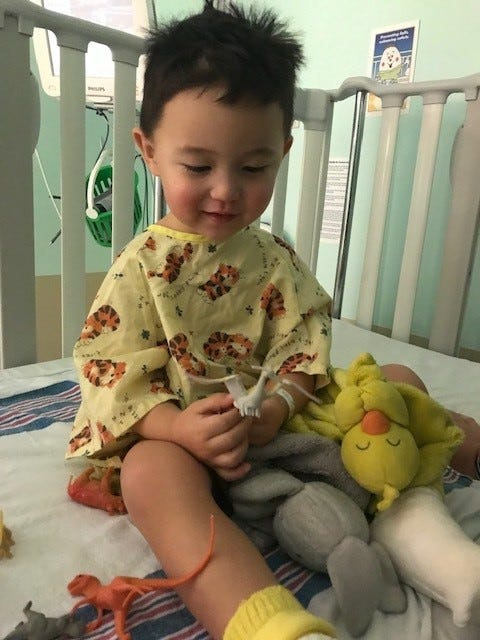
Malory Saki was shocked to learn during a routine check-up that her 6-month-old son, Gabe, had a hole in his heart. Though a common occurrence in babies, the hole within Gabe’s heart, an atrial septal defect affecting the top heart chambers, required an intervention as soon as he was old enough to undergo open-heart surgery.
For two years, 39-year-old Malory Saki and her husband, 40-year-old Christopher Saki, who live in Cornwall, were in a holding pattern, waiting until Gabe was almost 3 for the surgery to take place.

In the early morning hours that day in 2018, Gabe received relaxing medicine inside the pre-op room at Maria Fareri Children’s Hospital Pediatric Cardiology in Valhalla. His mother recalled the room with multiple curtained beds as calm, with things running smoothly.
Only one person was allowed to escort Gabe to the operating room, and Saki said it had to be her. Naturally, as she’s the mother, but she also used to work as an operating room aide.
“That was a hard moment,” Saki said. “Because you walk in there with your baby and you walk out without them.”
The surgery was performed by Dr. Khanh Nguyen through a transaxillary incision in the armpit to avoid a chest scar. It took three and a half hours to complete, while the Sakis waited in another room with one set of Gabe’s grandparents. They talked. Malory Saki made little ornaments from fabrics, pins and foam balls a coworker had given her.
Within an hour after the surgery, Gabe was set up in the ICU and he awoke, groggy, turning his head to look at his mother. By the next morning, he was ready to go, trying to run down the hallway in the ICU.
“It was insane how quickly he bounced back,” said Saki.
Gabe, Rei are ‘heart heroes’ in community
Born four years after Gabe, the Sakis’ daughter, Rei, had holes in her heart, too. “And I was like, you’ve got to be kidding me,” Saki said.
During Saki’s pregnancy, a fetal echocardiogram showed two holes in the bottom chambers of Rei’s heart, called ventricular septal defects, expected to close after birth. The VSDs closed for Rei after she was born, but later an ASD was discovered. She is expected to have surgery in June through a less invasive procedure than Gabe’s, catheterization in the cardiac lab through the groin, and implantation of a device.
Both parents were found not to have any holes in their hearts. The hole in Gabe’s heart was 23 millimeters, and Rei’s is about one-fourth of that size.
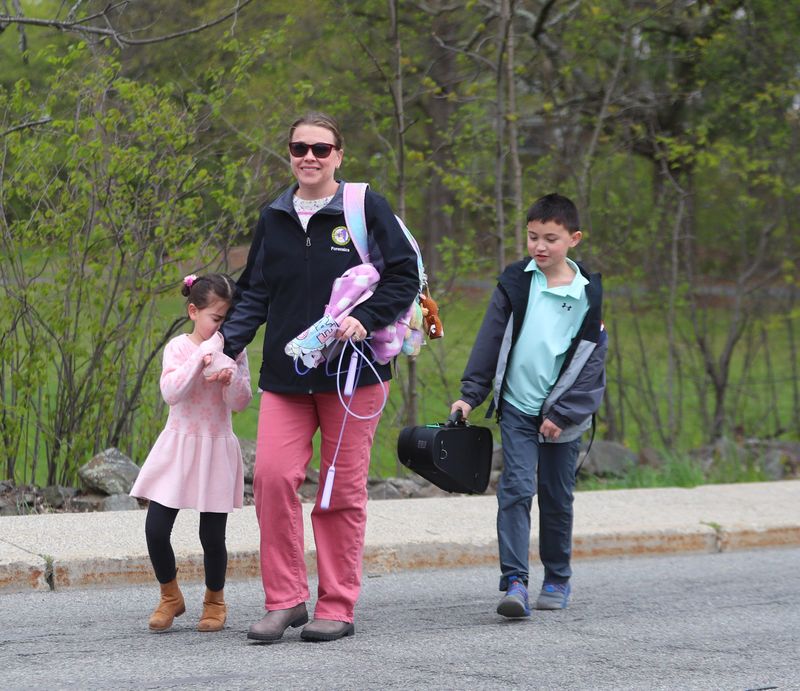
Gabe, now 10, and Rei, 6, have been named heart heroes by the Hudson Valley Heart Walk and were chosen as featured guests for the April 25 Newburgh event.
The Sakis want to share their story to raise awareness about congenital heart defects and the options that helped them improve the quality of life for their children. Saki credited her pediatric cardiologist, Dr. Joseph Giamelli, for a decade of heart care.
Who are the heart heroes?
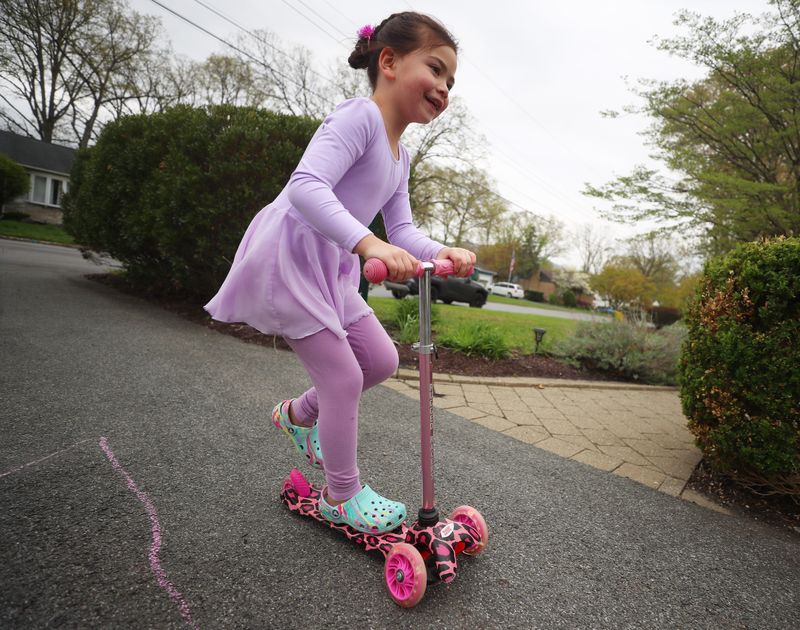
Rei is Miss Personality, according to her mother, with lots of energy, initiative and vigor. She loves to dance and perform, commanding a stage. She is expected to gain even more energy after her surgery and recovery. “I don’t know how that’s possible,” said Saki.
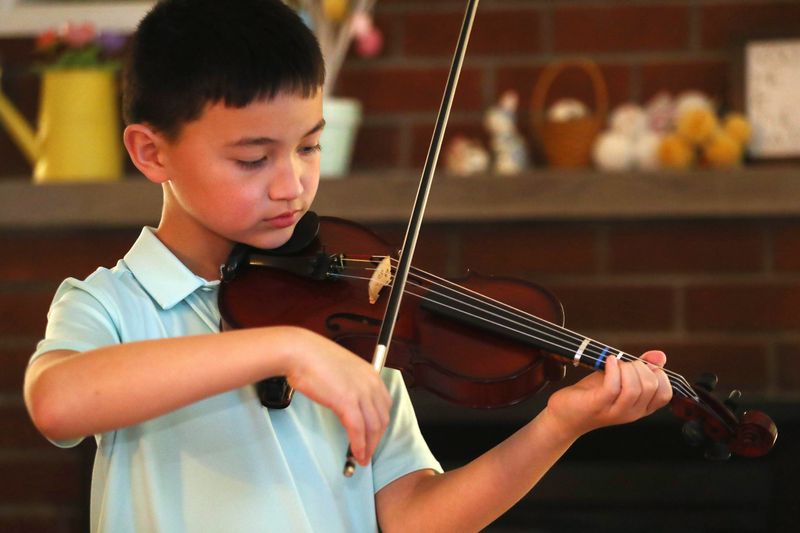
Gabe plays several instruments: viola, piano, and ukulele. A quiet child before, Gabe grew in physical size and personality after the surgery, Saki said. He said he doesn’t yet know what he wants to be when he grows up.
How common are holes in hearts?
“Small holes between the top two pumping chambers are present in every single baby when they’re born, every single baby,” said Dr. Jeffrey Vergales, MD, MS, MBA, who is chief of Pediatric Cardiology for WMCHealth Network and Boston Children’s Health Physicians. “And most of those holes close on their own, but still there’s about 30% of people walking around today that may have a small hole between the top chambers of their heart.”
Congenital heart defects are found in about 1% of the population, according to Vergales. The decision to intervene depends on the stress on the metabolic needs, of feeding and growing, and whether the hole causes the blood to slosh around in a circle in the heart, instead of pumping effectively to send blood from point A to point B.
Heart surgery in children is much different from that in adults, as it requires a lot less recovery time. Vergales’ child patients are back to normal activity after three or four days.
When, where is the heart walk?
The Hudson Valley Heart Walk opens at 8 a.m. on April 25, at Mount Saint Mary College, 330 Powell Ave. in Newburgh. It will begin after the opening ceremonies scheduled for 9 a.m.
Contact reporter Vandana Saras at vsaras@usatodayco.com and @orangecountynyreporter on Instagram.
This article originally appeared on Times Herald-Record: Saki siblings offer stories of hope for those with heart defects
Reporting by Vandana Saras, Middletown Times Herald- Record / Times Herald-Record
USA TODAY Network via Reuters Connect