When officer Joseph DeAngelis interviewed for a job at the Poughkeepsie Police Department in 2020, a question about past conduct quickly became a confessional history of lawbreaking and misconduct.
In a series of rapid fire admissions, DeAngelis said that he had filed a false police report, used his badge to evade paying train fares, shoplifted serially, killed a family cat and had driven drunk, according to a memo of a polygraph performed by the Dutchess County Sheriff’s Office as part of the interview process.

In that interview, he also admitted to a range of on-duty misconduct while employed part-time at five New York village and town police departments: altering police reports, disclosing confidential information to family members and using the n-word in the workplace. He was found at fault after he crashed a new police car.
In ten years as an officer, he had never been fired, or even suspended, for misconduct.
He did not get the job in Poughkeepsie, but DeAngelis remains eligible to serve as a police officer in New York.
And while his voluntary admissions of almost a decade of misconduct are highly unusual, his ability to avoid accountability is not.
New York’s police officer decertification laws, meant to prevent officers who commit misconduct from continuing to serve in any law enforcement capacity around the state, are riddled with loopholes that let officers skirt the system.
The laws are not retroactive, meaning that DeAngelis could continue to serve in law enforcement even though he committed seemingly disqualifying misconduct before the laws were passed.
“New York is an outlier. It is one of the very few states in the United States that does not empower a state agency to suspend or revoke an officer’s certification when they engage in specified serious misconduct unless they have first been fired, resigned or retire,” said Joshua Parker, a deputy director of the Policing Project at New York University Law School. “New York has one of the worst systems in the country.”
DeAngelis was able to exploit those loopholes in New York’s law. He resigned from some part-time jobs while facing investigations for misconduct, allowing him to continue seeking law enforcement positions without disclosing those resignations to potential employers.
It’s unclear why he opted to confess at his interview. DeAngelis declined repeated requests to answer specific questions about his misconduct in communications with the USA TODAY Network.
“During my time as a Police Officer I was able to truly make a difference, by enforcing the laws of the State of New York,” he wrote in an email. “As my life progressed, I found that it was necessary for me to cease my quest for full time employment, search career [sic] opportunities in the private sector, and devote my life to my family.”
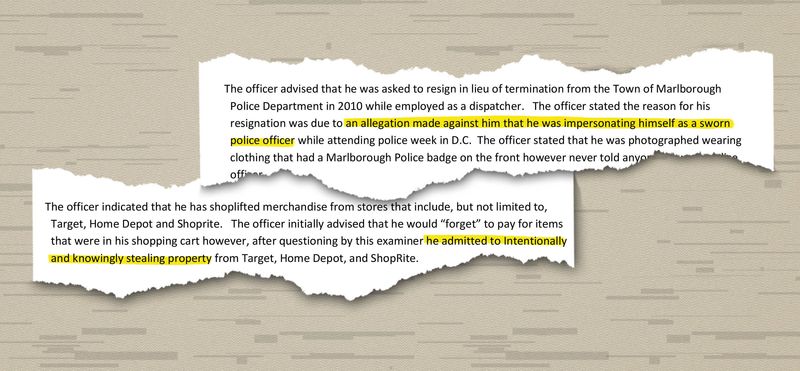
In his “confession,” DeAngelis admitted to repeatedly shoplifting at Target, ShopRite and Home Depot, at first claiming that he would “forget” to pay for items before admitting to “intentionally and knowingly stealing” a Mario Kart game and changing price stickers to pay around $200 less for a gas fireplace.
The details were captured in the polygraph, which became an unusual four-hour-long marathon session. The USA TODAY Network learned of DeAngelis’s admissions from a so-called Brady memo, which reported the polygraph results and was meant to highlight concerns regarding DeAngelis’s credibility. Brady memos raise concerns the Orange County District Attorney’s Office would have if DeAngelis testified in a case that Orange County would prosecute.
“He appears to be deceitful, irresponsible, untrustworthy, maybe some substance use issues. He’s shoplifting, he’s committing theft,” said Rachel Moran, a law professor at the University of St. Thomas.
“It’s one of the most remarkable memos I’ve ever seen in terms of the variety of the misconduct and the candor with which he is admitting to all the inappropriate things he’s done.”
The records raise broader questions about the effectiveness of the officer character and background screenings conducted as part of the hiring process at the five departments where DeAngelis previously worked. It is unclear if DeAngelis’s other employers were aware of the misconduct.
DeAngelis’ meandering history of police work
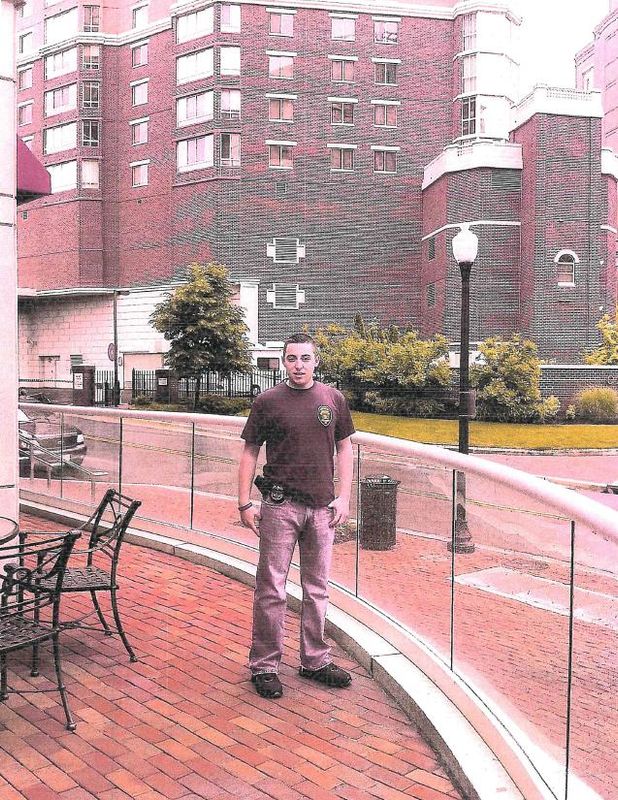
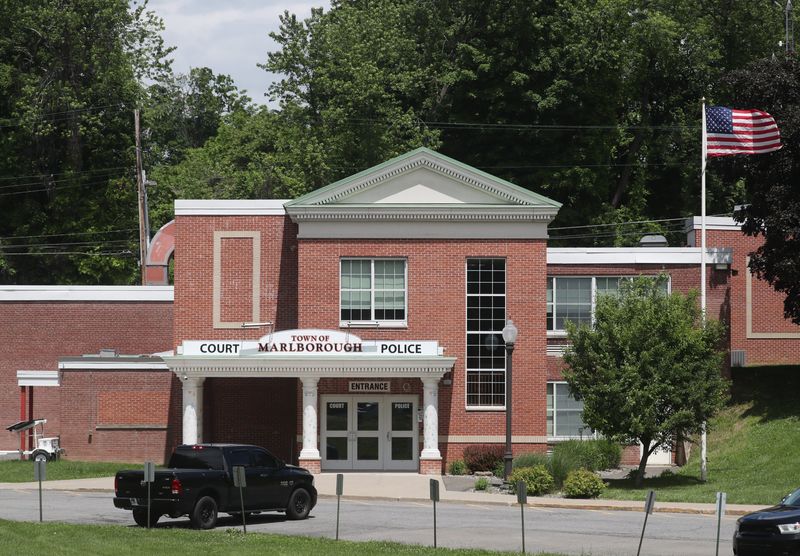
DeAngelis’s law enforcement career began in high school when he volunteered at the Fishkill Police Department as part of the department’s cadet program, eventually rising to the rank of cadet sergeant. After graduating in 2010, he found a dispatcher position in the department and in nearby Marlborough, in Ulster County.
He was the first person in his family to work in policing, he explained in an interview, and he liked how the work allowed him to “truly make a difference.”
Almost a year into the job, DeAngelis filed a report with the Dutchess County Sheriff’s Office claiming his badge had been stolen — a false report, he would later admit in the polygraph interview, as he had merely lost the badge. He also later stated that he used his badge to avoid paying the fare on Metro-North trains, covering the “dispatcher” on his badge to make it seem as though he was an officer.
Records requests to Fishkill and Marlborough reveal that neither department had any record of these incidents in DeAngelis’s employment file. Neither department responded to requests for comment.
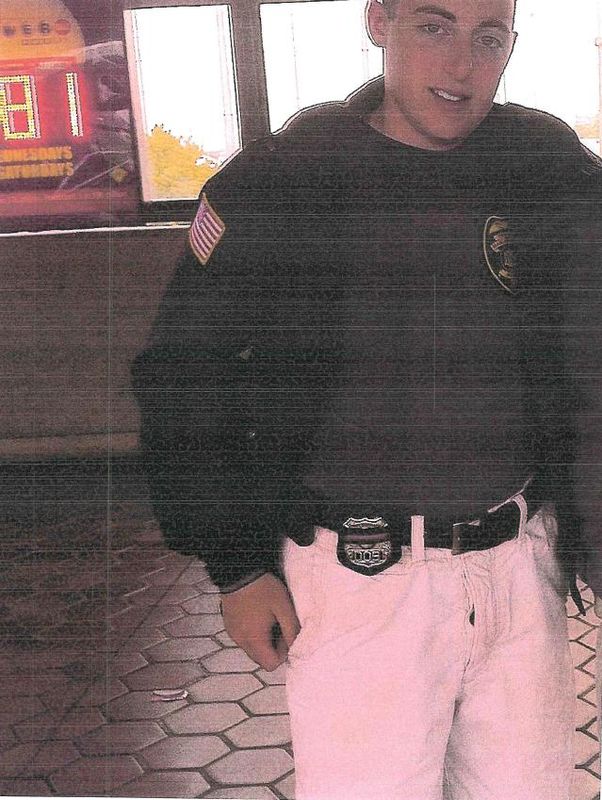
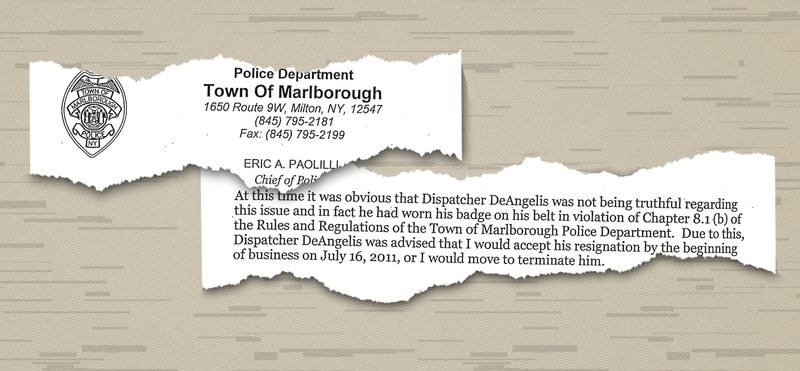
DeAngelis faced his first complaint of misconduct in Marlborough in 2011, where he soon faced his first internal affairs investigation. An officer in a neighboring town wrote to Marlborough police leadership to say that he had seen DeAngelis at a Dunkin’ Donuts displaying his Marlborough dispatcher badge on his belt as if to impersonate an officer.
A subsequent investigation found security camera footage showing DeAngelis wearing his dispatcher badge on his belt, along with two photos on his Facebook of him wearing his badge in a similar manner. The investigation also found that he had also worn his badge in a similar fashion at a “Police Week” conference in Washington, D.C.
When DeAngelis was asked by a supervisor if he had worn his badge on his belt by his chief, he twice denied doing so, adding that he felt this would be “impersonating a police officer.” “At that point he was shown the pictures, to which he replied that he, ‘wasn’t thinking that far back,’” a supervisor wrote. (The supervisor noted that the “Police Week” event was held a month before the conversation.)
In an email, Marlborough’s current chief of police, Gerald T. Cocozza, Jr., wrote that his supervisor “was stern and … fair and did not tolerate less than the full truth no matter what he was speaking of or about.”
DeAngelis was given a month to resign from the department before he would be fired, according to his personnel file. But he had already found a job in Walden, a village 30 minutes away, allowing him to work as a part-time officer once he completed basic officer training.
“The reason I no longer can hold employment at the Town of Marlboro [sic] Police Department is because it is coming into contact with previous commitments that I have made,” DeAngelis wrote in his letter of resignation, adding that he would “be starting phase one of the police academy on July 25th of this year.”
DeAngelis’ personnel file, obtained through a records request of the village, contained no records of Walden being made aware of DeAngelis’ resignation in Marlborough. (The Walden Police Department did not respond to repeated requests for comment for this article.)
Similar gaps exist in Walden’s personnel file for DeAngelis: Though he stated in his interview in 2020 that he was asked to resign after he was found at fault for crashing a new department vehicle, his resignation letter from Walden and his personnel file don’t mention the crash or any job performance issues.
“My decision to resign is due to personal economic reasons and in no way reflects my attitude towards a career in law enforcement, or my job performance,” DeAngelis wrote in his resignation letter.
DeAngelis next worked in Wallkill, another nearby town, where records show that he faced numerous complaints of misconduct starting in 2015. At one point, DeAngelis sat in his vehicle outside the village courthouse. A member of the public asked him if the court was in session.
“No, it’s a ****ing party!,” the individual said that DeAngelis responded.
He was given a counseling memo.
Later, he failed to exit his vehicle in the winter during a traffic stop to assist another officer.
He was issued another letter of counseling.
Another member of the public wrote to the department to complain that DeAngelis had called him a “punk-*** kid” driving a “s***box honda” during a traffic stop.
A department investigation found no evidence to substantiate this allegation; DeAngelis was instead counseled for failing to ensure that his dashboard camera was operational.
In December 2019, Wallkill Police Department administrators accused numerous officers, including DeAngelis, of making improper case assignments in an internal system.
“The improper assignments were deliberately made to former Department members who were no longer employed by the Town thereby creating a situation where such blotter entries and case reports remained incomplete and without follow-up reminders,” disciplinary records noted in each case.
Disciplinary records at the time were considered confidential under state law, and it is unclear if the pattern of misconduct across the department was ever disclosed to the public. DeAngelis and at least nine other officers signed settlement agreements with Wallkill in which they agreed to a fine of 40 hours of vacation time.
The Wallkill Police Department did not respond to repeated requests for comment for this article.
New jobs didn’t know about DeAngelis’ past missteps
In 2018, DeAngelis took a second part-time job alongside his Wallkill position as an officer in Goshen. There are no records of any misconduct complaints or investigations in his Goshen personnel file.
In some other states, DeAngelis’ two resignations following misconduct complaints and his subsequent history of misconduct in Wallkill might have been disclosed as part of his application to other departments.
But in New York, the lack of a centralized misconduct database means that such information sharing is at the discretion of each former department and their internal policies. (In New Jersey, significant disciplinary proceedings in every police department are shared with the attorney general every year; they are also shared in a public report on every department’s website.)
Parker explained that to hire an officer under New York law, a department must determine that a person is of “good moral character.”
“This is someone who has apparently repugnant moral character, let alone good moral character,” Parker said, noting that his impersonation of an officer and filing a false police report meet the definition of crimes involving fraud under state law. “Every agency that is hiring them is either reckless or conducting a serious ethical and statutory lapse.”
Cocozza, Jr., the current chief of police in Marlborough, explained that when his department has received requests for information from some of DeAngelis’ subsequent departments, as is required by policy, they have shared information only about DeAngelis’ “start date and end date,” not his resignation in lieu of termination.
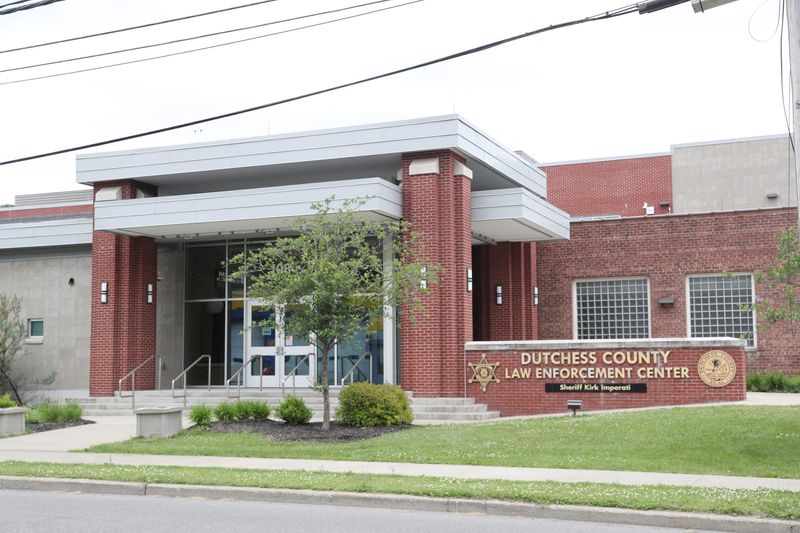
The polygraph exam at the Dutchess County Sheriff’s Office was requested by the City of Poughkeepsie, the largest department where DeAngelis sought a position and the first one where he sought a full-time role.
The detective who administered the exam was so concerned by DeAngelis’ admissions that he provided a recording of the interview to Wallkill, where DeAngelis soon resigned from his part-time position. It is unclear if the recording was shared with Goshen, where DeAngelis also worked at the time, but within two weeks, DeAngelis had also resigned from his position in that department.
Ryan Rich, the current chief of the Village of Goshen Police Department, wrote in an email that Deangelis’ misconduct “did not occur here.” He added: “We are NYS-accredited and operate with professionalism and integrity. Misconduct is not and will not be tolerated; accusations would be thoroughly investigated and dealt with swiftly.”
In his resignation letter to Goshen, DeAngelis wrote that he was resigning “at a time where I am in need of employment closer to my home and that is more convenient for my family.” He moved to the northern Hudson Valley, where he continues to live today while working in the private sector.
DeAngelis’s admissions in the polygraph examination also contained admissions of serious moral transgressions: He said he had locked a dog in his basement for extended periods of time and killed one of his parent’s cats by intentionally not feeding it. He also admitted to viewing child pornography when he was younger. “The children involved in the pornography was [sic] close to his age at the time,” the district attorney’s summary memo notes.
Michael Sussman, a frequent trial attorney in Orange County, said this memo highlighted why loopholes in the system mean defendants might go free when officers’ lack of credibility is introduced to a jury. (Sussman has no relation to the reporter.)
“The question to be considered is why any police department would employ a person who engaged in such a pattern of behavior,” Sussman said, “and how the DA could ever prosecute a defendant if it needed to rely on his testimony.”
Moran, the law professor, explained that this memo would almost certainly be used to undermine DeAngelis’ credibility if he was ever called to testify in court.
“As a defense attorney, I would just be so incredibly delighted to receive this memo,” Moran said. “I don’t mean that to sound trite. But you look at this and you just can’t believe it.”
Moran noted that a judge might not allow every instance of admitted misconduct to be part of a trial.
“But a lot of these things speak to credibility,” she explained.
Through a records request in 2023, the USA TODAY Network obtained an internal list created by the Orange County District Attorney’s Office to summarize officers in the area with credibility issues that might be relevant at trial. After most officers’ names and departments, the list includes a brief summary of an incident or two of misconduct.
For DeAngelis, it simply states, “a little bit of everything.”
Sammy Sussman is a freelance investigative journalist with the NY Police Accountability Project in partnership with the USA TODAY Network and Syracuse University, covering New York police misconduct and accountability. Reach him at sammybsussman2@gmail.com.
This article originally appeared on Rockland/Westchester Journal News: NY officer lied, stole his way through 5 jobs. He was never fired.
Reporting by Sammy Sussman, USA TODAY NETWORK / Rockland/Westchester Journal News
USA TODAY Network via Reuters Connect

By Sammy Sussman, USA TODAY NETWORK | USA TODAY Network