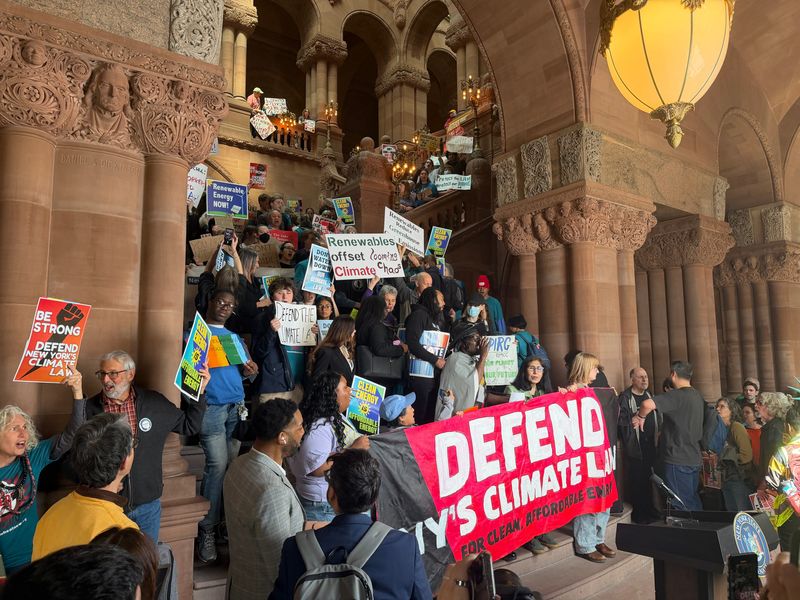
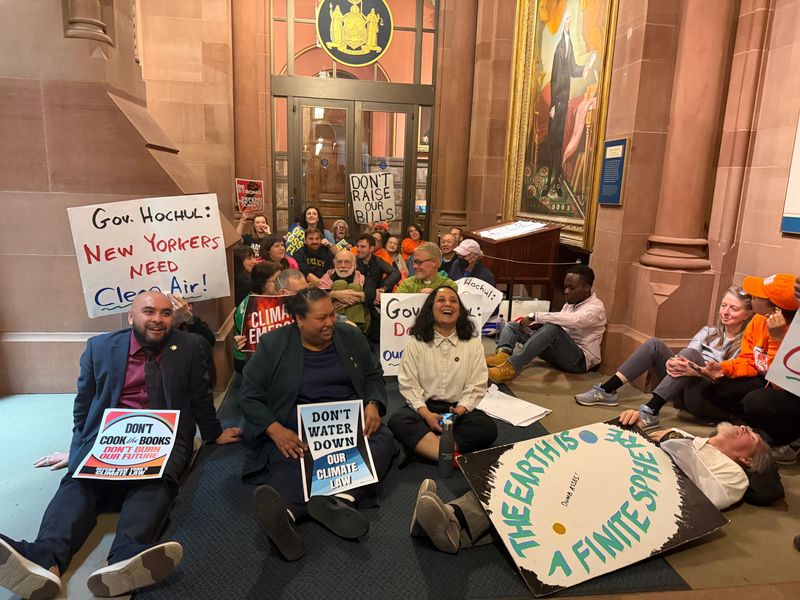
New York’s climate protection law appears set to be weakened as state lawmakers and Gov. Kathy Hochul were poised to approve changes to the landmark measure as part of a bigger state budget bill progressing on Tuesday, May 26.
The state’s Climate Leadership and Community Protection Act (CLCPA) — a 2019 law that requires New York to take an aggressive renewable energy approach — mandated New York to generate 70% of its electricity from renewable sources by 2030, fully transition to zero-emission electricity by 2040 and shed all fossil fuel use by 2050.

Now, the state has pushed back the issuance of regulations to reduce statewide greenhouse gas emissions to 2028 and will instead require New York to reduce statewide greenhouse gases by 60% by 2040.
Here’s what to know.
How NY’s climate law rollback unfolded
A memo released by the state’s Energy Research and Development Authority (NYSERDA) in February warned natural gas and home-heating oil costs could jump as much as $4,200 a year for homes outside of New York City and gas prices would rise by $2.23 per gallon on top of the existing cost by 2031, if the state goes through with the already agreed-upon CLCPA plan.
This memo, along with a lawsuit filed by environmental groups against the state for missing a number of deadlines related to the implementation of the CLCPA, prompted Hochul to reevaluate the state’s climate law.
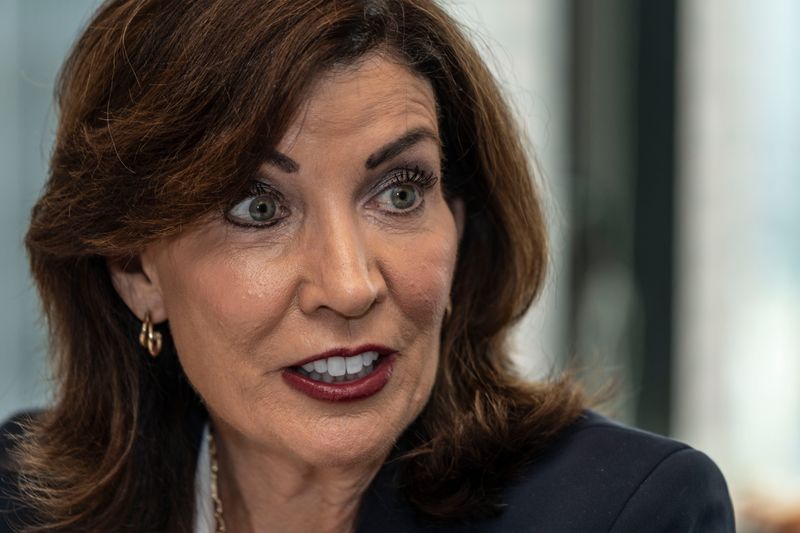
The governor has said the COVID pandemic, high inflation and the Trump administration have made a difference between now and when the climate law was first passed. Additionally, she has said if the state loses its appeal to the lawsuit, it will have to face the realities of the NYSERDA memo.
What environmental groups say about NY’s climate law changes
Environmental groups raised major alarms as soon as Hochul revealed her hesitations with the current stipulations, saying it would only worsen the already dire situation and set a problematic precedent.
On May 26, Rachel Spector, Earthjustice deputy managing attorney, called the changes “pretty monumental” and said they transpired “without a lot of public input.”
“The changes that we see in here are primarily designed to avoid accountability for the state to have to regulate in a way that achieves ambitious emissions reductions in the near term,” Spector said.
The changes also include no longer counting upstream emissions from the transmission and extraction of fossil fuels imported into New York, she added, or counting the combustion of biogenic materials as having carbon dioxide emissions as well as lengthening the timeframe for methane emissions to convert to carbon dioxide from 20 years to 100 years.
“All of this changes the ambition of the law and again lets the governor off the hook for making near-term ambitious reductions through mandatory regulation,” Spector said.
And Earthjustice New York Policy Advocate Liz Moran says the climate law is the best tool the state has in combatting high energy prices.
“People need relief,” Moran said. “Despite what the governor seems to think, sweeping the climate crisis and rising energy costs under the rug does not make them disappear. Gov. Hochul stands alone as the only governor in the country to weaken their state’s climate laws.”
Business advocacy group applauds state climate law changes
However, long-time opponents of the state’s climate law goals have said the rollback affirms their long-standing concerns about its ambitious goals.
“The Business Council strongly supports the Governor’s proposed changes to the CLCPA,” the group said in a written statement on Tuesday.
“We believe these reasonable and necessary amendments will help businesses that are facing significant compliance burdens and also help consumers who are struggling with affordability issues, while also allowing the state to continue to make meaningful climate progress,” the statement added.
Ken Pokalsky, the group’s vice president, also previously said altering the climate law’s timeline would “relieve some of the pressure on energy costs.”
Emily Barnes covers state government for the USA TODAY Network-New York with a focus on how policy and laws impact New Yorkers’ taxes, communities and jobs. Follow her on Instagram or X @byemilybarnes. Get in touch at ebarnes@usatodayco.com.
This article originally appeared on Rockland/Westchester Journal News: New York set to roll back aggressive climate targets over utility costs
Reporting by Emily Barnes, New York State Team / Rockland/Westchester Journal News
USA TODAY Network via Reuters Connect