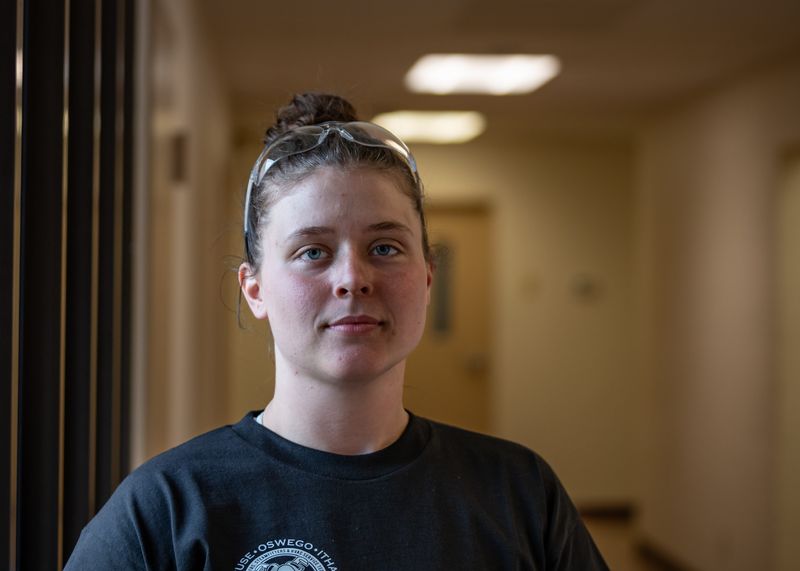
Morghan White had just returned to the upstate New York town of Gouverneur after a stint working in a-fast food restaurant in South Carolina when her grandfather sat her down for an old-school pep talk.
“Hey kid, you got to get your life together,” Lee White told the teenager, who left Buffalo’s Daemen University after a semester when she got sidetracked by the death of a close friend. “You’ve got to figure something out, get a real job.”

White ventured into the upstate town where she was raised by her grandparents, walked into a steel fabrication shop and asked about a job. Come back tomorrow morning, she was told.
“So I went back Monday and they taught me to weld a little bit,” White recalled. “Now I was no expert but the guy that was teaching me said, ‘I think you’d make a good fitter.’ I said ‘I don’t know what a fitter is.’ He said Google it.”
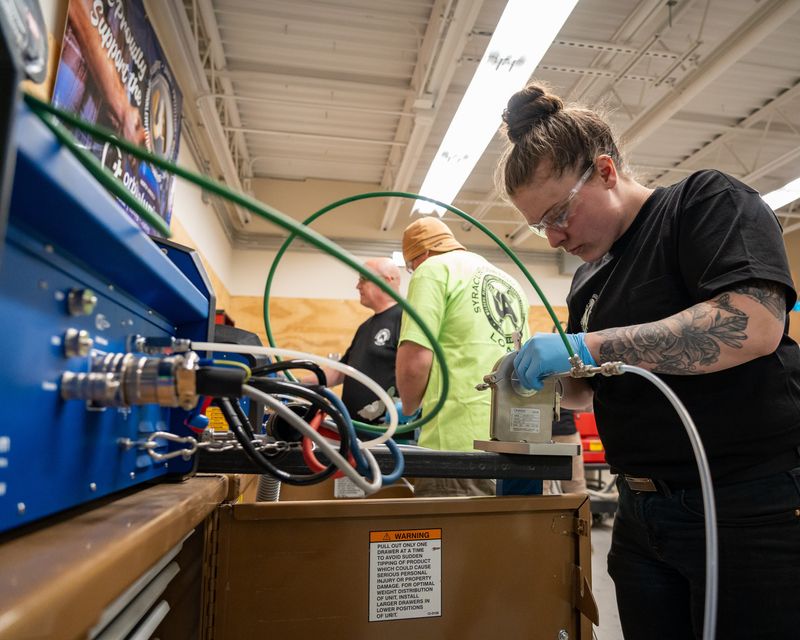
That was March 2022. Today, White, 23, is a fifth-year apprentice in UA Local 81, which represents plumbers, pipe and steam fitters and welders in a 14-county upstate region that stretches from the Pennsylvania border to Canada. “It’s the best career choice I ever made,” White said.
The union expects to double its membership of 1,400 in the coming years through a labor contract with Micron, the tech giant whose $100 billion bet on Central New York represents a once-in-a-generation opportunity for a region known more for the businesses it’s lost than those it’s gained.
“It’s wild what’s coming man,” said Marcus Williamee, Local 81’s business manager.
The union expects as many as 4,000 of its plumbers, pipefitters and welders will be employed during the peak of construction on four 600,000 square-foot fabs or cleanrooms Micron plans to build in the Syracuse suburbs of Clay and Cicero, each the size of ten football fields. Nearly 500 could have permanent jobs, many paying six-figure salaries.
Lining up for jobs at Micron in New York
Over the past six months, Local 81 purchased a new training center in Ithaca and has plans for another in Syracuse to go with one in Oswego. Applications for apprenticeships have soared to 800 a year. “We’ve had to say no a lot of times and now we can say yes to everybody who is ready to go,” Williamee said.
Upstate welders and pipefitters will be among the biggest winners of a job explosion coming to Central New York. The Syracuse region will be flush with jobs in the coming decades as Micron tries to fulfill the vision created by the $280 billion CHIPS and Science Act Congress passed in 2022 — disrupting China’s dominance of the market in semiconductors, the microscopic memory chips essential to artificial intelligence, military equipment and cybersecurity systems, not to mention computers, laptops and smart phones.
The federal government has invested $6.1 billion in CHIPS and Science Act funding in Micron to make the U.S. less vulnerable to world events like the pandemic, which crippled the global supply chain in chips. And New York’s Empire State Development agency has kicked in another $250 million for job and community efforts.
Micron has promised more than 9,000 permanent on-site jobs after a 20-year construction project, 4,000 on-site construction jobs, and over 40,000 additional jobs in the regional economy — suppliers, contractors and the like.
Thousands more jobs will be spread throughout upstate cities — in Rochester, Buffalo and Binghamton — that form a tech hub along I-90 that will act as the supply chain for Micron and others. By one estimate, over the next ten years one-in-four semiconductors chips will be produced within 350 miles of the I-90 corridor.
‘A broad New York state approach’ to jobs
“We have to be realistic,” said Melanie Lewis, Micron’s vice president for workforce development. “9,000 plus all the other ecosystem jobs. It’s a lot of people. So yes, of course Central New York, Onondaga County is our nuclear focus, investing in the communities and partners but it is a broad, New York state approach.”
The project has attracted cheerleaders from both sides of the political divide, who’ve spent years courting Micron and pushed the federal government to invest in the upstate region’s future.
But among labor advocates in Syracuse, who’ve seen companies break promises before, the response has been more muted. While they welcome the jobs, they’re concerned that disadvantaged communities will be left out when it comes time to fill them.
They’re pressing Micron to agree to hiring goals. “The whole point of a community benefits agreement is it actually creates accountability,” said Dick Kornbluth, who leads the Urban Jobs Task Force in Syracuse. “Anything short of that does not.”
The project is also facing a legal challenge from those who say the state and local officials rushed through an environmental review to approve the plan.
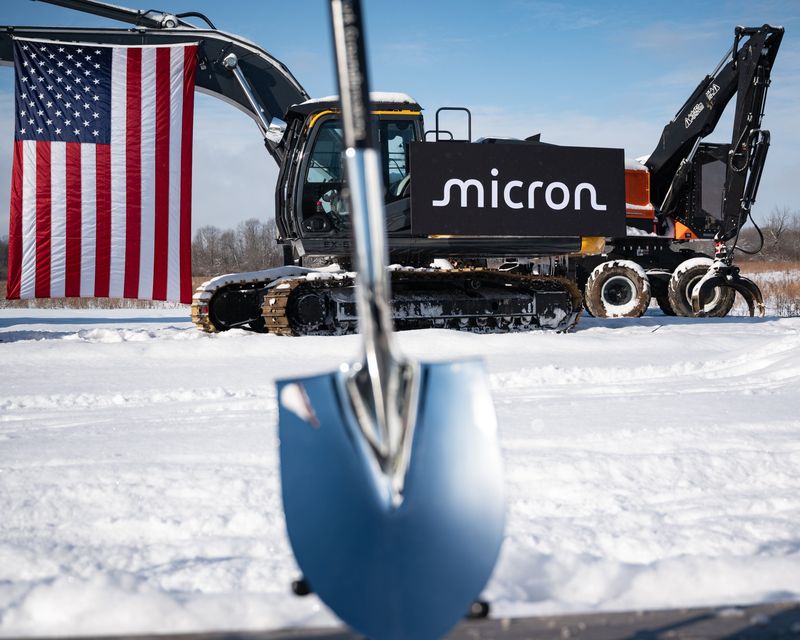
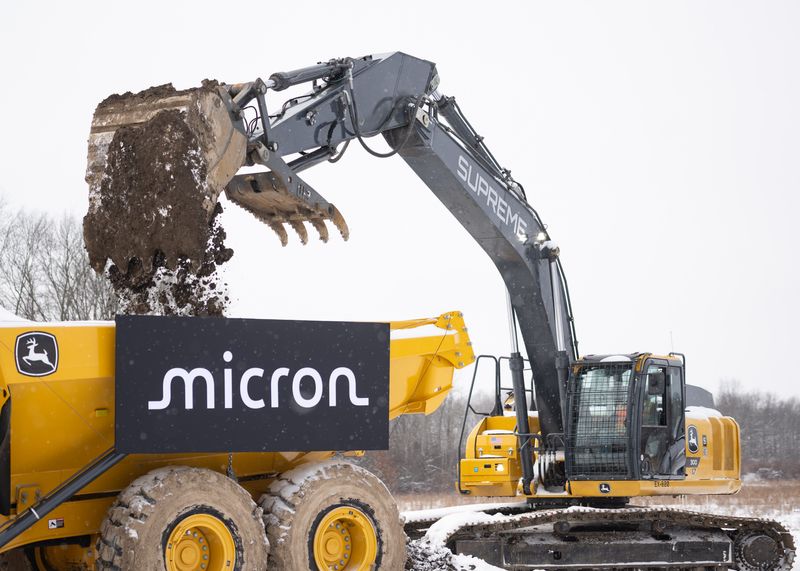
At the same time, the first wave of hiring was in motion before a January groundbreaking in Clay that had members of both political parties angling to take credit for convincing Micron to plunk down in Central New York.
Since then, Micron has cleared over 300 acres of trees and poured 500,000 cubic yards of cement. It’s spent $661 million since November, including $232 on construction alone since January. And it’s already committed $2.3 billion in contracts, according to court filings.
In addition to the fabs, Micron will build a child care center, a recreation center and a healthcare facility. A 38-acre parcel will be used for a rail spur to bring construction material to the site.
20 years of construction
The cleanrooms will be built one at a time, meaning construction jobs and the electricians, welders and other skilled trades needed to fill them could be on the same job for decades.
Workforce development has begun in a 34,000 square foot space on Genesee Street in Syracuse where the ON-RAMP (One Network for Regional Advanced Manufacturing Partnerships) program has started training workers.
It’s the flagship location for a network of workforce training centers upstate backed by a $200 million state investment. Others are coming to the Capital Region, the Finger Lakes and Mohawk Valley. It will remain on Genesee Street for two to three years before moving into a permanent home in the old Sears Roebuck Building on Salina Street that closed in 1973.
“It was really important for us to put this advanced manufacturing and construction training center right in the middle of a neighborhood that is one of the neighborhoods that needs these jobs and these opportunities the most,” said Benjamin Sio, the president of CenterState CEO, an economic development nonprofit based in Syracuse.
The focus will be on hiring under-employed workers and helping them find better-paying jobs.
In June, 137 graduated from a six-month ON-RAMP program that introduced them to the basics of construction work, manufacturing, heating and air conditioning. Some will move into union apprenticeships or work in the building trades and heavy manufacturing.
Workforce training in Syracuse
Among them was Myrna Colon of Syracuse. She’s worked in the medical field for several years and is hoping for a better-paying job in manufacturing. At 55, she was among the oldest in the class.
“Wherever you’re at mentally, physically they meet you where you’re at,” Colon said. “They’re going to help you get through it.”
Colon learned the basics of advanced manufacturing and robotics and even spent some time learning safety tips for working on the road as a construction site flagger. “I’m excited for that because if it doesn’t work on one end I’m going this way,” she joked.
She convinced her daughter to try the programs as well. “I feel like Syracuse is going to be amazing in the next couple of years as far as jobs go,” Colon said.
It’s run by ON-RAMP CEO Carlene Lacey, whose family has deep roots in Syracuse.
“Syracuse used to be a manufacturing town,” Lacey said. “And over the last several years, decades when they left, it left a void. But the young and the young at heart either have someone or know someone who was here when the manufacturing boom was here.”
Her mother, Carrie Maxey, was the first female steel worker foreman at Crucible Industries, better known as Crucible Steel, a specialty steel maker that filed for bankruptcy last year after over 100 years in Syracuse.
“I lived it and now I’m happy to be part of shifting the trajectory,” Lacey said
The arrival of Micron as well and Inficon in East Syracuse, which makes sensors and other tools used to make chips and TTM Technologies, which built a $130 million facility on 23 acres in Dewitt to produce circuit boards, presents the region with a “resurgence of possibilities,” Lacey said.
The goal, she said, is “to attract those who grow up here, enticing them to return and to also expose people who are discovering Central New York for the first time and let them know this is going to be a major talent attraction.”
A NY region that could use the jobs
Like much of upstate New York, the region has struggled to keep its people from moving away or getting others to relocate.
Central New York was among four regions across the state that lost population between 2010 and 2025, according to a July 2026 study by the Citizen’s Budget Commission. But the county’s 2.5% decrease was better than the Mohawk Valley’s 4.3%, nearly 5% in the Southern Tier and 5.6% in the North Country.
The Hudson Valley’s population, by comparison, increased from 2.2 million in 2000 to 2.4 million last year.
The unemployment rate for Onondaga was 3.9% in May 2026, slightly better than the statewide average of 4.2%% but above the 3.2% from May 2025.
But, Sio says, in recent months the region has seen month-over-month increases in construction jobs, some of the best job growth performance in decades.
“The job prospects for somebody with construction skills in Central New York or the surrounding area is very bullish right now,” Sio said.
Kornbluth of the Urban Jobs Task Force asserted unemployment levels don’t tell the whole story. “It’s one thing to have a job,” Kornbluth said. “It’s another thing to have a family sustaining job.”
At 19.7%, Central New York’s child poverty rate in 2024 was among the highest in the state and above the state average of 18.3%. Per capita income of $67,000 has ticked upward in recent years but is still below the state average of around $89,000.
Kornbluth is pressing Micron to agree to a hiring agreement similar to one state and city officials put in place for the $2.25 billion I-81 Viaduct Project, which will tear down a 1950’s-era highway that devastated a Black community on Syracuse’s south side.
For that project, the state created The Big Table Hiring initiative to create hiring goals from local communities.
“The big difference between I-81 and Micron of course is I-81 involved a public agency,” Kornbluth said. “Micron is a Fortune 100 private corporation dealing with private unions we have no real access into the workings of their arrangement.”
Micron facing legal challenge
Separately, a group of citizens calling themselves Neighbors for a Better Micron sued the company in January claiming an environmental review of the project’s environmental impacts was rushed and left unanswered questions about air and water quality and the capacity of the state’s grid to provide electricity.
“The Project will cover approximately 1,000 acres and it will reportedly require six times more concrete than the Pentagon and use four times as much steel as the Golden Gate Bridge,” the lawsuit notes.
They’re backed by Jobs to Move America, a nonprofit that has worked to get companies receiving government subsidies to agree to hiring goals through a community benefits agreement.
“I think a lot of companies will make general promises or commitments about the type of jobs, the number of jobs, but we want something that’s legally enforceable so that we can use that as a mechanism to hold them accountable,” said Lauren LaBorde, a spokeswoman for the group.
In July 2026, Micron rejected efforts to shut down construction while the lawsuit is pending.
“Micron would suffer undue hardship if the Project construction were to be halted at this time, as would OCIDA (Onondaga County Industrial Development Agency), the State of New York, the utilities supporting the Project, and the federal government, all of whom have made significant investments to support development,” Micron lawyers wrote in July 2026.
CenterState CEO is working with Syracuse University to tap into a jobs network developed for the I-81 project through the Future Ready Workforce Innovation Consortium.
“We’ve got some experience under our belt in terms of understanding the ebbs and flows of the industry, how each trade is different,” said Aimee Durfee, CenterState CEO’s vice president of workforce innovation.
Many of the same trades that worked on that will work on Micron.
“We’re looking at it from all lenses but our goal is to retrain and give hope to those that live here already,” Lacey said.
Why bother with a college degree?
Aron Gilbo, a pipe fitter and welder with Local 81 from Pulaski, is hoping to work on the Micron site in the coming years.
“It’s going to be years and years of steady work and just a different type of work than we’ve seen,” Gilbo said. “So, it’s going to be fun learning all of that and mastering that sort of craft.
When he was 18, he followed the path taken by his father and grandfather and joined the union and he saw the trades as a better fit than college. “You’re getting paid while you’re learning,” Gilbo said. “You’re not spending years and spending money to learn a career that you don’t even know if you’ll like.”
He’s already worked at some of the upstate nuclear power plants in Oswego County and makes a six-figure salary as an apprentice.
Cornell works on the next generation
After construction, Micron expects to hire thousands of technicians and engineers to work in the cleanrooms. And that training effort is already taking shape.
Cornell University has a 17,000-square foot clean room in the middle of campus where it’s training thousands of students and educators for the sort of work that will be done at Micron.
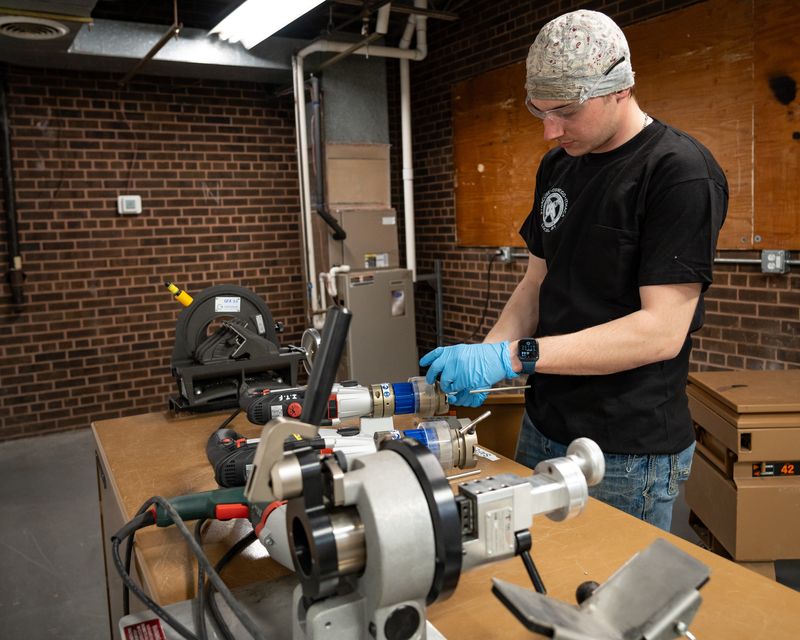
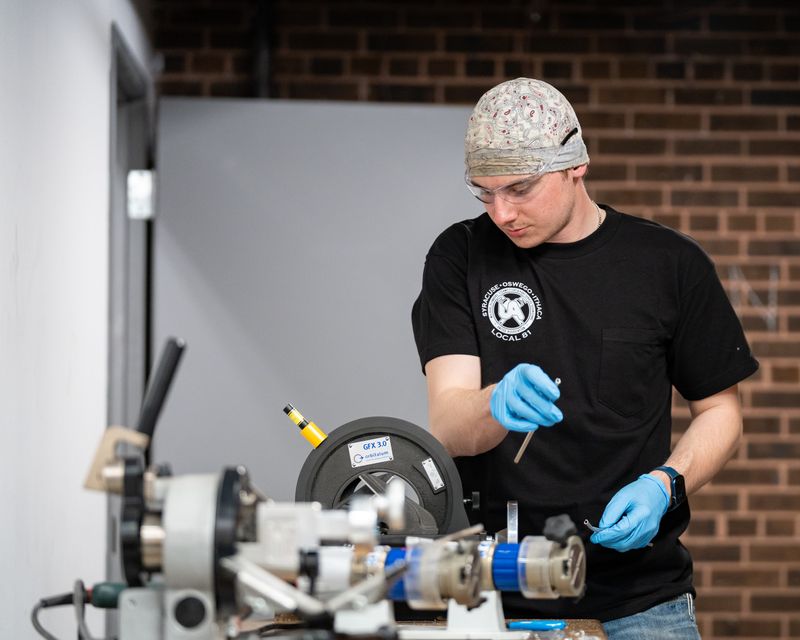
High school students from local BOCES programs take a two-week, immersive program learning how to work on stainless-steel gas lines using an ultra-high purity welding process known as orbital welding. Another program teaches students how to fabricate devices. They’ve worked with a semiconductor wafer emblazoned with the Cornell crest the size of a human hair that can only be seen through a microscope.
It’s not a typical high school workshop. This one is climate controlled and students don cleanroom suits to guard against contamination.
“We’re shifting these students’ career trajectories,” said Tom Pennell, the workforce development program manager at the Cornell NanoScale Facility, which has been around since 1977. “Once they go into the clean room and they start seeing this career pathway many of them really enjoy it.”
In a few years, once Micron’s clean rooms are up and running, they might be working there. “When Micron needs these folks, they are going to have them,” Pennell said.
Pennell travels to elementary, high schools and community colleges in the region, introducing students to the microfabrication industry. And, he and others have developed a virtual reality education program schools can use to replicate the clean room experience at Cornell.
Pennell was raised in Moravia in Central New York and gets the cynicism of those that question whether Micron will make good on its promises.
“For the last few years, I’ve heard a lot of people say it’s never going to happen,” Pennell said. “People in upstate New York are used to seeing business leave. So in a way I think some folks are a little jaded. But I’m very excited to see these incremental steps — the ground breaking, the laying of concrete…It’s coming.”
Thomas C. Zambito covers energy, transportation and economic growth for the USA TODAY Network’s New York State team. He’s won dozens of state and national writing awards from the Associated Press, Investigative Reporters and Editors, the Deadline Club and others during a decades-long career that’s included stops at the New York Daily News, The Star-Ledger of Newark and The Record of Hackensack. He can be reached at tzambito@lohud.com
This article originally appeared on Rochester Democrat and Chronicle: Micron’s $100B project promises 9,000 jobs. This is how it changes NY
Reporting by Thomas C. Zambito, New York State Team / Rochester Democrat and Chronicle
USA TODAY Network via Reuters Connect



By Thomas C. Zambito, New York State Team | USA TODAY Network