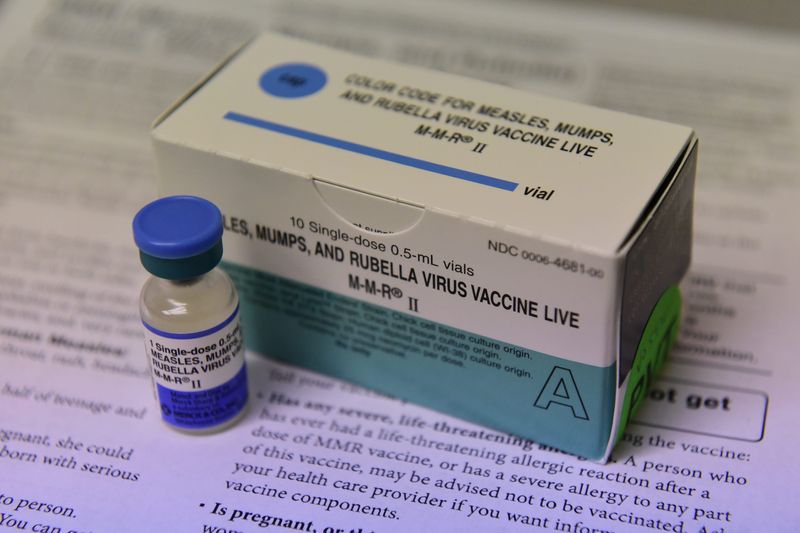
The New York State Department of Health is encouraging New Yorkers planning to travel internationally or to states with measles outbreaks to get their measles, mumps and rubella (MMR) vaccination before they go.
Around 90% of unvaccinated people who are near a person with measles will become infected, the NYSDOH says, and the disease can lead to serious complications such as pneumonia or permanent brain damage.

“A deluge of vaccine misinformation in recent years has eroded public trust in vaccines, contributing to a rise in vaccine hesitancy and declining vaccination rates,” the NYSDOH said in a news release. “However, due to the seriousness of measles, the Department encourages everyone to get the MMR vaccine.”
Here’s what to know.
What is measles and how is it spread?
Measles is a highly contagious respiratory disease and is spread by coughing or sneezing into the air, according to the NYSDOH.
You can catch the disease by breathing in the virus or by touching a contaminated surface and then touching your eyes, nose or mouth.
Have there been any measles cases in New York this year?
The total number of measles cases in the U.S. as of March 2025 has already surpassed the total number of measles cases in all of 2024, according to the state Department of Health, with the majority of cases reported in New Mexico and Texas and among children who had not yet received the MMR vaccine.
Canada’s also experiencing an outbreak consisting of over 600 cases with the majority reported in Ontario.
New York has seen four cases of measles in 2025 so far — three in New York City and one in Suffolk County — but the NYSDOH says New Yorkers’ risk of contracting measles from the current outbreaks is low.
Measles: Amid concern on measles, here’s why some vaccine shots like MMR fight multiple diseases
What symptoms should you look out for?
The state Department of Health says measles symptoms include the following:
Someone infected with measles can infect others as soon as four days before a rash appears and as late as four days after a rash appears.
Measles can lead to hospitalization, pneumonia, brain swelling or death as well as long-term complications like subacute sclerosing panencephalitis, which can lead to permanent brain damage. And if you contract measles while pregnant, your risk of early labor, miscarriage or delivering a low birth weight infant increases.
What to know about immunity: Can you get measles if you’re vaccinated?
What to know about the vaccine
The NYSDOH’s travel advisory recommends travelers be fully vaccinated, which means receiving two doses of the MMR vaccine, at least two weeks before you leave.
If your trip is less than two weeks away and you’re not immunized, you should get one dose of the MMR vaccine as one dose provides 93% protection and two doses provide 97% protection against the disease.
“Measles is more common in different places and exposure during travel is something we need to consider,” New York State Health Commissioner Dr. James McDonald said. “It’s important that New Yorkers ensure they are up-to-date regarding being immunized against measles. In some cases measles is as close as a car ride away.”
What to do if you’ve been exposed to measles
After traveling, you should keep an eye out for symptoms for three weeks after you get back and don’t come in contact with other people who are sick, the NYSDOH says.
If you know you’ve been exposed to measles, you should quarantine for 21 days after you’ve been exposed and if you test positive, you should isolate until four days after a rash appears.
Emily Barnes reports on consumer-related issues for the USA TODAY Network’s New York Connect Team, focusing on scam and recall-related topics. Follow her on X and Instagram @byemilybarnes. Get in touch at ebarnes@gannett.com.
This article originally appeared on Rockland/Westchester Journal News: Measles concerns prompt NY health department to recommend travelers get MMR vaccine
Reporting by Emily Barnes, New York Connect Team / Rockland/Westchester Journal News
USA TODAY Network via Reuters Connect