TARRYTOWN – Otarmeni, a surgically-delivered drug developed by Regeneron, recently received accelerated approval from the U.S. Food and Drug Administration. The genetic condition it treats is rare, but for children able to benefit, the results have been clear and dramatic, researchers say.
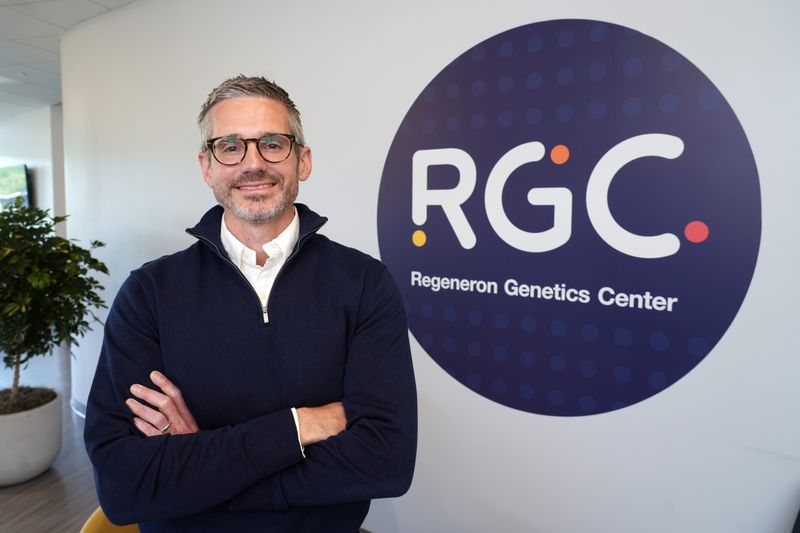
“What we saw in clinical studies was that in a few weeks, children started to hear; within a few months, they could hear whispers,” said Jonathon Whitton, head of the auditory global program for Regeneron. “These are kids that before the surgery, wouldn’t hear a gas-powered lawnmower if they were standing next to it.”

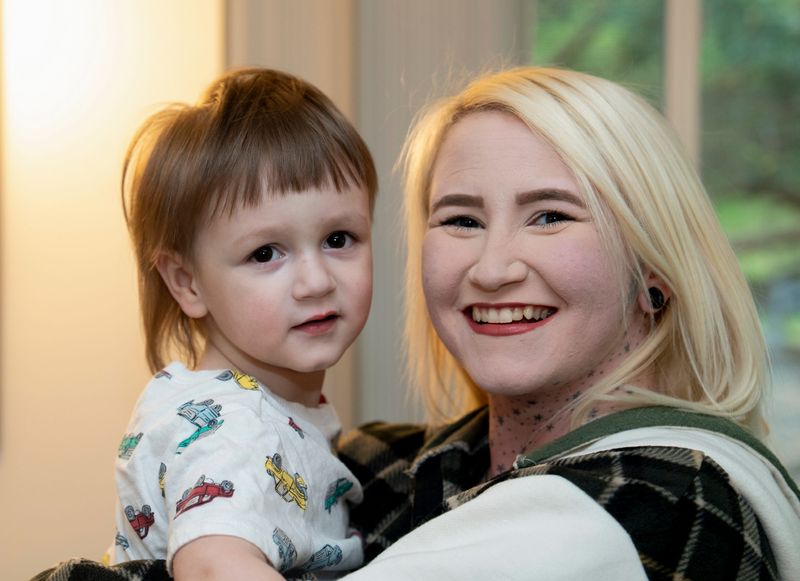
For Sierra Smith of East Greenbush, New York, and her son, Travis, Otarmeni (rhymes with “harmony”) has been lifechanging.
Travis, now two and a half, had the surgery to place the genetic therapy when he was 18 months old. Since then, hearing tests show progress.
But Smith didn’t need a hearing test to tell her it worked. Weeks after the surgery, she was chatting with a friend as she drove down the road with Travis asleep in the back seat. Smith laughed loudly and Travis jolted, reacting to a sound for the first time.
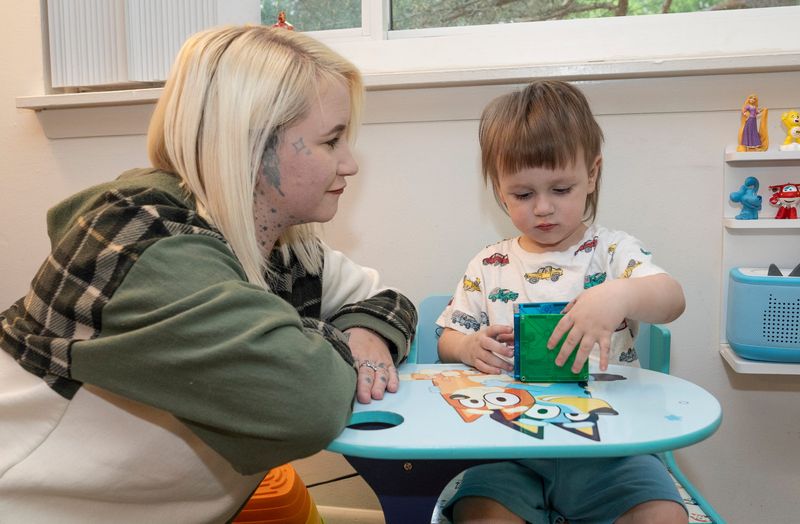
“He was such a mute baby, very serious,” Smith said. “Now he babbles, uses different pitches.” He’s started to socialize with other kids at library story hour and bops along to music now. “He loves Bruno Mars.”
Language acquisition is still a bit of a way off, Smith said, but he’s making all the right sounds and gets speech therapy three times a week. “I know it’s coming.”
Free access for ‘orphan drug’ in USA
Otarmeni is considered an “orphan” drug because it affects so few in the population that creating and manufacturing it usually isn’t a priority.
It’s the first gene therapy approved under the FDA’s National Priority Voucher program.
Regeneron has made Otarmeni free in the U.S. Pricing for the rest of the world has yet to be set.
“We just though it was the right thing to do here,” said Christos Kyratsous, Regeneron’s senior vice president, genetic medicines, internal and research. “We thought it was a nice demonstration about the power of science.”
Smith called that access for other families “a miracle.”
Smith said when she first was told Travis could benefit from this experimental treatment, she was desperate to figure out how to pay for it.
“I was ready to sell anything, take out a million loans if my child could hear me say ‘I love you,’ ” Smith said.
Then Travis’ surgeon explained that it was a clinical trial so it was free. Travis’ surgery was performed by Dr. Lawrence Lustig, chair of the Department of Otolaryngology – Head and Neck Surgery at the Columbia University College of Physicians and Surgeons and otolaryngologist-in-chief at NewYork-Presbyterian Hospital/Columbia University Medical Center.
That was such a relief for the family, Smith said, it brought her father to tears.
Otarmeni’s value for Regeneron and for medical research in general goes well beyond the small group of kids with the specific kind of genetic disorder that this medicine treats. The treatment approach, which focuses on fixing genetic instructions, is part of what Whitton calls a “new era of medicine we’ve been building at Regeneron. This is the first one approved.”
“Regeneron has been focused on really understanding the underlying genetics of human diseases since the beginning of the company,” Whitton said.
That knowledge base, Whitton said, allows the company “to develop transformational medicines.”
Smith said it was scary to allow her son to be a medical pioneer and let a doctor operate on his head. But she’s proud of Travis’ role in developing therapies for kids in the future.
“Every surgery has to be done for the first time,” she said. “He’s helping other kids and he doesn’t even know it yet.”
Otarmeni can ‘put the thing in that’s missing’
Regeneron has a focus in treating auditory diseases, which Whitton said are common. People often lose hearing range as they age and certain kinds of hearing loss are relatively common in children. About 1 in 500 children are born with hearing loss in the U.S.
In the genetic disorder that Otarmeni treats, the person lacks a functional otoferlin protein, which is critical for communication between the sensory cells of the inner ear and the auditory nerve.
This specific kind of OTOF-related hearing loss is rare. It’s believed to affect about 50 newborns per year in the U.S.
Travis was born six weeks early. He failed the newborn hearing test in the NICU. Because he experienced several birth complications, Travis’ hearing loss was first categorized as auditory neuropathy. Smith, though, insisted on genetic testing and that was how it was discovered he was a “perfect candidate” for Otarmeni.
Smith wondered if maybe other kids could have this kind of genetic cause for their hearing loss but didn’t ever get genetic testing to know for sure.
Whitton said she had a good point.
“For many rare diseases, it’s hard to know how may cases are out there, because there aren’t many getting thorough genetic tests,” he said. “Now that there is an approved gene therapy for a certain kind of hearing loss, it could lead to more kids being tested.”
“It’s actually a beautiful cycle,” Whitton said. “The better able we are to diagnose patients, that knowledge helps develop a new therapy (and) then that puts pressure on better diagnosis.”
Conceptually, Whitton said, treatment is relatively simple: “Put the thing in that’s missing.”
The process is more difficult.
How to get the right recipe to the right cells
Otarmeni is an “in vivo” therapy, which means the treatment goes into the body’s cells.
The gene therapy is placed surgically in the inner ear, similar to how and where a cochlear implant is placed.
But instead of a device being attached, the missing protein is introduced.
“We can create code for making the protein they need,” Whitton said. But that code has to get into a certain type of cell that’s in the inner ear.
Basically, Regeneron figured out the code that alerts a cell to “turn on” the protein-making capabilities, then figured out a “shell” to package the code and get it to the right type of cell where the instructions would be released.
“This is truly precision medicine,” said Whitton, a pediatric audiologist and neuroscientist.
To get the instructions into the cell, Whitton said, “you need an escort.”
So the code-carrying packages are attached to a common adenovirus that helps them hitch a ride into the right cell.
“Most people already have antibodies to the virus,” Whitton said. “It’s not a virus that gets you sick.”
The protein shell is then injected to the right spot in the inner ear.
When the shell bumps up to the right cell type, Whitton said, “it opens up and the protein directions are delivered.”
Kyratsous said other gene therapies need different delivery methods.
“For many of these genetic medicines you have the payload you want to deliver into the cell, and then you choose the chauffer to get it into the cell.”
How method can help fight other health challenges
Whitton and Kyratsous said Regeneron is using genetic medicines to tackle other medical issues.
Conceptually, there may be similarities, but every treatment has its own set of systems.
“The similarity is in the way the medicine is working,” Kyratsous said.
Regeneron has been working on genetic therapies to treat common medical conditions, including:
There’s a key difference in these treatments: While Otarmeni gives directions to create a missing protein, these treatments would turn down production of certain proteins.
“The packages you deliver to the body, some create proteins, some silence proteins,” Whitton said.
The technologies are very different, but every area of research informs the next, Whitton said.
Kyratsous said this kind of research takes years of experiments that may not directly lead to success, but provide the building blocks for future wins.
“It’s a road with a lot of turns and a lot of failures,” Kyratsous said of the nature of research. “When we fail, we are trying to understand why we fail.”
Successes like Otarmeni, he said, “of course are easier learning.”
While the failures outweigh the successes by a long shot, Kyratsous said it’s all a good investment. Just look at little Travis, he said.
“Seeing the direct connection of work to successful treatment in a person,” Kyratsous said. “Definitely it’s a great feeling to get that once in a while.”
This article originally appeared on Rockland/Westchester Journal News: How new gene therapy gives kids born deaf the ability to hear whispers
Reporting by Nancy Cutler, Rockland/Westchester Journal News / Rockland/Westchester Journal News
USA TODAY Network via Reuters Connect