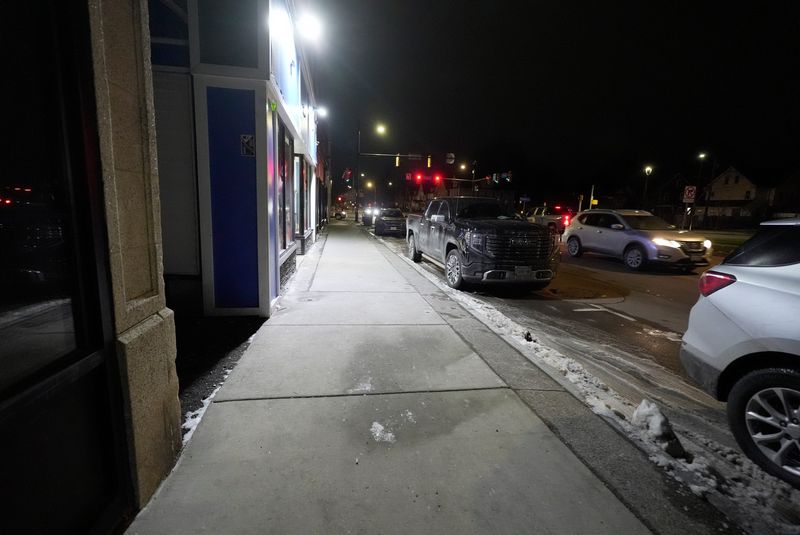
Dewey Avenue is dark by the time dozens of people slip inside an unassuming storefront on a cold and snowy night early this winter.
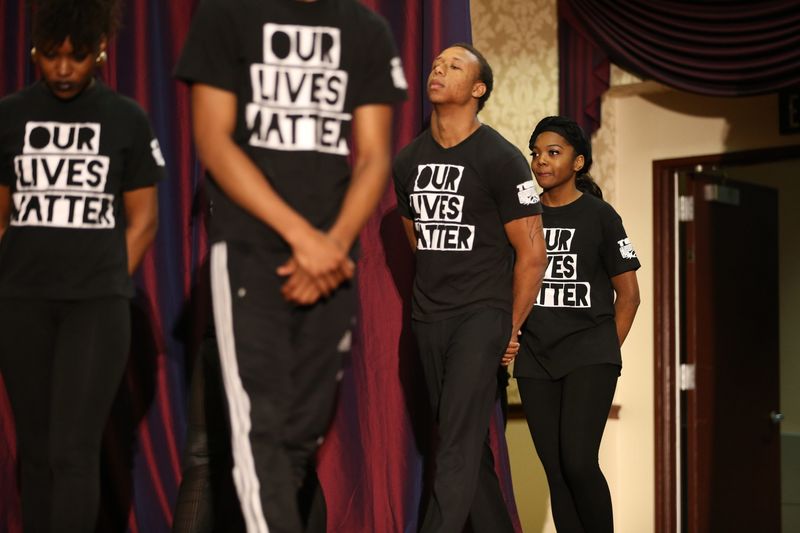
The room is not big enough for all who have come. The mayor is here, sitting in the front row with a manicured envelope nestled in his lap. Toward the back of the room, a pack of teenagers whisper and laugh on a short set of steps near a raised alcove. This space belongs to them, someone soon explains.

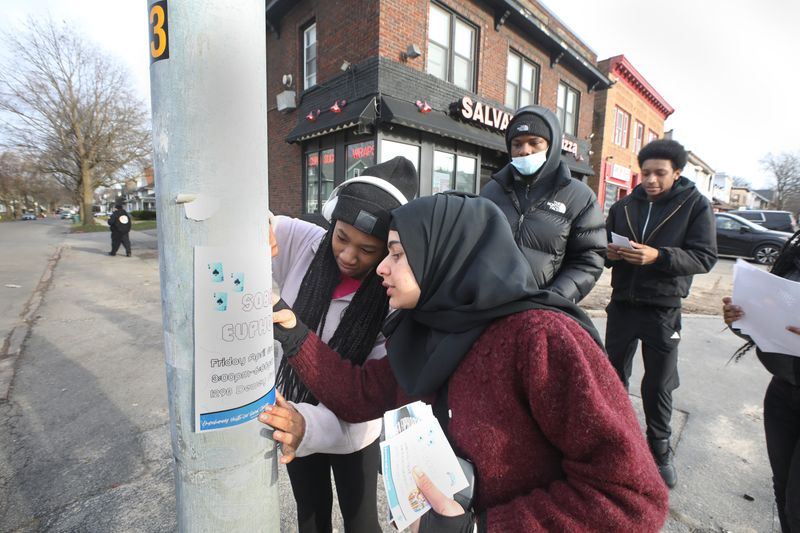
Teen Empowerment has moved into the neighborhood, opening its third youth center at the corner of Dewey and Magee, reclaiming a northwest intersection once synonymous with violence and drug activity.
This neighborhood, like others in Rochester, has endured decades of open-air drug markets and street fights. The 2015 mass shooting outside of the Boys and Girls Club across town has roots here, on Dewey Avenue, and the retaliatory warfare from that incident has spilled blood all over our city. The name of this block evokes a negative connotation from outsiders. Yet, to those who live here, Dewey Avenue is home.
What will become of its future?
That question hangs in the air of a celebration tinged with grief and regret.
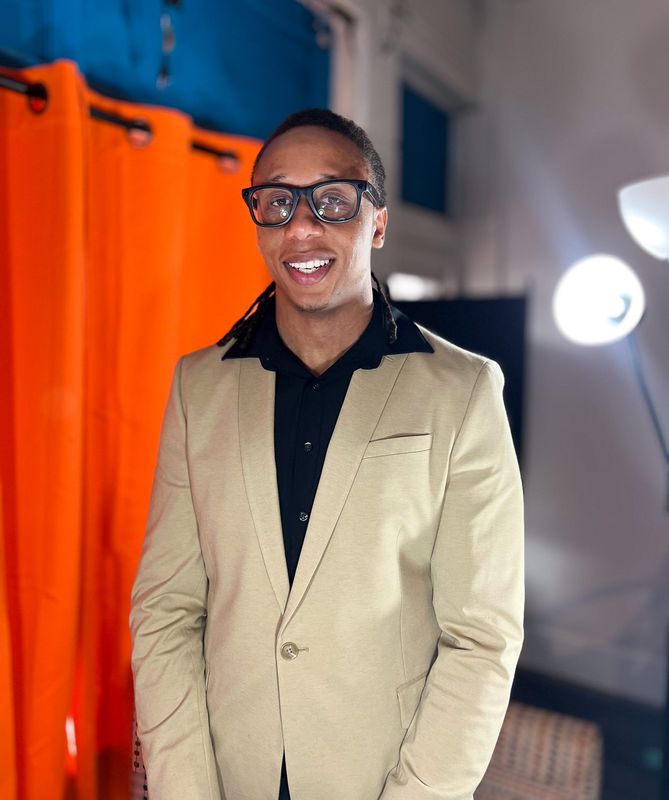
“In these times, we need spaces of real positive vibes,” says Tajh Ryland-Iverson, who worked with Teen Empowerment nearly two decades ago as a young man growing up on Dewey.
“I think Teen Empowerment brings that element back. It’s a real place for teens to be heard and understood and it might cause a chain reaction in some good decisions. … And let’s be real, this block definitely needs it,” he says.
The room pulses with uncomfortable but knowing laughter.
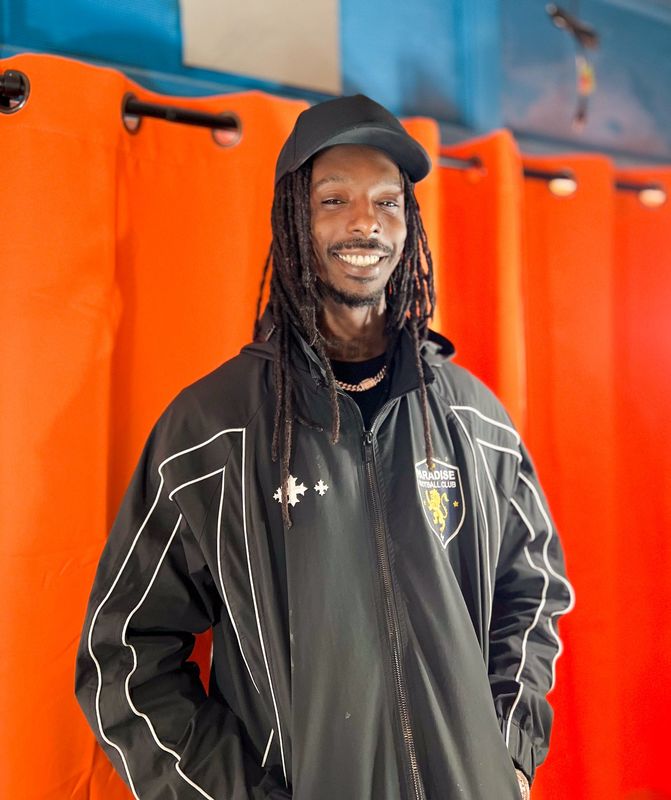
Weeks later, inside his barbershop a few blocks north, Devon Reynolds considers the state of his neighborhood.
He grew up on Dewey Avenue, playing basketball in the streets and kicking back at Maplewood Library. He met his wife and started a family here; opened his first barbershop under the guidance of an uncle. He has also carried lifeless bodies off street corners and washed the blood of friends from sidewalks.
Today he says there is a cohort of players determined to change the narrative of Dewey Avenue for the next generation. He hopes it will be enough.
“Dewey Avenue is under construction,” Reynolds says. “Rebuilding. Resilient. That’s what Dewey Avenue is: It’s a symbol of resilience.”
Trying to revive a district
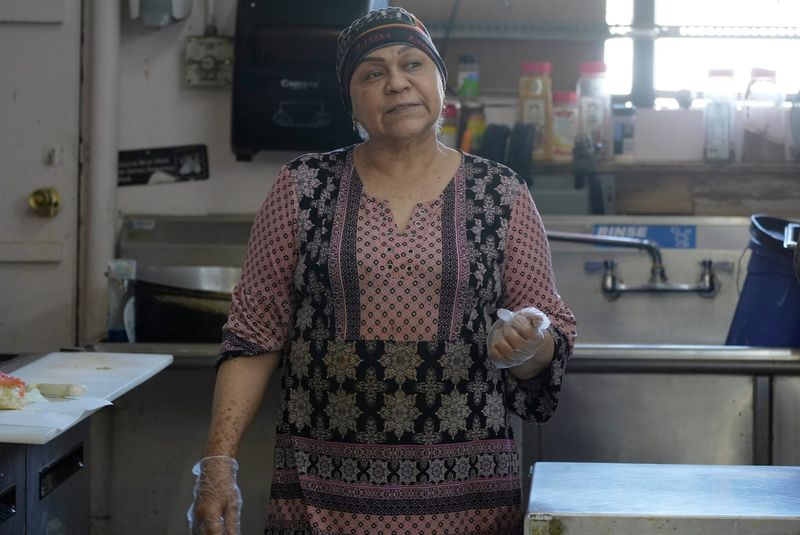
The spices rising from Fatima Nunez’s kitchen are the first thing to greet you inside American Deli & Grocery — then, the woman herself.
“Buenos dias, good morning,” she sings as she dances between a stovetop and the display case holding her fare.
It is too early for lunch, but the buffet counter is already steaming with yellow rice and Spanish beans, fried and baked chicken, steak and vegetables and empanadas.
At the front of the shop, encased by a plastic wall of scratch-off tickets, bubblegum and cigarettes, is Nasher Alsalahi, the corner store’s owner. He relocated his shop from Lyell Avenue in 2013, complaining of “too much drama, too much shootings.” Every few seconds, his eyes bounce to a large television broadcasting feeds from 12 security cameras both in and outside of his shop.
“Dewey Avenue is good,” Alsalahi said. “You do your business, nobody bothers you. When you do your business, worry about yourself, that’s it.”
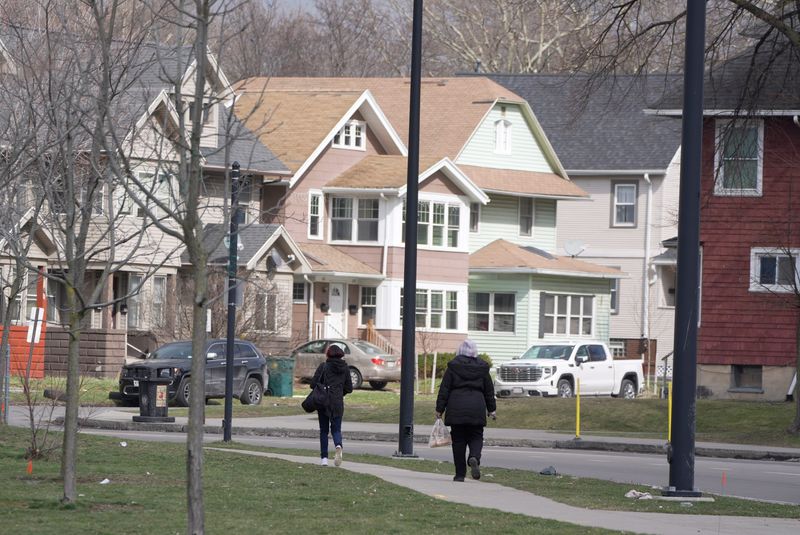
Shops like this one are a familiar sight along the corridor, where it seems there is a corner store, barbershop and church on every block. Bill Collins remembers a more vibrant business district when he first moved to the Maplewood neighborhood 35 years ago.
He called Dewey Avenue a “suburb of Kodak workers” in its heyday. The film giant attracted a good variety of businesses to the area, including bakeries, butchers and banks. Many left after Kodak collapsed and long-term residents followed. The neighborhood is now mostly broken down into rental units; the median household income is just under $38,000.
Collins is president of the Maplewood Neighborhood Association. A coalition of neighbors is trying to revive the business district through litter patrols, outreach and street beautification projects. He hopes Teen Empowerment will be an important anchor in that endeavor.
“Crime has gone down in almost every measure from murders all the way down to petty larceny,” Collins said. “People don’t see it because TV likes to publicize crime a lot, but if you look at the statistics, crime is now lower than it has been for most of the time that I’ve lived here.”
Dennis Felder, an elder in the neighborhood, said Dewey Avenue has a “bad rap” because of trouble that was mostly isolated to a group of bad actors. He and his wife moved into a home on Magee Avenue 30 years ago, put down roots and raised a son and grandson who still live in the area.
“You can also make it here,” he said. “This is not a failing place. It was just that young people went and ravaged at that time, but all of that is changing.”
The corridor is quiet on this early spring day. Rochester Police Capt. Nathan Cornell said there has been a slow but clear shift of activity on Dewey Avenue over the last few years. When Cornell took command of the Lake Section around 2020, drug trade was rampant.
“It was just out in the open,” Cornell said. “It was obvious to anybody. Police would drive down the street. There was no attempt to conceal what was going on — it was kind of a free-for-all.”
That invited other trouble, including prostitution and gunfire.
Cornell describes the police strategy in the Lake Section as a constantly shifting puzzle. RPD analyzes crime data to identify short street segments where shootings are more prevalent and allows the information to guide patrol decisions. Last year included a focus on the Dewey and Emerson block.
He has about 10 officers on the road at any time, divided between the main thoroughfares of Lyell, Lake and Dewey avenues and the northern city sliver that includes Charlotte beach.
Officers also rely on strong relationships with locals and businesses. Cornell meets with the Maplewood Neighborhood Association once a month.
“They’re the eyes in the neighborhood,” he said. “We drive through. If someone sees us before we see them, they’re out of sight. (The residents) live in that neighborhood and they see things every day that we don’t.”
Today the data is clear: Violent crime on Dewey Avenue is slowly falling, though no one can say for sure why that is. It follows a citywide and national decline — and also an infusion of resources into the neighborhood.
Searching for role models to influence this generation
Snow is falling again when Devon Reynolds ushers a mother and her young son inside his barbershop off Ridgeway Avenue. The woman is crying into an iPhone and poorly dressed for the weather.
“Just a moment,” Reynolds tells a reporter. He hurries to the back of the shop for a stack of tissues. A colleague offers the boy a plastic cup with green and orange cubes of fruit inside.
The woman lives just around the corner, so Reynolds leaves to drive the family home. When he returns, he explains they were strangers in crisis that he couldn’t leave out in the cold.
“It don’t take money or finances or resources to have compassion,” he says. “To have empathy. You just have to have love for the people. That’s our struggle.”
That empathy positions Reynolds at the heart of his neighborhood’s progress.
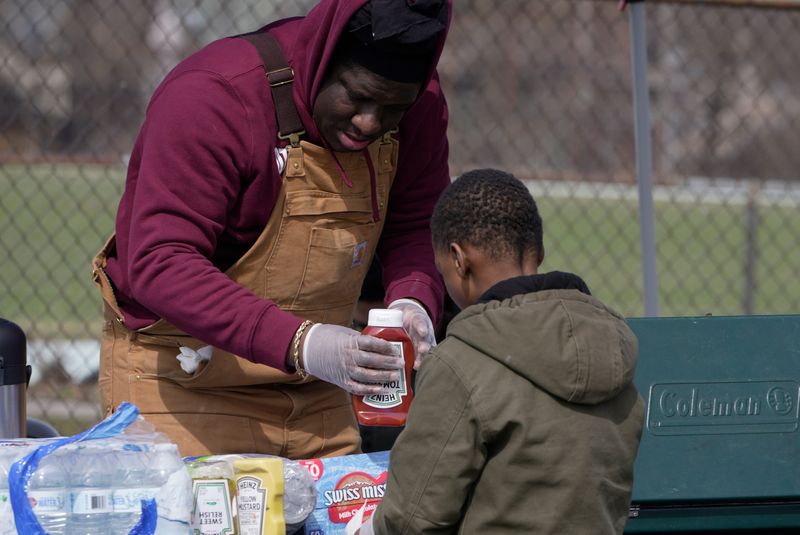
His barbershop is a training ground for young men edging their way into the field. He’s part of the neighborhood association and runs a mobile food pantry several nights a week. He spends his afternoons advising youth at Teen Empowerment. And when city officials launched an experimental violence prevention program on Dewey Avenue in 2021, Reynolds quickly signed on as a peer mentor.
That program, Advance Peace, found 27 gun offenders from the Dewey Avenue neighborhood and promised them consistent paychecks if they put in work to turn their lives around. The city hired trusted neighborhood-level mentors like Reynolds to help the men develop short- and long-term goals and connect them with therapy, jobs and stable housing.
“We were always very intentional about getting the one that was kind of the influencer or the shot caller,” said Terrell Cunningham, who oversees the program. Advance Peace is now in its fourth cohort and has expanded to include fellows from other neighborhoods.
“A lot of the times when we are meeting with these guys from the Dewey Avenue area, they do talk a lot about feeling almost remorseful,” he said. “I remember a conversation … where (the fellow) talked about how he was one of the ones who had a major part in the gang activity, and he almost felt guilty and remorseful that he had been a part of so much destruction in that area. He shared with me and the others that he wanted to be part of the resurrection of Dewey — someone that can kind of bring that area back to prominence.”
A witness to all that destruction, it would have been easy for Reynolds to leave his neighborhood in search of something better. He was 16 when the first of his friends was shot and killed in 2007. Once guns were introduced to solve petty street fights, he said, there was no returning. Those still alive today struggle to remember what even started the warfare.
“One year we buried at least four of our friends,” Reynolds said. Those deaths became landmarks he uses to map intersections along his neighborhood and leave him afraid of what his children may experience.
Even today, though Dewey feels quieter, Reynolds said he is not sure when he will allow his children to walk to the bus stop or a corner store alone. Visits to playgrounds come with a warning: If you hear shots fired, don’t run. Just get down and know that I’m coming for you.
So why stay in a neighborhood swirling with fear and grief?
Reynolds said he was spared from the violence because of an uncle who taught him how to cut hair and made sure he stayed on the right path.
“We needed more guidance,” he said. “More male role models, more structured programs. A lot of my friends didn’t have that. What keeps me here and doing the work that I’m doing is trying to better the community that my kids will be raised in. It will be a disservice for me to take my influence, my skills, my potential, to the suburbs, where other Black kids won’t be able to see that role model.”
‘They know they can call us’
That sentiment becomes a recurring refrain from others working on Dewey Avenue.
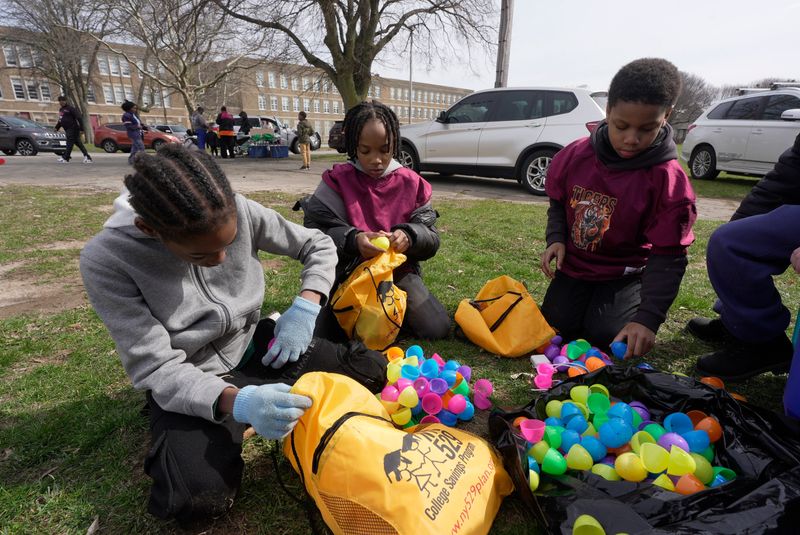
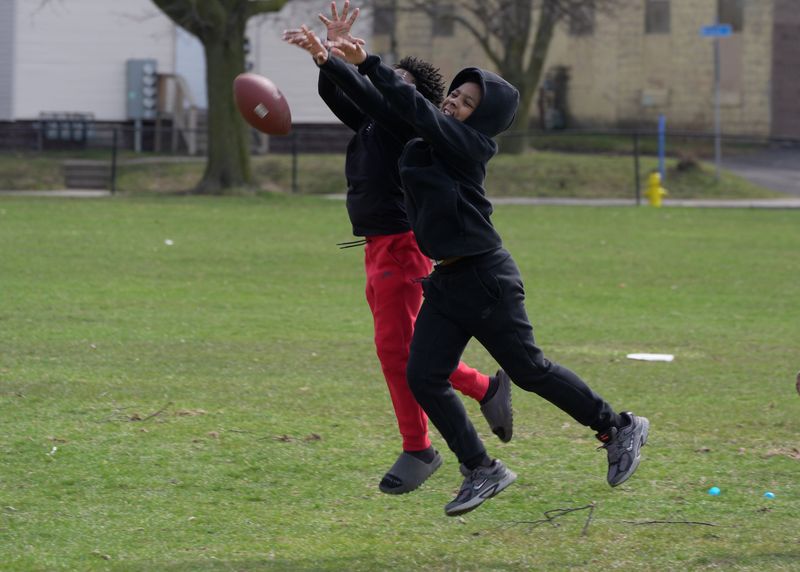
It feels a bit more like spring when the Tenth Ward Tigers gather at Edgerton Park for an Easter egg hunt. Offseason events like this are one way the team looks to keep its young athletes engaged outside of the football seasons held in the spring and fall.
“They form really great relationships with these coaches, and these coaches are always there for whatever they need,” league president Ahjah Harper said. “They know they can call us. They need a ride, they’re short of food, mom needs a few bucks ‘til next week — they know they can call us.”
Edgerton Park is located on the athletic fields at hulking former school, Jefferson High, now partly empty. The city allows the team to use the fields for free, but the facilities are worn down and dated. Coaches are looking forward to when promised upgrades to the park come to fruition. Edgerton Park is part of the city’s multi-site park planning project but currently there is no funding to implement the improvements, city officials said.
“We love what the city does do for us,” Harper said. “We just want to know when they’re going to make it safer for the people.”
On this day there are mini football drills, grilled burgers and hot dogs and free haircuts from two local barbershops. One of the barbers doubles as a football coach. Marcus Perkins, or Coach Cannon as he’s known, is cleaning up a kid’s fade in his portable barber’s chair and speaking “love and life into them.”
“Some of these kids, they can be good kids and then next thing you know, a straight A student hanging around with the wrong crowd, boom he’s in trouble — legal trouble,” he says. “And we don’t want to see them go down that road. So, if we can stop and prevent a lot of stuff from happening, we try to do that.”
Good grades are required to participate in Pop Warner football, and the team made a point to celebrate an athlete with a 4.5 GPA at its March meeting. They offer discounts on a multi-season commitment to keep kids engaged and lighten the load on families.
Determined to make a difference
On the other end of Dewey, a line is forming outside of Hooked Fish Market near Driving Park Avenue. It’s now 10:45 p.m. The doors are locked; the restaurant is closed.
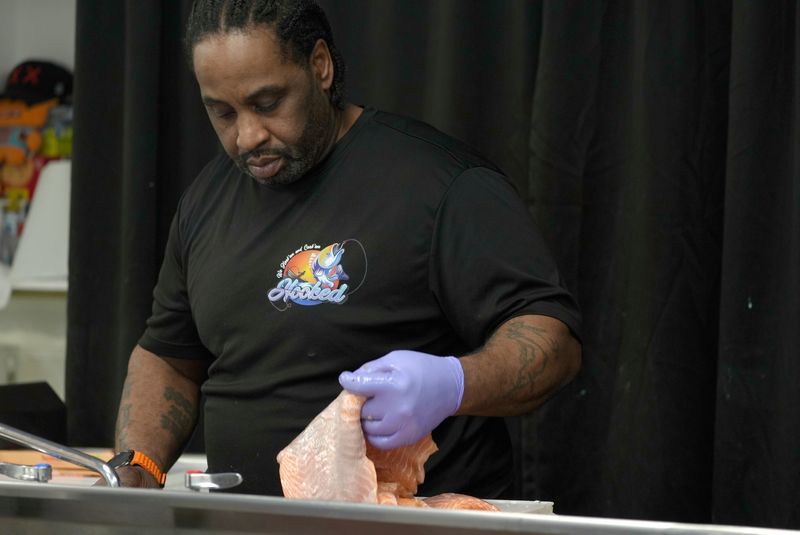
But Kenneth Rivers is still at work inside, piling the day’s leftovers — rice and beans and generous portions of fried fish — into mountains on top of sturdy paper plates. He slides them one by one through a turnstile window to the hungry people who appear outside of his shop nightly.
Rivers opened this fish market four years ago, resurrecting a similar shop he used to visit as a kid to buy frog legs for his family. It has all the appeal of an old-school fish market: Fresh, daily deliveries, the sheen of oil against a golden filet pulled straight from the fryer and aquatic art that covers every surface.
To Rivers, though, it is much more than a restaurant: He has used his food to build rapport with his neighbors and lay claim to this corner of Dewey Avenue — a corner that he is determined to use for good.
Rivers is the Santa of his block. He funds an annual scholarship for city school students and hosts regular giveaways of backpacks, bikes and winter boots. When thousands of families lost SNAP benefits during a government shutdown last fall, Rivers split 300 pounds of fresh cod among 100 local families. He offers plates of food to the unhoused every night, without fail, even after a long day spent in the kitchen.
“All the time and effort that I put into doing things wrong, you know, I promised myself that I would put that same energy and time into doing things right,” Rivers said.
He shies away from talk of trouble but acknowledges a prison stint for selling drugs as a young man. He spent his time behind bars working toward redemption. He believes in a similar renewal for Dewey Avenue.
“A couple of summers ago there was just a lot of the car stealing and the shooting and kids really not understanding life,” Rivers said. “When you don’t understand life, you’ll fall victim to what you see on TV and what you see on the internet. I believe that a lot of that was where that was coming from, the spike in violence.
“I don’t like to dwell on the past or the negative. It’s something that we went through — you know what I mean? It’s just time to move forward and just continue to grow with the growth.”
The growth comes in forms big and small.
Rivers has laid the foundation for a community resource center in a shuttered building three doors down from his fish market. His vision for the space is all encompassing: A future hub for Teen Empowerment, a connector for folks recently released from prison and a skills center for job training.
In other ways, his outreach is quieter and less formal. Three teenagers found him shoveling the sidewalk in front of Hooked Fish earlier this winter. Hey, Mr. Hooked — they called out. Let us do that.
Instead of brushing them along or handing over his shovel, Rivers grabbed a few extras from the back and stayed in the work alongside them. He wants to be the example he lacked as a kid.
“I want them to understand that being out here (in the streets), it’s easy and it’s fun, but doing it the right way is hard but it’s the right thing to do,” he said. “It’s going to last longer. It’s going to take you a long way in life.”
Getting unstuck from a cycle
Many in the neighborhood say the new Teen Empowerment center brings an infusion of hope that will build on the work that’s already being done. The nonprofit has a strong reputation in Rochester but was always centered on Genesee Street.
That meant teens like Zeke Gross and Tajh Ryland-Iverson had to travel across town to take part.
Ryland-Iverson said the organization pulled him from a cycle of trouble that landed him in juvenile detention and it gave him a new sense of self-worth.
“Because of how strict my probation was, I really didn’t have to do much to get locked up,” he said. “It could be over simple stuff like arguing with my teacher. I was getting stopped by the police all the time when I wasn’t doing nothing. It’s like whether you are good or bad, you’re going to jail anyways — that’s how I felt at the time.”
Teen Empowerment valued his perspective and gave him a platform: Ryland-Iverson was able to speak on real issues impacting his neighborhood through the Mayor’s Youth Advisory Council and sit-downs with police and found a creative outlet in spoken word.
“I will say it kept me in the best of both worlds,” Ryland-Iverson said. “If I’m out here on the block and (they) call me for something, it kind of took me out of that zone for a second and what we talk about in here makes you think about the stupid stuff I’m doing.”
Gross called the organization a “door” that saved him from the street life. He is hopeful that the next generation of Dewey Avenue teens will now have the same opportunity.
Making a decision to change course
Back in Reynolds’ shop, 19-year-old Timarian Lovett is taking a break between clients.
The apprentice barber is not from this neighborhood, but the negative influences that can take hold on Rochester’s youth exist citywide.
“I was susceptible to the street life,” Lovett said. “I was roaming places I didn’t need to be roaming, friends with people I didn’t need to be friends with. I felt like, for me, I wanted different.”
That future started first at the Willie Lightfoot R-Center, where Lovett connected with staff as a kid and got his first job. Then, he was hired by Teen Empowerment and met Reynolds. When he showed an interest in cutting hair, Reynolds offered him a spot at his shop.
As part of his training, Lovett must tag along and volunteer at outreach events.
The change Reynolds wants to see in his neighborhood starts like this. He wants to be more than a resource. The door to his shop is unlocked and people come and go freely.
“Be safe,” he says, anytime someone leaves.
These days it feels more like a blessing than a warning.
— Reporters Kerria Weaver, Steve Howe and Justice Marbury contributed reporting for this article, along with Kayla Canne, who wrote the story. Canne, the Democrat and Chronicle public safety journalist, led the reporting team for “Dewey Rising” and edited the package.
This article originally appeared on Rochester Democrat and Chronicle: How neighbors are rebuilding Dewey Avenue for the next generation
Reporting by Kayla Canne, Rochester Democrat and Chronicle / Rochester Democrat and Chronicle
USA TODAY Network via Reuters Connect